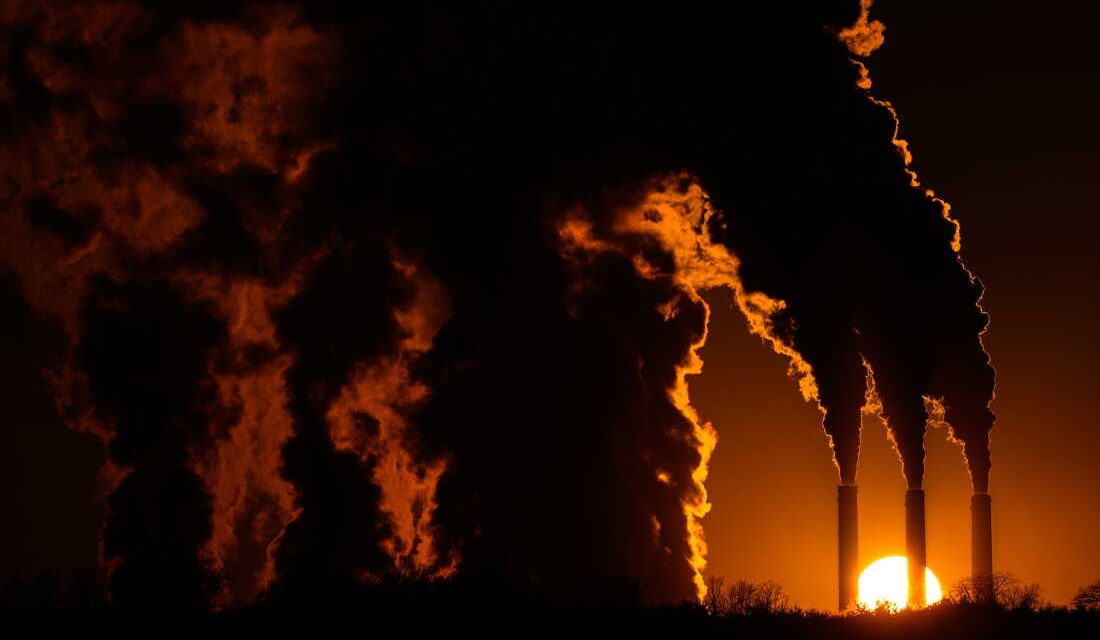
The Jeffrey Energy Center coal-fired power plant, captured in January 2026 in Topeka, Kansas, exemplifies the issue of coal burning contributing to increased greenhouse gas emissions in the U.S., as noted by a recent United Nations report.
Countries globally are not sufficiently reducing emissions that drive climate change’s detrimental effects, according to U.N. scientists’ findings. The U.S. emerges as a critical contributor, with last year witnessing a notable rise in planet-warming pollution. This increase places the U.S. at the forefront alongside Russia among G20 countries for per capita emissions of carbon dioxide and similar gases.
While China surpasses all in total greenhouse gas emissions annually, its larger population distributes these emissions more broadly. In contrast, U.S. emissions rose due to escalating electricity demand and policies favoring fossil fuels under the Trump administration.
“Several G20 members have demonstrated ongoing emissions reductions,” noted Inger Andersen, Executive Director of the U.N. Environment Programme.
The Trump administration’s order to prolong coal plant operations, rollback of fuel-efficiency standards, and termination of renewable energy tax credits have escalated U.S. emissions. Global energy security challenges, influenced by geopolitical conflicts in Ukraine and Iran, compound this issue.
Conversely, the European Union has made strides in emissions reduction through investments in energy-efficient technologies and renewable resources, partially driven by Russia’s Ukraine invasion.
U.S. Departure from U.N. Climate Initiatives
The Trump administration’s exit from the 2015 Paris Climate Agreement and reluctance to engage in U.N. climate efforts underscore a worldview that perceives international systems as unjust burdens. Additionally, the Environmental Protection Agency altered its stance on the hazards of greenhouse gases.
Despite dissociation from global climate dialogues, fossil fuel consumption in the U.S. continues to influence global warming significantly.
Implications of Fossil Fuel Burning
The release of carbon dioxide and other greenhouse gases from fossil fuels contributes to planetary warming. According to the World Meteorological Organization, the Earth has warmed by approximately 2.7 degrees Fahrenheit compared to the mid-1800s, leading to severe weather events, including heatwaves, floods, storms, and wildfires.
U.N. Secretary-General Antonio Guterres emphasized the necessity for major emitters to enhance their efforts, stating, “Every fraction of a degree matters.”
Warming Projections and Agreements
The planet is currently projected to experience up to 5 degrees Fahrenheit of warming this century, causing catastrophic repercussions, such as significant sea level rises and widespread biodiversity loss. The Paris Climate Agreement aims to limit this warming to below 3.6 degrees Fahrenheit to avert these disasters.
This year marks the first acknowledgment that achieving even stringent targets is unattainable. Yet, a 25% reduction in global emissions over the next decade could maintain warming below this critical threshold. Despite this, nations are collectively falling short of the necessary reduction benchmark.
Under the Paris Agreement, around two-thirds of countries have robust emissions reduction plans. Fulfillment of these plans would reduce emissions by about 15% over the next decade, still beneath the essential reduction level.
 Severe Weather Risk and Atmospheric Conditions in Arizona and Southern California
 Michigan City Residents Protest Coal Plant Over Environmental Concerns
 Impact of 2010 Deepwater Horizon Spill on Gulf of Mexico Marine Life
 Suburban School Districts Grapple with High Diesel Costs
 Alaska’s Agricultural Challenges and Land Development
 Santa Ana Winds Impact Southern California, Prompt Fire Preparedness