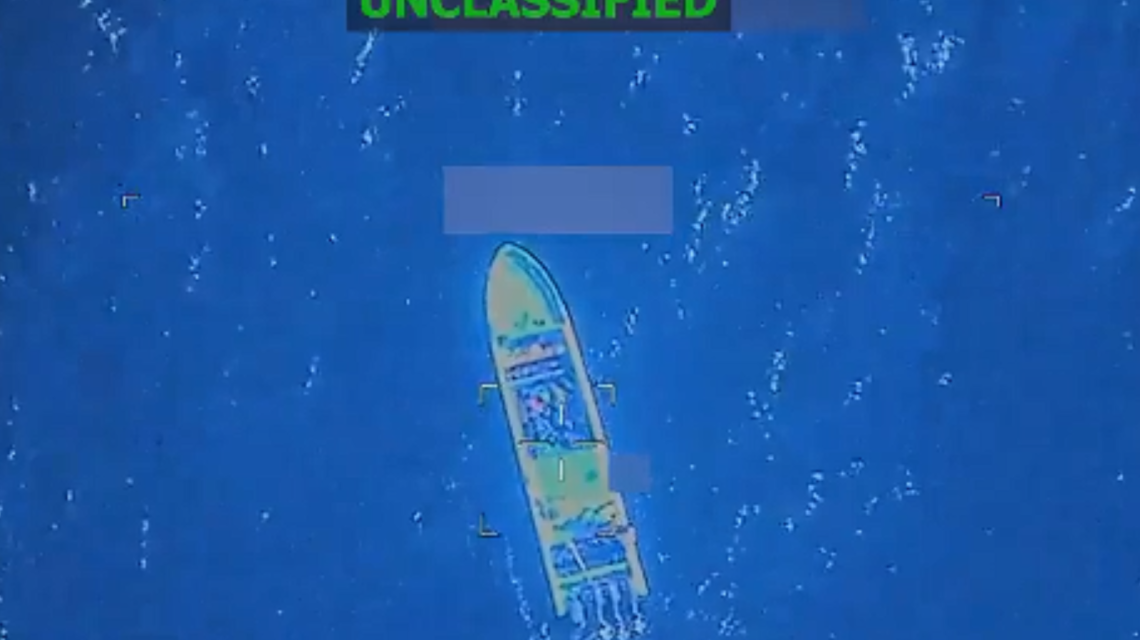
The U.S. military has announced a third strike on a boat, occurring within a week. The U.S. Southern Command (SOUTHCOM), responsible for American forces in the Caribbean and Latin America, confirmed this recent action. The operation is part of an ongoing campaign targeting alleged drug-related vessels in the eastern Pacific and Caribbean Sea.
The boat in the eastern Pacific Ocean was charged with drug smuggling. Three men, identified by SOUTHCOM as ‘narco-terrorists,’ were killed. Since early September, this operation has resulted in over 200 deaths.
Engaged in ‘Narco-trafficking Operations’
SOUTHCOM described the strike as a ‘lethal kinetic strike on a vessel operated by Designated Terrorist Organizations.’ Intelligence reportedly confirmed the boat was on recognized narco-trafficking routes in the Eastern Pacific and actively engaged in smuggling.
The U.S. government frames this operation as a drug trafficking crackdown, facing criticism from international groups and scrutiny from Congress. The Trump administration has yet to release evidence linking these boats to drug transport.
Are The Strikes Legal?
Recently, a U.S. strike killed two people on an alleged drug boat, followed by another strike that resulted in one death and two survivors.
The U.S. government claims it is engaged in a legal ‘armed conflict’ with cartels to reduce drug flows and protect lives. However, some humanitarian organizations and experts argue these actions violate international law, as they target civilians who do not pose immediate threats.
The American Civil Liberties Union has labeled these claims by the Trump administration as ‘unsubstantiated’ and ‘fear-mongering.’ Human Rights Watch and Amnesty International equate the strikes to unlawful killings.
Guatemala Denies Involvement
Guatemala’s President, Bernardo Arévalo, denied authorizing U.S. strikes on drug smugglers within his country. Despite a report by The New York Times suggesting otherwise, Arévalo stated there is ‘no agreement’ with the U.S., although Guatemala has sought U.S. assistance against cartels during the campaign.
Despite the Trump administration’s stance on the necessity of these conflicts, experts caution that the operations do not significantly disrupt cocaine flow from South America into the U.S. A New York Times report highlighted that cocaine availability remains unchanged, based on street prices, overdose statistics, border seizures, and sample purity evaluations.
 British Police Arrest Man Suspected of Terror Plot
  Activists Push for Nationwide Ban on Child Marriage in the U.S.
  Investigation into Alleged Incident at Cornell University
  Rising Drone Threats Highlight Vulnerabilities in Moldova’s Airspace Defense
  Bolivia Faces Security Test Amid Unrest
  Incident on FlyDubai Flight Raises Security Concerns