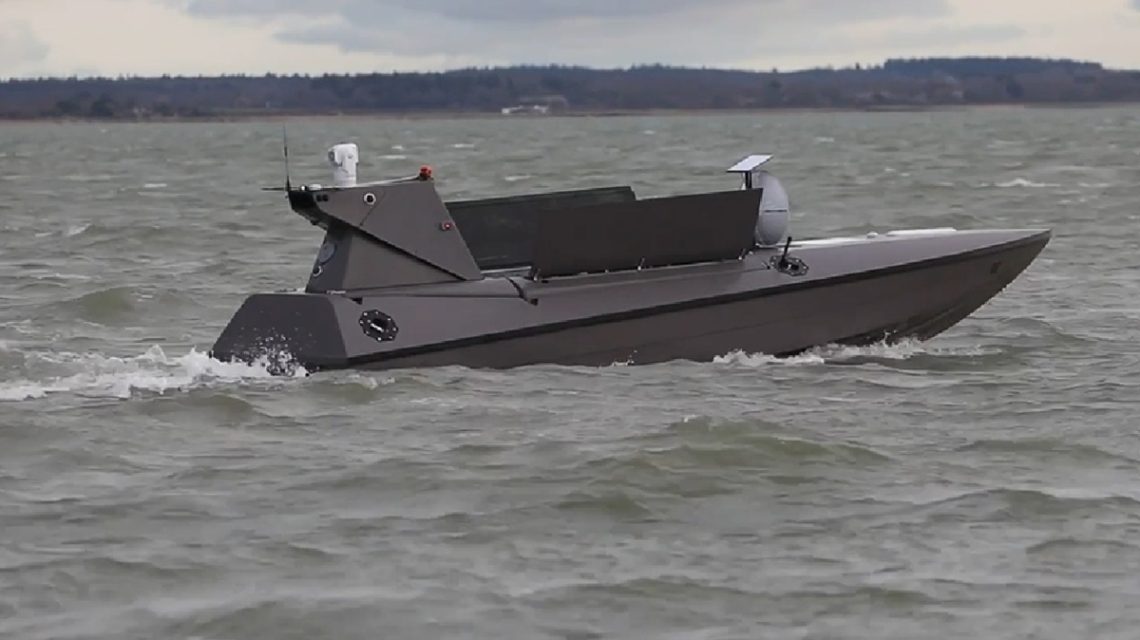
Surveillance drones utilized by United Kingdom Special Forces were reported to have transmitted data to China, prompting renewed security concerns amid efforts by London to address past tensions with Beijing. The U.K. Ministry of Defence uncovered that Kraken K3 Scout drones sent ‘heartbeat communications,’ which confirm the devices’ functioning, to a Chinese IP address, as reported by the Telegraph.
These drones are supplied by Kraken Technology Group, a British defense contractor specializing in unmanned maritime systems. A third-party supplier provided the cameras, asserting that they passed security checks. However, revelations have intensified concerns, especially considering warnings from Britain and its Five Eyes intelligence-sharing allies, including the United States, Canada, Australia, and New Zealand, about China’s ongoing and potential intelligence-gathering attempts through technology.
Security Concerns
The disclosure follows Britain’s move to remove Huawei, the Chinese telecoms giant, from its 5G network infrastructure due to espionage risks. The drones are intended for a British naval deployment to protect commercial routes within the Strait of Hormuz, as stated by a defense source.
There are worries that personnel from the Special Boat Service, a Royal Marines unit responsible for special operations, with security clearances might have been compromised. Kraken assured that ‘a small number of components’ were sourced from outside the UK. Following audits by Kraken and the Royal Navy, they are confident that sensitive information was not unintentionally disclosed, and potential vulnerabilities have been addressed.
The U.K.’s Ministry of Defence mentioned no evidence of sensitive data or systems transmission externally. Newsweek contacted the U.K. Defence Ministry, Kraken, and the Chinese Embassy in London for comments.
K3 Scout Drones
The K3 Scout drones, capable of high-speed operations, can function continuously for up to 30 days, measuring 28 feet in length and able to carry up to 1,322 pounds of various payloads, including radar and sensors for surveillance and electronic warfare.
The Royal Navy acquired 20 drones in March for £12.3 million (around $16.6 million) as part of Project Beehive, aiming to deploy a mixed fleet of manned and unmanned vessels. The drones were included in a defense proposal to support navigation security in the Strait of Hormuz.
These drones have been involved in NATO trials in the Baltic Sea as part of Task Force X-Baltic, testing autonomous air, surface, and underwater systems. Additionally, the U.S. Special Operations Command awarded Kraken a $49 million contract for developing prototype underwater and surface drones.
Britain’s China Balancing Act
As Britain seeks to balance security and economic ties with China, the report emerges. Former Prime Minister Keir Starmer visited Beijing in January amid trade tensions with the U.S., although the government remains cautious of potential Chinese espionage activities.
The Labor government recently stopped Chinese wind turbine company Ming Yang Smart Energy from developing an offshore turbine factory in Scotland, citing ‘national security risks.’ Zhang Junshe, a Chinese military affairs expert, suggested the report bore ‘Cold War overtones,’ accusing Western media of projecting historical practices onto the ‘China threat’ narrative.
MI5 had previously cautioned lawmakers about Chinese-linked LinkedIn accounts offering consultancy work to government officials—a suspected tactic to cultivate relationships. These warnings followed charges, later dropped, against British citizens accused of gathering government policy information on behalf of Chinese intelligence.
 Ukraine Converts APCs to Explosive Devices in Donetsk Offensive
  Dutch Review Board’s Euthanasia Ruling and International Debate
  Israeli PM Commends Heroic Actions in Flight Emergency
  Rabbi and Jewish Leaders Criticize Adam Brody for ‘Genocide’ Comment
  Flydubai’s Emergency Landing Highlights Cockpit Security
  Former Israeli PM Naftali Bennett Commends Passengers and Crew for In-Flight Heroism