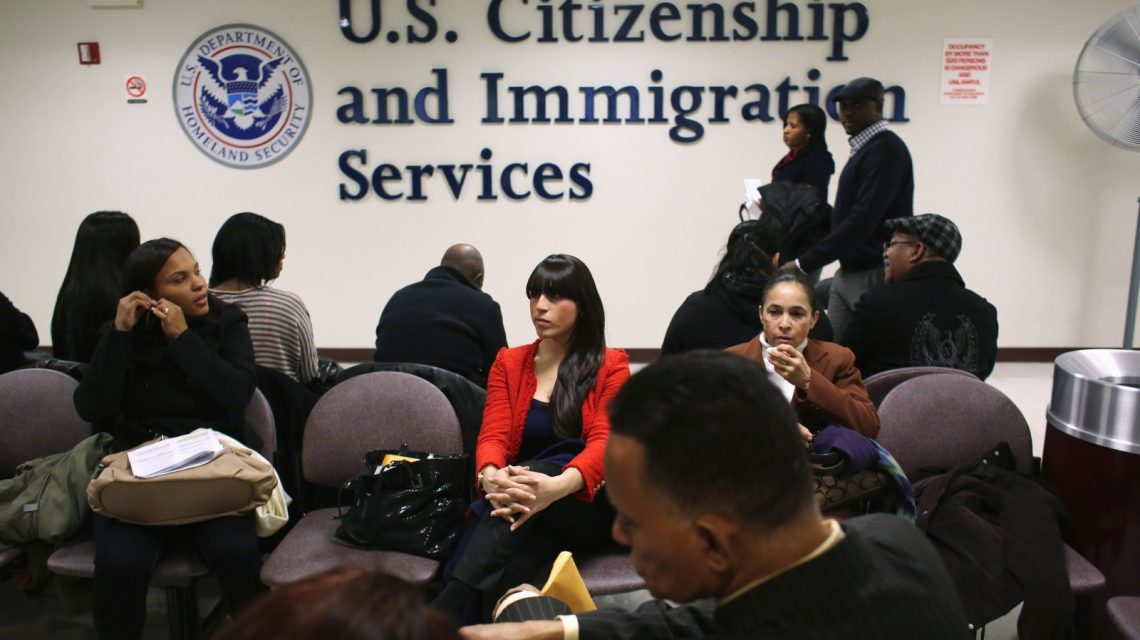
Green card applicants, international students, and visa seekers face an important week as changes to the legal immigration system unfold under the Trump administration. Significant developments include new immigration forms taking effect on September 15 and September 18, a revised public-charge framework for some green card applicants, and the imminent release of the October Visa Bulletin. This bulletin is a critical immigration update, as it marks the start of a new fiscal year.
I-539 and I-765 Forms Updated
On September 15, the Department of Homeland Security (DHS) will implement a new framework for admission periods for certain F, J, and I nonimmigrants. Concurrently, U.S. Citizenship and Immigration Services (USCIS) will mandate the use of new editions of Form I-539, for eligible nonimmigrants to extend or change status, and Form I-765, for employment authorization applications. The older editions will not be accepted after this date.
The new rule replaces the previous “duration of status” framework with fixed admission periods. This change impacts international students, exchange visitors, and foreign media representatives. Under the new system, these nonimmigrants will receive a specified admission period with options to extend if necessary.
The DHS emphasized that the new framework will phase out the duration-of-status system, establishing specific admission periods and a formal process for seeking additional time in the U.S.
Applicants using Form I-539 or Form I-765 from September 15 onward must use the editions dated September 15, 2026. Previous editions filed after that date will be rejected by USCIS.
I-485 Update
Commencing September 18, USCIS will require a new edition of Form I-485, which is used by immigrants pursuing lawful permanent residence through an adjustment of status. The adoption of the new form is mandatory from that date forward, with older editions being rejected if postmarked or submitted on or after September 18.
The revised form includes updates to the information required during the adjustment-of-status process. While the form format changes, the statutory eligibility requirements for adjustment remain unaffected.
For applicants filing for an adjustment of status, the September 18 deadline is crucial. Submissions from this date must use the updated Form I-485, and applicants should check the USCIS filing instructions and fees before applying.
Public Charge Rules
Starting September 18, a new public-charge rule by DHS will take effect. This rule repeals the 2022 regulations and gives immigration officers greater discretion to determine if an applicant could become a public charge. The rule applies to applications made on or after September 18 and adjustment-of-status applications postmarked or submitted on or after this date.
The revised approach involves evaluating the applicant’s circumstances overall, considering factors like age, health, family, financial resources, education, and skills, as well as public benefit use. Receiving a public benefit does not automatically render an applicant inadmissible, as the determination is individualized under public-charge provisions.
USCIS has issued separate policy guidance effective September 18 for adjustment-of-status cases. This date marks a significant regulatory change, with applications submitted on or after subject to the new rule.
Stephanie Lewin of Waypoint Immigration USA noted the administration’s stringent policy changes, indicating that applicants will face increased scrutiny and may need more evidence to demonstrate they will not become a public charge.
Poonam Gupta of Summit Legal PLLC pointed out the misconception regarding U.S. citizen children’s benefits, which might now be considered indirectly in the parent’s application under the new rule due to officers’ increased discretion.
Anticipated Visa Bulletin Release
The State Department is expected to release its October Visa Bulletin soon. This document is the first for fiscal year 2027, when immigrant visa allocations reset and new numbers are available for employment-based and family-sponsored categories.
The bulletin establishes priority-date cutoffs for these visa categories. For adjustment-of-status applicants, USCIS will separately decide whether the Dates for Filing or Final Action Dates chart is applicable.
The October release is critical as the annual immigrant visa limits reset, potentially allowing for the resumption of visa issuances in categories that reached their yearly limits.
 The Trump Team’s Challenge to the Military Leadership
  Maryland First State to Restrict Electronic Pricing in Grocery Stores
  Activists Push for Nationwide Ban on Child Marriage in the U.S.
  Democratic Hopes and Historical Warnings in 2026 Senate Race
  Republicans Face Challenges Amidst Cost of Living Concerns
  A Different Kind of Fall for Congress This Year