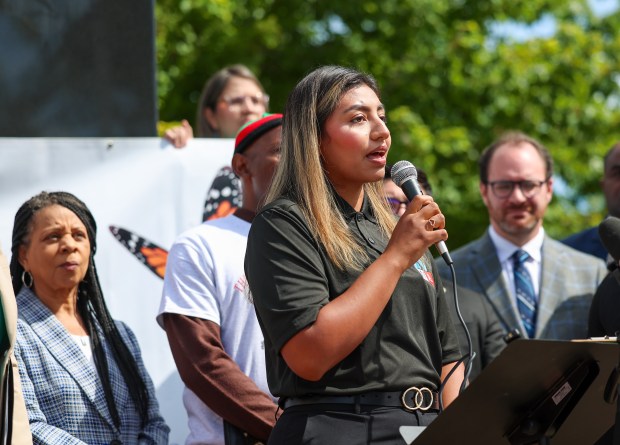
A Will County Board member has expressed frustration regarding the delay in disbursing funds to an immigration services group. Destinee Ortiz, a Romeoville Democrat on the County Board, highlighted the group’s funding woes, citing issues with the executive’s office and documentation requirements.
Board Approval and Funding Allocation
In November, the Will County Board voted 12-10 to allocate $200,000 to Illinois Workers in Action, using cannabis tax revenue. Ortiz voted alongside 11 board Republicans to approve the budget, which included several programs benefiting from cannabis revenue.
Illinois Workers in Action, a nonprofit, operates in Chicago, Bolingbrook, and Aurora, serving Will County. Before approval, the group’s organizers met with both Republican and Democratic caucuses. Ortiz and Republican Vince Logan reviewed funding proposals and presented recommendations to the County Board for final approval.
Dispute Over Grant Disbursement
As of now, nearly ten months post-approval, Ortiz claims the executive’s office hasn’t released the funds. Mike Theodore, a spokesman for the county executive’s office, explained that lack of specific documentation prevents disbursement. The cannabis funding process was hastily handled during the budget meeting, leading to unclear provisions marked by handwritten notes.
Concerns from the Executive Office
The county executive’s office has asked for clear guidance on the allocation specifics. Concerns about the fund usage, particularly related to salaries, have been raised. Illinois Workers in Action lacks recognition from the U.S. Department of Justice for legal services, which adds to the complexity. Theodore communicated ongoing efforts to interpret this documentation and fund programs aligning with rigorous standards previously applied.
Organization’s Perspective
Giselle Rodriguez, Illinois Workers in Action’s executive director, affirmed their continued efforts in answering questions from County Board members. Since January, the group has assisted nearly 31,000 individuals statewide. Key programs include labor justice, immigration services, public health advocacy, and support against workplace harassment.
The organization gathers grant funding and is committed to following Will County’s procedures for funding requests.
Future Allocations
Ortiz is eager for resolution on fiscal year 2026 allocations, as discussions for fiscal year 2027 are underway. Past recipients of cannabis funds were asked to report on their impact, emphasizing the importance of immigration services in Will County.
State Senator Rachel Ventura has also reached out to highlight constituent concerns. Jim Richmond, the County Board’s Republican leader, stressed the executive’s obligation to implement Board actions.
Review and Transparency
To address the complexities, an ad hoc cannabis revenue review committee was established in July. This group aims to provide transparency and guide fund allocation. Historically, Will County has dedicated cannabis funds to public health and safety, contrasting other counties that merge these revenues into general funds.
Community Reactions
Last November, some community groups criticized spending decisions involving cannabis funds, calling for reparative focus on neighborhoods impacted by past drug policies. The board allocated funds across various services, including advocacy centers, housing, workforce programs, and children’s scholarships.
The clerk’s office also awaits funding for election equipment, with ongoing interest expressed during board meetings.
 The Trump Team’s Challenge to the Military Leadership
  Maryland First State to Restrict Electronic Pricing in Grocery Stores
  Activists Push for Nationwide Ban on Child Marriage in the U.S.
  Democratic Hopes and Historical Warnings in 2026 Senate Race
  Republicans Face Challenges Amidst Cost of Living Concerns
  A Different Kind of Fall for Congress This Year