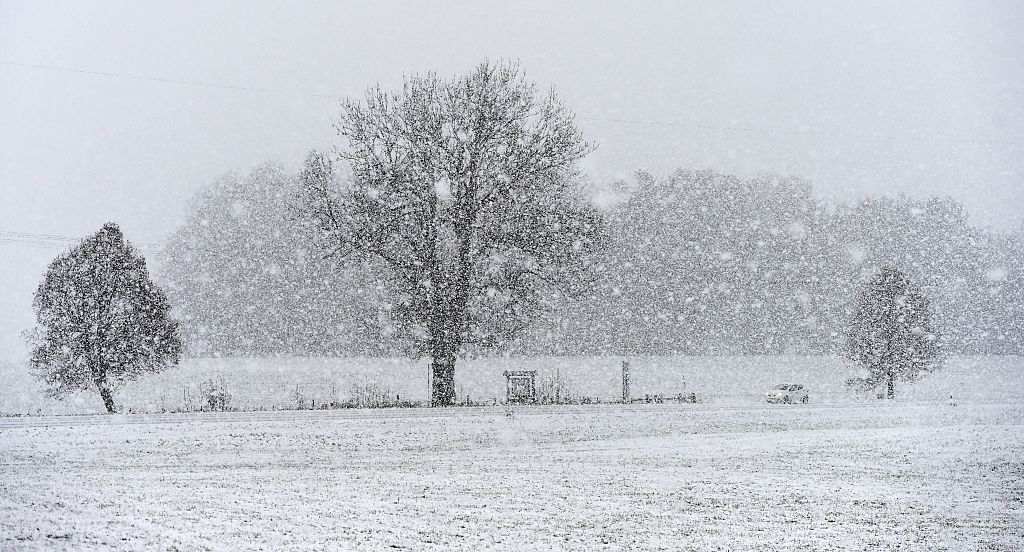
The Old Farmer’s Almanac has issued its Winter 2026–2027 forecast, indicating a potential shift in weather patterns across the United States due to a strengthening Super El Niño. Rising ocean temperatures in the tropical Pacific are known to disrupt the jet stream, leading to significant winter storms. As a result, millions of Americans might face wetter conditions, heavy snow, icy mixes, or sudden cold spells.
El Niño and Climate Influences
The Almanac has confirmed that El Niño is active and will likely intensify. This phenomenon, along with elevated solar activity and long-term ocean cycles, will influence the coming winter. Various regions may experience different weather patterns, with notable contrasts throughout the country.
Forecast for Different Regions
The Almanac’s outlook suggests varied conditions across the U.S. The southern part of the country—from Southern California to the Gulf Coast and Southeast—may experience wetter conditions and stormy weather. Cold air colliding with moisture could result in sleet, freezing rain, or heavy snow. In the northern areas, including the West and the Great Lakes, temperatures are expected to average near normal, yet be unpredictable. Rapid cold snaps or brief thaws may occur.
The Northeast might see multiple instances of heavy, wet snow, while coastal areas face rain or mixed precipitation as storm tracks shift. Small temperature changes could turn a slushy forecast into a snowstorm.
Expert Analysis and Insights
Crystal Egger, an Emmy Award-winning meteorologist, pointed out, “It’s too early for definitive regional outcomes, but the southern U.S. shows signs of elevated risk.” She highlighted the potential for heavy precipitation in the southern Plains and Gulf Coast.
Impact of Super El Niño
El Niño significantly affects the upcoming winter. Its warming of the tropical Pacific alters the jet stream, pushing it south and energizing storms in the southern U.S. A Super El Niño, with especially warm Pacific waters, heightens these impacts, increasing the likelihood of heavy rain and flooding in affected areas, notably California, the Southwest, and South.
Egger noted the potential for severe weather, particularly in Florida, during El Niño years. She emphasized, “This can disrupt energy and transportation sectors with flooding, mudslides, ice, and travel delays.”
The Role of the Polar Vortex
The polar vortex, a mass of cold Arctic air, remains an unpredictable factor. If it weakens or shifts, cold outbreaks may occur in the U.S. Changes in high-altitude equatorial winds, known as the Quasi-Biennial Oscillation, could influence the polar vortex.
Almanac’s Prediction Accuracy
The Old Farmer’s Almanac claims an 80 percent accuracy rate in long-range weather forecasting. Last winter, they reported an 86.1 percent accuracy, correctly predicting a rare snow event in the Southeast. While independent reviews sometimes find lower accuracy, the Almanac remains a longstanding source for forecasting in North America.
Egger underscored that “Super El Niño” is often misunderstood. “A strong El Niño can mean a less active hurricane season, but ‘less active’ does not imply less impact.” Businesses and households should prepare by understanding their risk before it becomes a crisis.
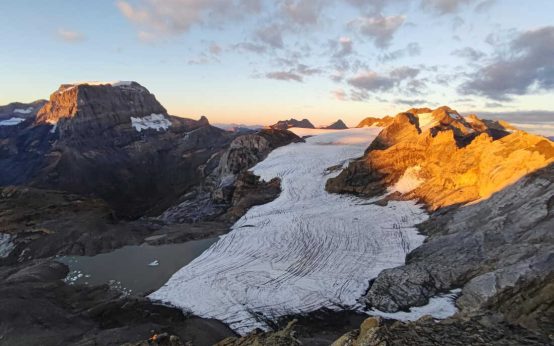 Swiss Glaciers Show Effects of Ice Loss Amid Global Warming
  Climate-Resistant Rock Glaciers: Hidden Water Resources
  Senators Reach Bipartisan Agreement on Permitting Reform
  Experts Warn of Critical Period for the Colorado River
  Future Cities: Ambitious Projects Aiming for Innovation and Sustainability
  Supreme Court Case Suncor vs. Boulder: Implications for Accountability in Climate Change