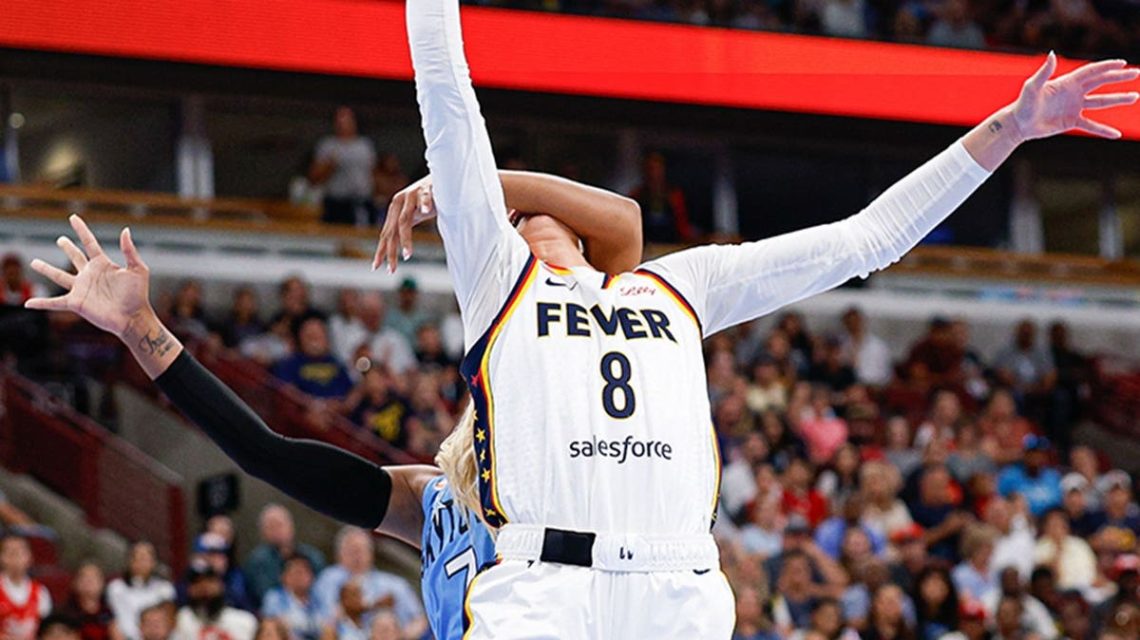
OutKick host Dan Dakich has criticized the WNBA and media for their handling of Caitlin Clark, a prominent player whose popularity he believes the league has failed to leverage after 30 years. Dakich highlights issues such as ‘petty jealousies, racism, and sexism’ that contribute to negative portrayals and inadequate support for Clark, a 24-year-old star. This, he argues, affects both Clark’s career and the sport’s growth potential.
Incident Sparks Controversy
On Saturday afternoon, Chicago Sky guard DiJonai Carrington was ejected for committing a Flagrant 2 foul against Indiana Fever guard Sophie Cunningham. Following her ejection, Carrington appears to have made a significant accusation. In a post on her Threads account, she referenced ‘WHITE PRIVILEGE @indianafever.’
Cunningham was fouled when Carrington struck her on the head during a layup attempt. Officials reviewed the situation and upgraded Carrington’s foul to a Flagrant 2, leading to her automatic ejection. Cunningham needed assistance from her teammates afterward, indicating her mouth was bleeding.
League Response and Allegations
The sequence of events suggests Carrington believed race influenced the decision, though she didn’t directly accuse referees of racism. By tagging the Indiana Fever, questions arise whether her claim involved the organization. This places the WNBA in a complex position. The league must decide to either penalize Carrington, which could upset other players and parts of the media, or take no action and risk perceptions of inconsistent racial standards.
The WNBA has maintained, as stated by Commissioner Cathy Engelbert to Congress, that its rules and disciplinaries are uniformly applied. Despite contacting various organizations, including the WNBA, the WNBA Players’ Association (WNBPA), and the Chicago Sky, OutKick received no clarification before their report was published.
Context Behind the Accusation
Accusations of officiating bias are common in sports. Players often feel unduly penalized, and supporters suspect referees favor opposing teams. Carrington’s ‘white privilege’ charge, however, introduces an implication that racial bias influences official calls. If this is what Carrington intended, more explicit evidence is necessary. Otherwise, a clarification could suffice.
Additionally, the broader conversation includes player Sophie Cunningham’s controversial stance opposing transgender competitors in women’s sports. This has caused rallies and counter-protests, making it possible Carrington’s message extends beyond the officiation.
Need for Clarity
The WNBA’s involvement in public discussions on social and political matters complicates reactions to Carrington’s public accusation. The WNBPA faces pressure to uphold its statement against any form of discrimination without exceptions.
Until official responses are provided, Carrington’s remarks, made during and presumably from within a game setting, remain open to interpretation.
 White Sox’s Pope Hat Promotion Shines Amid Playoff Push
  Phillies Edge Braves in 10th, Push Series to Game 3
  Arike Ogunbowale Sets Playoff Record as Dallas Wings Force Game 3
  Chicago White Sox Triumphs in 2026 Postseason
 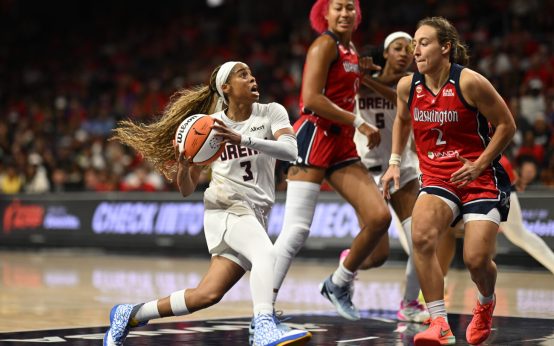 Atlanta Dream Defeats Washington Mystics to Advance in WNBA Playoffs
  MLB Wild Card Series: Drama Unfolds