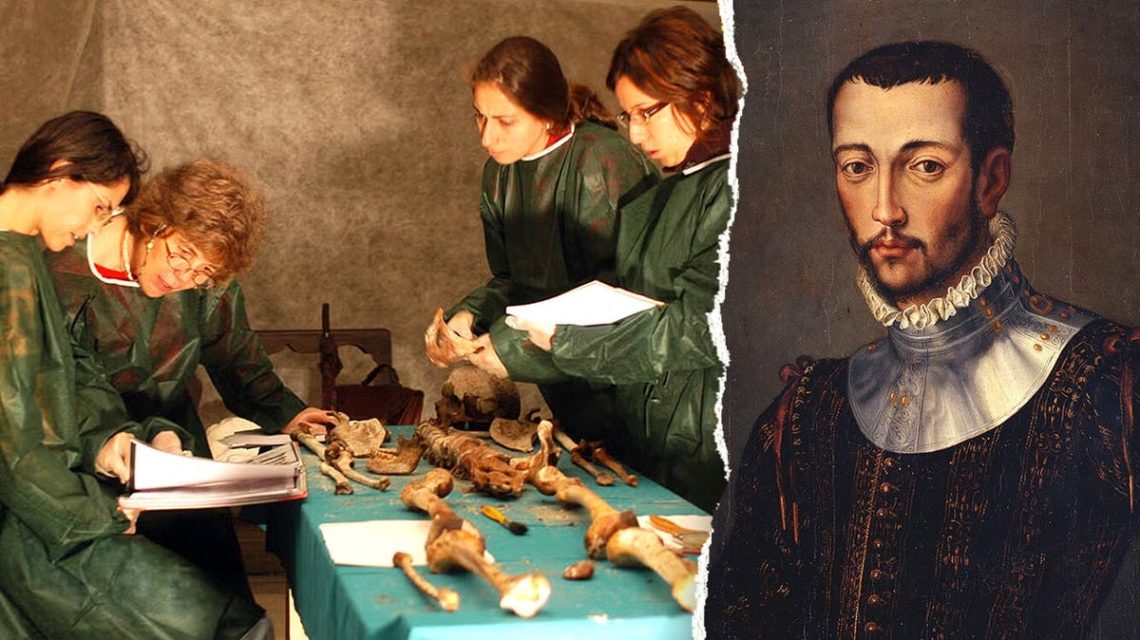
Researchers at Yale University have made progress on a mystery surrounding the death of a notable member of the Medici family. They believe they have identified the cause of death for Grand Duke Francesco I de’ Medici, an influential Italian ruler from the Renaissance period. The findings were published in the journal iScience.
Francesco I de’ Medici, who ruled Tuscany, died unexpectedly in 1587. Both he and his wife, Bianca Cappello, fell ill with intermittent fevers at a mosquito-laden villa, a situation that fueled rumors of poisoning.
To address these rumors, Yale researchers teamed up with paleopathologists from the University of Pisa. They analyzed DNA from the ribs of Francesco I de’ Medici and his younger brother, Giovanni de’ Medici. Giovanni had died of malaria 25 years earlier. Serena Tucci, an anthropology professor at Yale, led the study. Their research was highlighted in a university press release on June 30.
The team found genetic evidence of Plasmodium falciparum, known for causing the deadliest form of malaria, in the remains of Francesco I de’ Medici. This discovery challenges the earlier poisoning theory.
A unique strain of Plasmodium falciparum was also found in Giovanni’s bones. Additionally, molecular traces of P. falciparum and another species, P. malariae, were identified in Francesco’s remains.
Using historical specimens can not only help us understand our past better, but also it can help build a better future.
During the Renaissance, malaria was common in central Italy, but the lack of scientific evidence allowed poisoning theories to circulate. Historical records describe symptoms of malaria, then called “febbre terzana,” and common treatments like bloodletting, which often did more harm than good.
The findings provide tangible proof to counter centuries-old speculation that Francesco was poisoned. Tucci confirmed this to Fox News Digital, emphasizing that while poisoning cannot be completely excluded, malaria likely explains Francesco’s death.
Gisella Caccone, a senior research scientist at Yale and a study co-author, mentioned that similar genetic approaches could resolve other historical questions, provided clear hypotheses and appropriate genomic tools are available.
Ancient DNA can also contribute to understanding the evolution of malaria parasites. This knowledge could enhance control methods and models used today.
 Climate-Resistant Rock Glaciers: Hidden Water Resources
  California Voters to Decide on $7.5 Billion State Research Fund
  Ancient Pottery Unearthed During Roadworks in Tbilisi
  U.S. Space Academy Announcement
  The Need for New Strategies in Oregon’s Wildfire Management
  Plastic Pollution in the Great Lakes: A Growing Concern