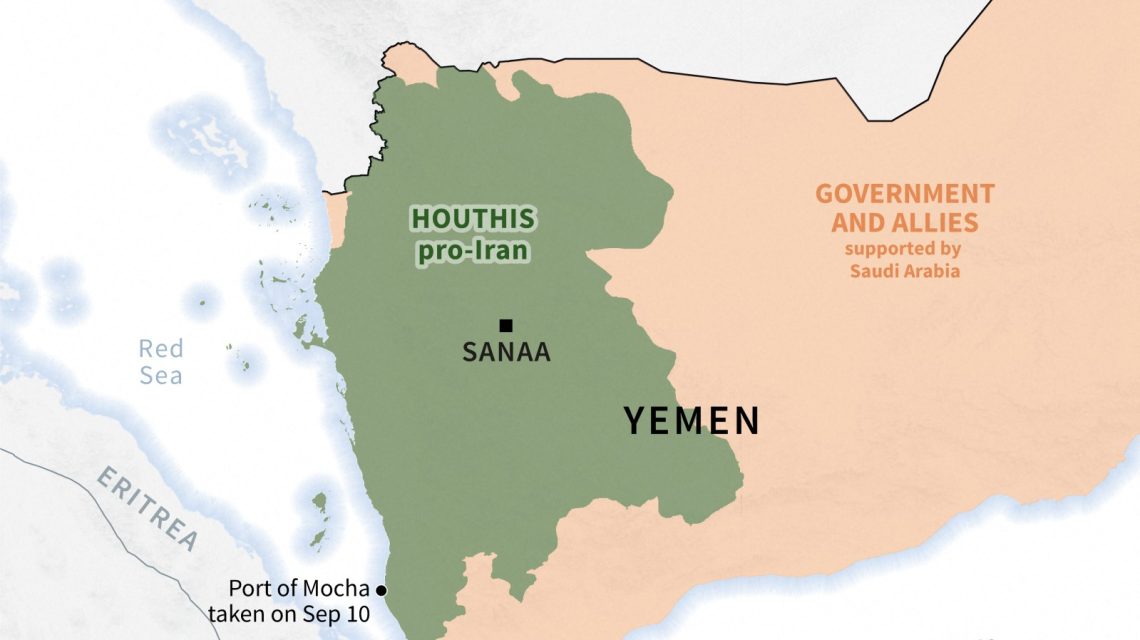
The Yemeni Ansar Allah movement, known as the Houthis, has captured control of Yemen’s Red Sea coast, a strategic area crucial for global shipping. This advancement places the Bab el-Mandeb Strait, a key maritime route between the Red Sea and the Gulf of Aden, under threat. At its narrowest, the strait is just 16 miles wide and has been previously vulnerable to Houthi attacks on global shipping.
With Saudi-backed Yemeni government forces retreating, a potential new blockade supported by Houthi missiles and drones could disrupt the flow of around 8.1 million barrels of oil per day. This accounts for about 10% of global maritime oil trade, increasing the strategic importance of the Bab el-Mandeb as an alternative route due to the Strait of Hormuz restrictions by Iran.
The Risk to Global Trade
Yemeni analyst Hisham al-Omeisy highlights that the Houthis do not need to fully close Bab el-Mandeb to cause disruption. Merely making it dangerous for shipping companies could increase insurance costs, force ships to reroute around Africa, extend delivery times, and ultimately raise prices.
This situation mirrors challenges in the Strait of Hormuz, with Iran applying pressure there as well. Together, these threats place dual pressure on maritime routes around the Arabian Peninsula.
Impact on Energy and Trade
The Bab el-Mandeb, before the conflict, facilitated about 30% of global container traffic according to Nitya Labh from Chatham House. Since Iran restricted the Strait of Hormuz, nations like Saudi Arabia have rerouted oil exports via the Red Sea, boosting its significance in energy markets. However, even overland routes face conflict-related risks.
Following Houthi attacks, damage reports emerged concerning Saudi Arabia’s east-west pipeline, crucial for oil transport. The escalating conflict not only endangers maritime routes but threatens to block the Suez Canal, potentially severing the last major shipping pathway in the Middle East.
Regional and Global Repercussions
The crisis could especially impact Saudi Arabia, already navigating threats from Iran and Iraq to the north and the Houthis from the south and west. The Houthis have intensified attacks on southern Saudi cities and critical infrastructure amid the ongoing conflict.
Saudi Arabia has historically intervened in Yemen since 2015, backing the exiled Yemeni government. Yet, the renewed conflict raises doubts about their allies’ ability to fend off Houthi advances.
The situation prompts global implications as trade routes shift, compelling vessels to resort to longer, costlier routes to bypass regions of conflict. This increases risks of piracy and accidents, ultimately adding time and cost to shipping, impacting consumer prices worldwide, and especially challenging small island economies dependent on imports.
Saudi Arabia’s Strategic Decisions
Faced with direct threats and potential loss of Yemeni allies, Saudi Arabia may assess whether to escalate military efforts to reclaim strategic points like Bab al-Mandeb. This escalation risks provoking significant Houthi retaliation, especially targeting energy infrastructure.
On the other hand, making concessions to the Houthis, like lifting a blockade, could enhance their strength long-term and leave allies exposed. Potential negotiations could pressure global acts, as ongoing conflicts threaten international trade stability.
The evolving situation underscores the complexity of Yemen’s conflict, highlighting its potential to reshape global energy routes and trade patterns with significant geopolitical ramifications.
 Incident on FlyDubai Flight Raises Security Concerns
  Journalist Gershkovich Discusses Wrongful Detention and Release in Russian Prisoner Swap
  Pakistan Airstrikes in Afghanistan: Civilian Casualties Reported
  Ukraine Converts APCs to Explosive Devices in Donetsk Offensive
  Dutch Review Board’s Euthanasia Ruling and International Debate
  Israeli PM Commends Heroic Actions in Flight Emergency