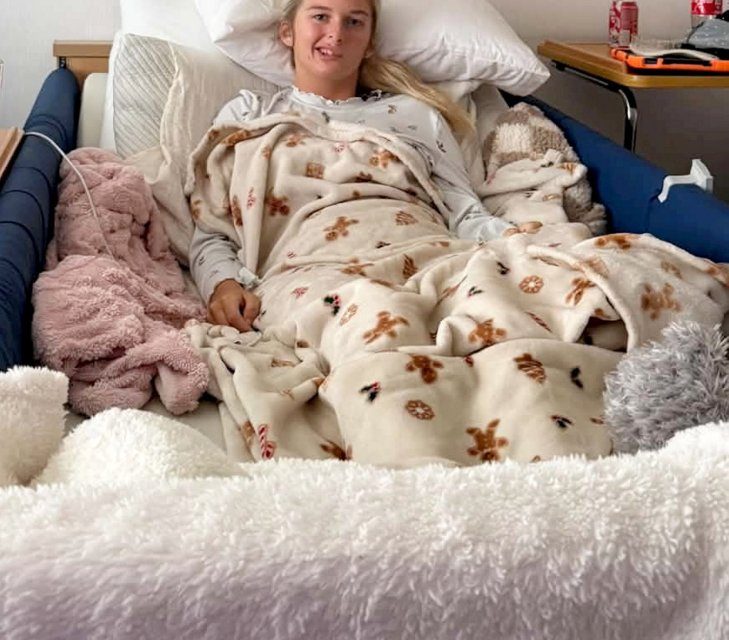
A young woman, Lillie Thorne, 22, from Barrow-in-Furness, Cumbria, experienced a sudden and drastic change in her health. Previously fit and engaged in everyday activities, Lillie woke up one day to find that the left side of her face was paralyzed. Days later, she lost her ability to speak and walk.
Lillie’s condition was initially diagnosed as Bell’s palsy at the Furness General Hospital. This condition typically involves temporary facial weakness. She was prescribed steroids and discharged but returned the following day after beginning to slur her words. This prompted further medical checks, including a CT scan, which ruled out a stroke. Doctors considered Ramsey Hunt disease and administered antiviral medication. However, her condition worsened, leading to her hospitalization.
Following extensive investigations, doctors diagnosed her with Functional Neurological Disorder (FND). According to the NHS, FND affects the way the brain receives and sends information throughout the body. It is estimated to affect between 50,000 and 100,000 people in the UK, as per FND Action.
Despite being discharged on October 22, Lillie still faces challenges. She suffers from multiple seizures daily and still struggles with her speech. While she has regained some ability to speak, her words are often slurred, and she stutters. Lillie cannot walk and has been referred for physiotherapy. Doctors are uncertain about the cause of her FND but suggest it might be a stress-related side effect.
Lillie’s family has launched a crowdfunding campaign to cover costs for private treatment. They aim to consult specialists in Leeds, as she doesn’t qualify for specialized services under the NHS threshold. The funds will also cover travel and other treatment-related expenses.
Lillie is currently staying with her grandparents, supported by her family and boyfriend. Her aunt, Ashleigh Thorne, has expressed the emotional toll on the family. They hope the treatment will aid in restoring Lillie’s mobility and independence.
FND treatment focuses on retraining the nervous system and brain. However, there are currently no regional funds allocated for specialist centers, adding to the family’s challenge. The funds raised will support private consultations and rehabilitation initiatives, aiming to help Lillie regain as much normalcy in her life as possible.
 The Future of MAHA in American Health Politics
 Insulin Cost Caps Gaining Support Amid Rising Prices
 A Personal Journey Through Encephalitis
 Low-Cost Medication May Benefit Stroke Survivors
 The Complex Debate Over Kratom Use in the U.S.
 Florida’s Struggle with Dengue Fever and AI Solutions