California’s Central Valley stands as one of the United States’ most productive agricultural areas. The region benefits from highly fertile soil, a sunny climate, and a vast network of irrigation canals and reservoirs that enhance agricultural productivity. However, the impacts of climate change, intensifying droughts, and stricter water regulations have led to reduced water availability for farmers across the valley. There are now additional restrictions on groundwater pumping, forcing farmers to leave significant stretches of land fallow.
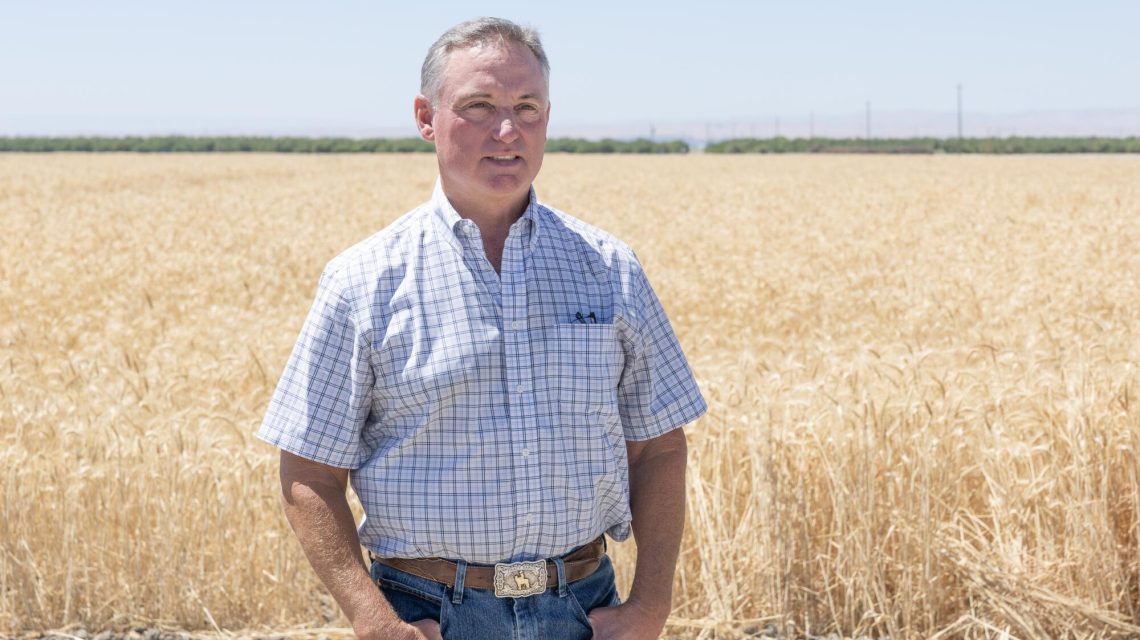
Amidst these challenges, some farmers are considering an unexpected solution: solar energy. Todd Tracy, a farmer with deep roots in the area, has started converting a sizable portion of his farm to solar energy. Tracy’s operation, located in Buttonwillow roughly 30 minutes from Bakersfield, involves leasing nearly one-third of his family’s 8,600 acres to solar developer Avantus. The developer is planning the nation’s largest solar-plus-storage venture, called Buttonbush, spanning nearly 12,000 acres to produce two gigawatts of electricity, which could power a million homes.
Tracy explained that initially, his family had reservations about transitioning to solar. The farm, which produces diverse crops such as cotton, corn, wheat, and carrots, lies adjacent to extensive unutilized land due to water shortages. The Tracy family relied on water transported from Northern California and groundwater, both of which had seen supply reductions over several years. With regulatory demands under California’s Sustainable Groundwater Management Act leading to even more restrictions, some farmers may experience significant reductions in water allocation. In Tracy’s region, projections suggest a 30% reduction by 2040.
Buttonbush’s solar initiative received approval from Kern County in March and involves about 18 farmers within the Semitropic Water District and neighboring areas. Waiting for the developer to take action, Tracy anticipates the project’s execution soon. Caitlin Peterson from the Public Policy Institute of California highlights the predicament that growers in such water-stressed settings face, with solar energy representing one viable path, given its profit potential.
The state of California has legal mandates to achieve 100% clean energy by 2045, requiring an additional 10 gigawatts of renewable energy generation annually. Converting unused farmland in the Central Valley provides a practical means of contributing significantly toward these clean energy objectives.
Even though local sentiment towards solar energy was skeptical not long ago, priorities have shifted. An example is Westlands Water District, the Central Valley’s largest agricultural water district, which recently approved the conversion of a significant land area into a solar network. Half of this land is unsuitable for agriculture, suffering from issues such as high salinity or instability. Some years back, such a conversion was unimaginable, but conservation and adaptive strategies have become necessary given the restricted availability of water. Support for solar initiatives has grown, with organizations recognizing that renewable installations can occupy these inactive lands, with potential for reverting to agriculture after their lifecycle.
Yet, not all farmers are convinced, partly due to existing legislation, such as the 1965 Williamson Act, which offers tax incentives for keeping farmland agricultural. Implementing solar projects can incur penalties for breaking these agreements. However, groups like the Kern County Farm Bureau have notably shifted towards supporting legislative efforts that minimize penalties for transitioning land to solar, reflecting evolving attitudes in response to the region’s water crisis.
The Westlands Water District urges enhanced transmission infrastructure in the Central Valley. With this improvement, the development of significant solar complexes may commence in the coming years.
 Senators Reach Bipartisan Agreement on Permitting Reform
  Experts Warn of Critical Period for the Colorado River
  Future Cities: Ambitious Projects Aiming for Innovation and Sustainability
  Supreme Court Case Suncor vs. Boulder: Implications for Accountability in Climate Change
  Hawaii Faces Impact of Record El Niño Through Recent Hurricanes
  Efforts to Save the Endangered American Red Wolf