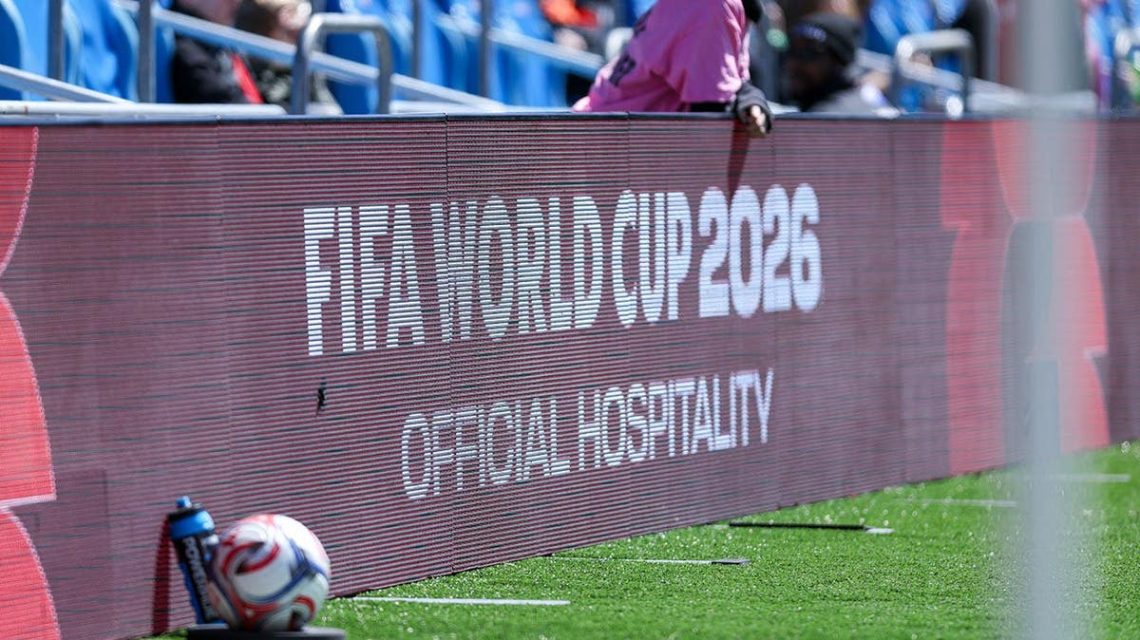
The countdown to the FIFA World Cup 2026 is underway as anticipation builds for the global soccer event. On ‘Fox & Friends,’ former USMNT Midfielder Stu Holden joined live from Audi Field to discuss the Capitol Cup congressional soccer match. He highlighted the increasing excitement for soccer in the United States and discussed the national team’s underdog prospects in the World Cup. Afterward, he participated in a penalty-kick challenge.
FIFA has implemented new rules for match days across the United States, Mexico, and Canada, which are stricter than those for regular sporting events. With the first match only a week away, FIFA has banned refillable plastic water bottles inside stadiums. This adjustment marks a departure from initial guidelines that allowed such bottles when weather conditions justified their use. Regardless of the circumstances, FIFA’s current stance is against any bottles.
FIFA communicated to Reuters that the ban on water bottles is aimed at protecting the health and safety of everyone involved, from players to fans and staff. The organization cited potential risks and injury prevention as reasons for this decision. This new regulation contradicts previous commitments made to Free Lions, a traveling fan embassy supporting England’s national squad. FIFA had assured access to free water and allowed fans to bring their own bottles. Free Lions expressed their concerns on social media, displaying graphics that confirmed the allowance of refillable bottles.
As FIFA applies existing stadium rules, concern remains over hot summer conditions. This is especially relevant after last year’s scorching Club World Cup final at MetLife Stadium, now rebranded as New York/New Jersey Stadium. Despite the bottle ban, FIFA had promised solutions to cope with extreme heat, including shaded areas, misting systems, and expanded water distribution. It’s uncertain whether these measures are still planned for the tournament.
Fans and players alike will face heat-related challenges. Players will benefit from mandatory three-minute cooling breaks during matches, ensuring protection against heat exhaustion. Evening matches and facilities like domed stadiums should offer some relief. However, the final, scheduled for July 19 at 3 p.m. ET in East Rutherford, New Jersey, will coincide with peak daytime temperatures.
 Dan Fouts Reflects on Violent Football Incident
  Dodgers Begin NLDS Against Braves: Key Details and Roster Decisions
  High School Football Tensions Flare in Central Florida
  Indiana Fever’s Tumultuous Season and the WNBA’s Cultural Storm
  Chicagoland High School Football Teams Results in Week 7
  Northwestern Debuts New Ryan Field with Victory Over Penn State