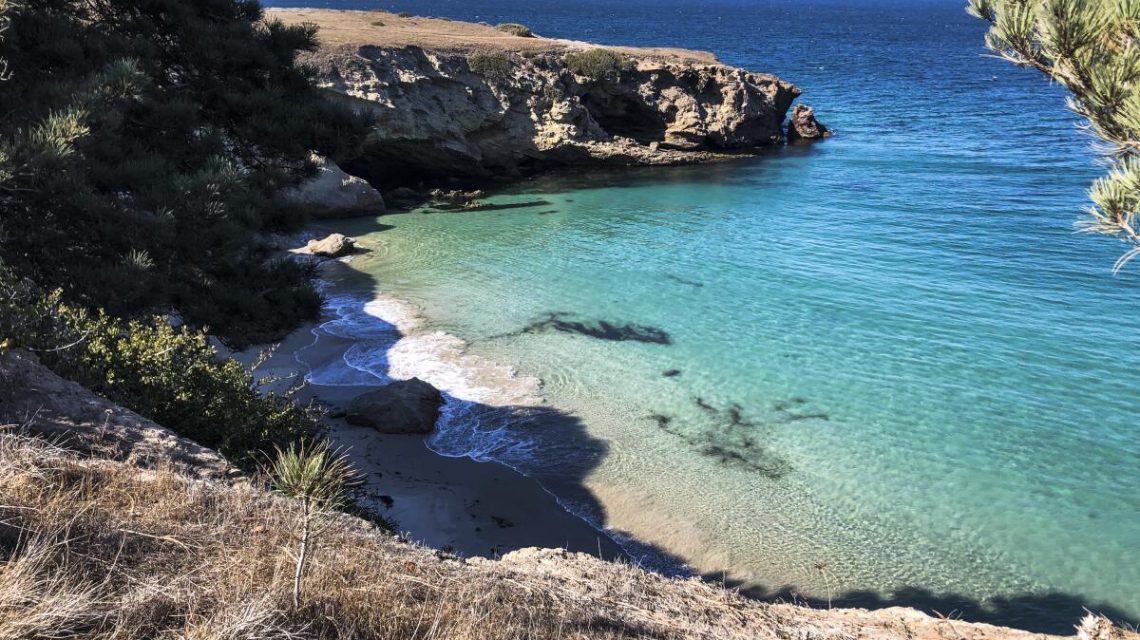
When news broke that Santa Rosa Island was engulfed by flames, it brought with it a deep sadness. The island, off the coast of Santa Barbara, is known for its unique species. These include small foxes and rare pine trees. To me, the loss was personal. I had visited the island during a backpacking trip five years ago. My journey took me through much of the area now affected by the fire.
My first campsite near Ford Point was a memorable spot. There, a massive elephant seal startled me awake one night. Despite the disruption, seeing the immense creature was worth the experience. Sadly, the fire also impacted a grove of endangered Torrey pines. This was where I had enjoyed views of the island’s stunning blue waters. Additionally, the fire reached Water Canyon Campground. This site was where I had my last comfortable night after days in the wilderness.
Now, the island’s enchanting presence is obscured by fear. As a wildlife reporter, I worry for its inhabitants. While the fire is fully contained now, it burned through a third of the island over three weeks. The U.S. Coast Guard initially suggested a shipwrecked sailor may have started the blaze while signaling for help.
Santa Rosa Island is part of the Channel Islands National Park. Known as the “Galapagos of North America,” the islands host exclusive flora and fauna. Fires of this magnitude are uncommon. Its ecosystems did not evolve with such threats.
Current insights from fire officials and scientists reveal uncertainties. The extent of the fire’s impact and the timeline of recovery remain unclear. Specialists will soon assess the condition of the island. Until then, experts can only speculate. Heather Schneider, conservation director at Santa Barbara Botanic Garden, shared insights on this. The island’s endangered Hoffmann’s slender-flowered gilia may have been severely affected. But seeds from previous years may assist its recovery under favorable conditions.
There is some good news. Reports suggest that the Torrey pines have mostly survived. The campground remains relatively intact, offering some relief. Certain areas such as the South Point Light Station were spared. Greg Pauly, curator of herpetology at the Natural History Museum of Los Angeles County, highlighted the interconnected web of life. Recovery challenges extend beyond surviving the fire.
Pauly notes unique factors influencing the island’s recovery. High clay content in the soil may have protected some animals. The fire might lead to a scarcity of prey for predators like snakes. Non-native grasses present a threat as they can overshadow native plants post-fire. Pauly shared observations about past significant changes shaped by human actions.
While daunting, Pauly’s insights offer solace. Change is constant. Santa Rosa, in its current crisis, continues evolving. Memories of my visit serve as a snapshot in time. Though change can be disruptive, the island’s resilience is remarkable.
Efforts to support recovery have already begun. Institutions like Santa Barbara Botanic Garden hold seeds of rare plants. They are prepared to aid recovery if necessary. Conservation groves for Torrey pines are now in place. The Channel Islands National Park Foundation is ready to provide financial support.
If I return to Santa Rosa, I aim to greet it in its new form. The island’s transformation is inevitable. Embracing it will honor its incredible journey.
 Supreme Court’s New Term Tackles Climate Liability and Key Legal Battles
  Tick Crisis on Martha’s Vineyard: A Growing Health Threat
  Colorado’s Emissions Regulation and Its Broader Implications
  The Threat of Melting Glaciers: A Call to Action
  Collapse of Hawai’i’s Hōlei Sea Arch Amidst Storms
  Los Angeles Faces Uncommon Heatwave in October