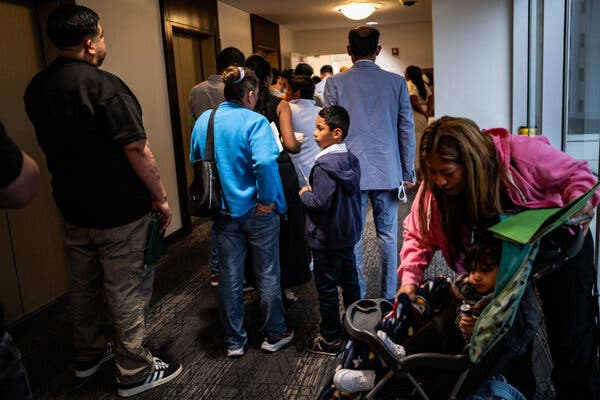
Federal authorities have initiated a rapid increase in case management within immigration courts, doubling or even tripling caseloads in some instances. This move is aimed at expediting the processing of asylum and other claims.
This acceleration seeks to hasten deportations, implemented without any official announcement from the Trump administration, leading to confusion and concern among immigration lawyers and court officials. The increase in cases is evident across many courts in the U.S., sparking fears that the fast-tracking system may infringe upon due process rights.
At courthouses in Annandale and Sterling, Virginia, significant logistical challenges were observed with overflowing courts and doubled caseloads. Reports indicate crowds waiting for hearings, including numerous unaccompanied minors in Annandale. In Chicago, court premises were congested with families, and cases were often grouped together, creating clusters of more than two dozen people appearing at once.
In New Orleans, one courtroom saw its cases swell to over 200 within two days. Typically, judges in that court handle approximately 30 to 40 cases daily, but the surge led to overcrowded dockets. Due to these conditions, attorneys aiming to observe proceedings faced difficulties gaining entry.
Federal representatives advocate that the increased pace of proceedings could help reduce backlogs that have historically delayed asylum and immigration relief claims for extended periods. They argue that the existing slow process encourages individuals to come to the U.S. and submit potentially weak or unfounded claims.
 Phil Collins Criticizes Trump, Talks Unwritten Song about America
  Byron Donalds Targets Black Voters in Florida Governor Race
  Brazil’s Presidential Race Heads to Runoff
  Sen. Thom Tillis Criticizes Trump’s Administration in New Book
  Controversy Surrounds Steve Hilton’s Campaign Ad Amid Gubernatorial Race
  Trump Calls for Probe into Alleged ‘Paid Protesters’