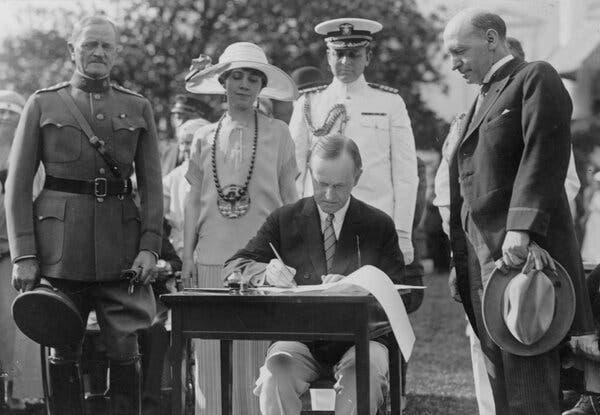
In 1924, the United States Congress sent a strong message to the world by limiting immigration. This move came during a time of social and economic unrest. Quotas were set to restrict immigration from countries like Italy, Poland, and Russia, and immigration from Asia was almost entirely banned. The total number of immigrants permitted annually was capped at 150,000, challenging the vision of America as a refuge for the oppressed, famously depicted in Emma Lazarus’s poem.
Representative Albert Johnson, from Washington, stated that the U.S. needed to stop functioning as an asylum. Historians observe that similar trends are visible today. President Trump has intensified border controls using executive powers rather than congressional legislation.
Utilizing administrative actions supported by the Supreme Court, President Trump has significantly cut back on various immigration forms. Asylum at the southern border has been halted. Deportation protections for individuals from countries affected by disasters and conflicts have been removed. Refugees have been largely blocked, except for a few white South Africans. Immigration from certain parts of the Middle East and Africa has been virtually stopped.
Efforts have been made to limit green cards for those perceived as dependent on government benefits. Additionally, hundreds of thousands have been deported, and others have been encouraged to leave voluntarily under the threat of being sent to unsafe third countries.
 Activists Push for Nationwide Ban on Child Marriage in the U.S.
  Democratic Hopes and Historical Warnings in 2026 Senate Race
  Republicans Face Challenges Amidst Cost of Living Concerns
  A Different Kind of Fall for Congress This Year
  Cornel West and Sean Hannity Discuss Differences on Podcast
  Trump Unveils AI-Powered America.gov Platform