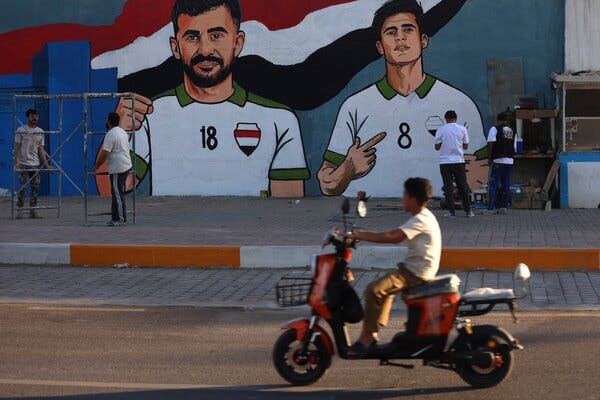
As the World Cup approaches, participants and fans are facing challenges due to restrictive immigration policies in the United States.
Listen · 7:11 min
Recently, Iraqi soccer player Aymen Hussein was briefly detained by U.S. immigration officials before being allowed to enter the country for the World Cup. A mural near Baghdad depicts him in his No. 18 jersey.
Iraq’s national soccer team landed at Chicago’s O’Hare airport, ready to compete in the World Cup for the first time in 40 years. However, Hussein’s participation was uncertain for a few hours as immigration officials questioned him while his teammates proceeded to their base camp. He was cleared after several hours.
The situation was different for Omar Abdulkadir Artan, a Somali referee. Artan, part of an elite group of about 50 World Cup referees, faced detention and deportation, highlighting the impact of U.S. immigration policy on the event.
Artan was questioned, placed in a holding cell, and then deported. These incidents have focused attention on U.S. immigration and border policies, tightened under the Trump administration, just as the country is set to host the World Cup.
Immigration issues are presenting obstacles on the eve of the tournament, which was awarded to North America in 2018 with promises of inclusivity. Concerns over entry restrictions into the United States have been longstanding and were minimized by soccer’s governing body, FIFA.
In February, FIFA’s president, Gianni Infantino, claimed the entry process would be smooth, aligning with his position as a friend of President Trump.
 Dan Fouts Reflects on Violent Football Incident
  Dodgers Begin NLDS Against Braves: Key Details and Roster Decisions
  The Threat of Melting Glaciers: A Call to Action
 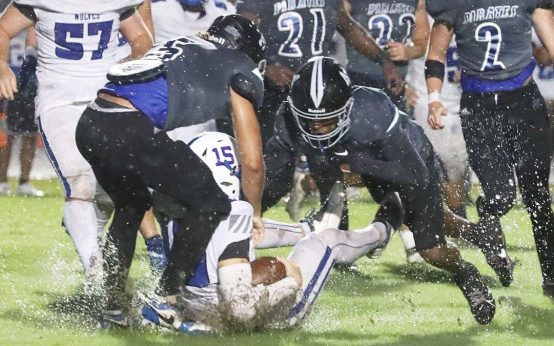 High School Football Tensions Flare in Central Florida
  Indiana Fever’s Tumultuous Season and the WNBA’s Cultural Storm
 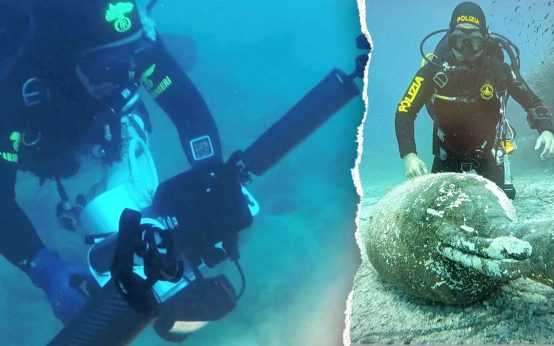 Police Discover Ancient Roman Artifacts Off Sardinian Coast