In a silent night, Southern California was jolted by an earthquake. The ground shifted, waking millions and destroying buildings. A magnitude 6 quake near North Palm Springs disrupted the California Aqueduct, spilling over a billion gallons of water into an ancient desert lake bed. This quake, which occurred on July 8, 1986, is not as infamous as others like Northridge or Loma Prieta, though it ignited a series of tremors shaking Southern California for nearly a decade. It was a reminder of seismic activities that younger generations haven’t experienced.
Seismic Activity Concerns
California’s larger cities haven’t faced major earthquakes in over 25 years, but experts warn this luck won’t persist. Seismologist Lucy Jones, a Caltech research associate, points out that many have grown up thinking of these quieter times as normal. Safety improvements have occurred, yet progress varies. While Los Angeles mandated retrofits for certain structures, it has not required inspections for vulnerable steel skyscrapers. Conversely, some Inland Empire locations on the San Andreas fault have not addressed old brick buildings that could endanger lives during a quake.
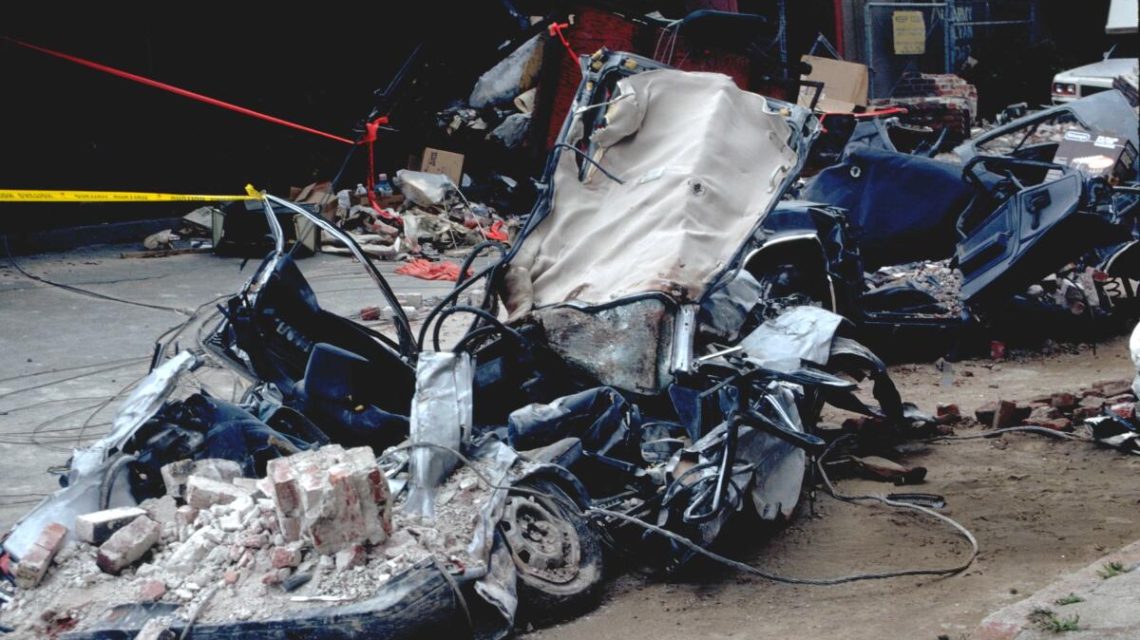
A brick building partially collapsed in San Francisco during the 6.9 magnitude Loma Prieta earthquake. The building’s wall fell on a parking lot, resulting in five deaths.
Updating the ShakeOut Scenario
Given these inconsistences, scientists plan to refresh the ShakeOut scenario, forecasting results of a hypothetical magnitude 7.8 earthquake on the San Andreas fault. Introduced in 2008, ShakeOut projected over 1,800 fatalities, 50,000 injuries, and $200 billion in damages.
“We’ve made progress, but more remains to be done,” said Jones, who leads the ShakeOut project.
Jones aims to update ShakeOut with recent funding. It’s crucial to understand that a significant earthquake, while uncertain in timing, will happen eventually. The extent of its devastation relies on proactive measures today.
The ShakeOut report emphasizes the difference between a disaster and a catastrophe. A catastrophe occurs when a society is unprepared for disruptions that follow a disaster, with long-lasting impacts.
An updated scenario could predict a massive urban fire, significantly larger than previous fires. In 2008, Southern California faced vulnerability to major fires due to quake-related water losses. One scenario describes simultaneous fires across multiple regions, resulting in nearly 900 fatalities and $90 billion damages.
Jones noted, “A fire of that magnitude has immense public health consequences.”
California’s History of Earthquakes
While California is known for earthquakes, its frequency is lower compared to regions like Japan or New Zealand. Yet, it can experience significant quakes. The last major quakes in Southern and Northern California were in 1857 and 1906, respectively. The 1986 North Palm Springs quake marked the start of significant seismic activity:
- 1987: 5.9 magnitude Whittier Narrows quake killed eight.
- 1989: 6.9 magnitude Loma Prieta quake in Northern California left 63 dead.
- 1990: 5.5 magnitude quake in Upland, followed by a deadly 5.8 Sierra Madre quake in 1991.
- 1992: 7.3 magnitude Landers quake, followed by a 6.5 Big Bear quake.
- 1994: 60 people died in the 6.7 magnitude Northridge quake, with damages around $40 billion.
Several powerful quakes shook Southern California over the past 30 years:
- 1999: 7.1 Magnitude Hector Mine quake.
- 2010: 7.2 Easter Sunday quake in Baja California.
- 2019: 7.1 Ridgecrest quake.
These quakes, although significant, were mostly in areas far from metropolitan Los Angeles, limiting social impacts.
Prepare for Future Quakes
- Consider retrofitting your home.
- Discuss earthquake safety with your family.
- Prepare an emergency kit for your pets.
- Understand California’s earthquake risks.
- Follow guidelines and checklists for preparedness.
 The Threat of Melting Glaciers: A Call to Action
  Collapse of Hawai’i’s Hōlei Sea Arch Amidst Storms
  Los Angeles Faces Uncommon Heatwave in October
  Drought Drives Black Bears Closer to Human Activity
  Atlantic Ends September Without a Hurricane for First Time Since 1994
  Bobcat Sightings and Conservation Efforts in Illinois