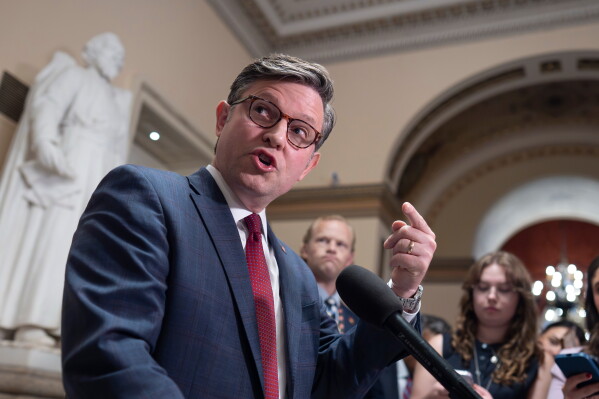
President Donald Trump announced his intention to nominate Jay Clayton, a former Chairman of the Securities and Exchange Commission and the current U.S. Attorney for the Southern District of New York, for the position of Director of National Intelligence. The announcement was made via social media amidst congressional pressure to appoint a permanent successor to Tulsi Gabbard, who resigned the previous month.
Trump had faced considerable opposition for initially appointing Bill Pulte, the head of the Federal Housing Finance Agency, as the acting director. This decision led to a congressional standoff, with Democrats threatening to block the renewal of key foreign intelligence powers unless Pulte’s nomination was retracted and a permanent candidate appointed.
In a statement, Trump emphasized Clayton’s high standing within the legal community, urging the Senate to confirm him promptly. Trump expressed a desire to keep Pulte in an interim capacity briefly, underscoring both Pulte’s role in downsizing the office and Clayton’s impressive credentials.
As U.S. Attorney in Manhattan, Clayton has overseen a range of significant cases dealing with espionage, terrorism, securities fraud, and public corruption. His approach has been noted for not clashing with federal judges, unlike some of his counterparts. Clayton began his tenure following an interim period, during which several prosecutors resigned under allegations of undue pressure in handling a case against NYC Mayor Eric Adams.
Although his tenure faced controversy, including the controversial dismissal of prosecutor Maurene Comey, Clayton’s office has been involved in high-profile investigations, including the release of thousands of documents related to the late Jeffrey Epstein and Ghislaine Maxwell.
Clayton’s office has also played a role in prosecuting former Venezuelan President Nicolás Maduro and his wife, Cilia Flores, on drug trafficking charges. With national security a central aspect of Clayton’s responsibilities, his office has handled various cases reflecting global terrorism threats.
Clayton referenced international threats during a recent press briefing, highlighting the intentions of foreign governments and organizations hostile to the U.S. While reaffirming his stance against these threats, he pointed to ongoing actions as evidence of malicious intent from adversaries.
Previously, efforts to appoint Clayton as U.S. Attorney for Manhattan were halted, resulting in Audrey Strauss’s appointment after Geoffrey S. Berman agreed to step down. Berman’s departure followed reassurances regarding ongoing investigations into Trump allies and a Turkish bank.
Senate Majority Leader John Thune revealed that Clayton’s nomination paperwork might be received swiftly, with plans for an expeditious confirmation process.
Connecticut Representative Jim Himes, a leading Democrat, expressed that Clayton’s selection could have prevented political disputes, praising his intelligence, temperament, and dedication to public service. However, Senate Democratic Leader Chuck Schumer maintained that Pulte must not remain in the role, emphasizing the importance of the position of the Director of National Intelligence.
 The Trump Team’s Challenge to the Military Leadership
  Maryland First State to Restrict Electronic Pricing in Grocery Stores
  Activists Push for Nationwide Ban on Child Marriage in the U.S.
  Democratic Hopes and Historical Warnings in 2026 Senate Race
  Republicans Face Challenges Amidst Cost of Living Concerns
  A Different Kind of Fall for Congress This Year