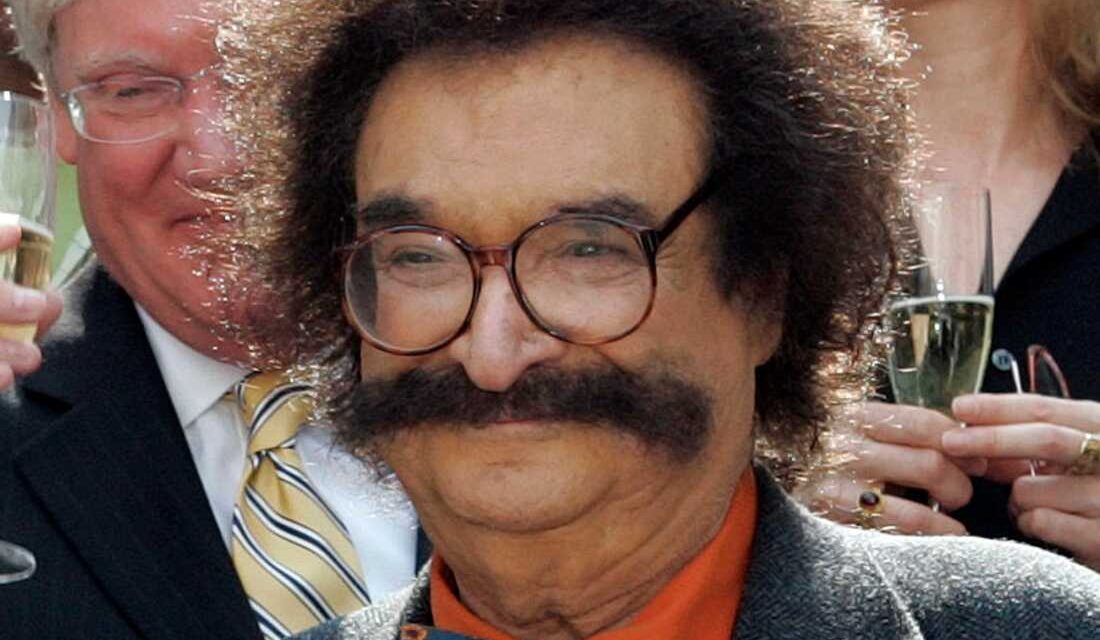
Gene Shalit, a movie critic and arts reporter for the “Today” show spanning over four decades, passed away at the age of 100. Known for his distinctive appearance with puffy hair and an oversized handlebar mustache, Shalit was beloved for his witty comments and humorous puns. His family announced that he “passed away peacefully today after 100 years of an amazing life.”
Career in Television and Film Criticism
Shalit began his career with “Today” as a contributor in 1970 and became the arts editor by 1973. He was well-known for his segment “Critic’s Corner,” where his jovial nature and keen insight entertained viewers. When he left the show in 2010, he was one of the last prominent film critics on major television.
“What resonated above his unusual appearance was his incredible wit, his remarkable intelligence. But he didn’t pound you over the head with it. He amused you,” said Guy Ludwig, Shalit’s longtime producer.
The critical landscape of television changed with Shalit’s entrance. His work with “Today” shifted the power from print media to television. This shift was evident when other critics, like Roger Ebert and Gene Siskel, gained national attention with similar programs.
Early Career and Rise to Fame
Gene Shalit’s career began in magazine journalism. He was a columnist for McCall’s magazine and a senior film critic for Look magazine by 1968. His work in magazines eventually led to an opportunity with NBC.
Ludwig recounted an amusing story of Shalit’s first meeting with NBC executives. They were taken aback by his appearance, which was quite different from the standard TV personas of the time. NBC was unsure how audiences would react to someone with Shalit’s unique looks.
Shalit had a balanced approach to critiquing films. He focused on maintaining plot secrets to enhance viewer experience. He was known for statements like, “I just don’t give away the story.” This philosophy kept his reviews engaging for audiences who valued plot surprises.
Memorable Reviews and Style
His reviews often included clever wordplay, such as calling “Frozen” “very cool” or referencing “The Men Who Stare at Goats” with “heard to bleat.” His wordplay and humor became hallmarks of his reviews.
Not all his opinions were without controversy. He faced criticism from GLAAD for labeling a character in “Brokeback Mountain” as a “sexual predator.” Although he apologized, the incident highlighted the cultural sensitivity of film critique.
Shalit’s interviews with guests were often lively and filled with humor. In a memorable interaction with John Belushi, he probed Belushi on various personal topics, showcasing his knack for engaging with guests in unexpected ways.
Impact and Legacy
Over the years, Shalit worked with renowned anchors like Barbara Walters, Katie Couric, and Tom Brokaw. Despite occasional criticism of his reviews and interviews, Shalit maintained a significant influence in film criticism on TV.
An unfortunate accident in 1994 in Florida resulted in Shalit being hit by a car, breaking his leg. This incident led “Today” to record his reviews from his home studio, which continued until his departure in 2010.
Personal Life and Contributions
Born in New York and raised in Morristown, New Jersey, Shalit began writing at a young age. He pursued his education at the University of Illinois, graduating in 1949.
He contributed to literature as well, editing the book “Laughing Matters: A Celebration of American Humor.” This work aimed to introduce readers to masters of humor, such as Mark Twain and James Thurber.
His unique persona made him a subject of parody on shows like “Saturday Night Live.” Shalit also made appearances on “Sesame Street,” “Family Guy,” and “SpongeBob SquarePants.” He leaves behind a daughter, Willa Shalit.
 Operation Mincemeat: A Theatrical Review
  Cornel West and Sean Hannity Discuss Differences on Podcast
  Hollywood Executive Praises Trump’s Efforts to Revitalize the Entertainment Industry
  Zoe Kazan’s Journey with ‘East of Eden’
  Pete Davidson Criticizes NYC Mayor Zohran Mamdani Over BQE Construction
  Chris Hansen Criticizes Hollywood’s Portrayal in ‘Primetime’