
The European Union will soon implement new regulations concerning irregular migration and asylum seekers, known as the European Migration and Asylum Pact. These changes follow years of complex negotiations aimed at replacing a previous system perceived as ineffective. The overhaul provided far-right political parties with a strong issue to attract votes.
While all 27 EU member states were expected to prepare for the Friday implementation by updating laws, training employees, and enhancing border infrastructure, the European Commission acknowledges that no member is completely ready. European Commissioner for Migration, Magnus Brunner, praised the pact as a milestone. However, he emphasized, “it is only the beginning and not the end.” Various human rights organizations caution that the new rules could create additional challenges for asylum seekers attempting to find safety within the EU.
Screening and Fast-Tracking Border Procedures
The forthcoming regulations will require foreign nationals to undergo border screening procedures for up to seven days before admission under a unified process. Hans Leijtens, Executive Director of Frontex, Europe’s border security and coast guard agency, noted, “The pact turns 27 different ways of doing things into one.”
Individuals considered a “security threat” or from nations categorized as “safe” will face expedited asylum protocols, reducing the waiting period from six months to three. Some may remain at the border during case processing, with only one opportunity to appeal if rejected. The European Commission noted that certain countries need to integrate a new biometric system, Eurodac, geared toward registering individuals, including children starting at age six. More states need to establish facilities for screenings, asylum processing, and detentions. Independent rights monitoring at borders also requires enhancement.
Efficient Return of Rejected Asylum Seekers
A key component of the new pact involves swiftly facilitating voluntary and forced returns of unsuccessful applicants, through automatic issuance of return orders after rejection. This is a major political priority for the center and far-right leaders who gained power in 2024 throughout the EU.
Rejected asylum seekers will be returned to countries deemed secure, such as Syria and Bangladesh. The European Agency for Asylum reported about 802,000 pending first-time asylum applications as of March. EU member states, in collaboration with lawmakers, are also working to establish “return hubs” in third countries for individuals who cannot be repatriated. Ongoing negotiations involve a group of five nations exploring deportation centers with overseas partners.
Distributing Responsibilities Among Member Nations
Responsibility-sharing for asylum seekers has been a contentious issue dividing EU countries, particularly in crisis scenarios. Under existing rules, asylum applications must be filed in the first EU country entered, placing a heavy burden on nations such as Greece and Italy. These frontline states have often allowed migrants to proceed to northern and western European countries, like Germany and Sweden, which then experienced surges in asylum applications.
The new pact aims to cultivate solidarity among border countries and ensure they are not left to manage alone. Other EU countries are tasked with accepting a share of asylum seekers or offering financial compensation. Nations can adjust their share through secondary movements—where migrants enter one country and proceed to another.
However, not all states welcomed the solution. Poland suspended the right to asylum, citing migration weaponization by Belarus. Hungary’s Prime Minister, Péter Magyar, continues to uphold his predecessor Viktor Orbán’s strict immigration policies, denying acceptance of migrants.
Pact’s Gradual Implementation
Although the commission acknowledges ongoing efforts post-June 12, complete readiness among nations is still lacking. Susan Fratzke, Senior Policy Analyst with the Migration Policy Institute, remarked, “It won’t be like a light switch turning on June 12. Some of these things will take time.”
The ambiguous nature of implementation poses issues, according to Susanna Zanfrini, Director of the International Rescue Committee’s Italy office. She stated that such ambiguity “creates uncertainty for both people seeking protection and the organizations supporting them at the very moment they most need clear information about their rights, options, and access to support to survive, recover and rebuild their lives.”
Criticism from Human Rights Groups
Human rights groups object to the new regulations, arguing that they compromise the right to asylum by expediting assessments. Critics suggest that rapid procedures promote racial profiling and deny international protection to applicants with valid claims, while anticipating an increase in prolonged detentions at EU borders.
Judith Sunderland, Senior Refugee and Migrant Rights Adviser at Human Rights Watch, asserted that the new pact “slams the door in the face of people who deserve to be treated with dignity and to have a fair hearing of their claims for protection.” Lukas Gehrke, Head of the International Organization For Migration in Brussels, stated that while the EU is intensifying deportations, it should also bolster integration programs for the millions permitted to stay legally within the bloc.
Hadjicostis reported from Nicosia, Cyprus, and Brito from Barcelona, Spain. Claudia Ciobanu in Warsaw, Poland contributed to this report.
 Trump’s 2024 Reelection and Evolving Voter Dynamics
  Defense Secretary Emerges as Key Player in the Trump Administration
 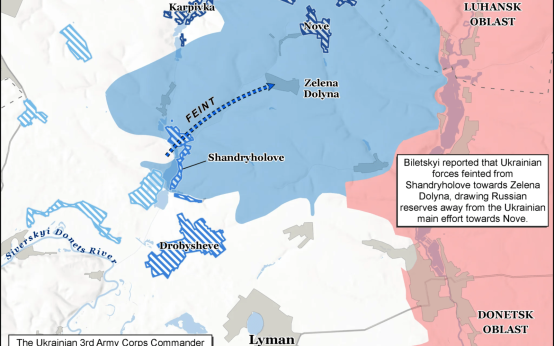 Ukraine Converts APCs to Explosive Devices in Donetsk Offensive
  Hegseth’s Vision for the Military: Balancing Tradition and Innovation
  Significant Funding Boosts Ken Paxton’s Texas Senate Campaign Amid Tight Race
  U.S. States Extend Gas Tax Waivers Amid Rising Fuel Costs Due to Iran Conflict