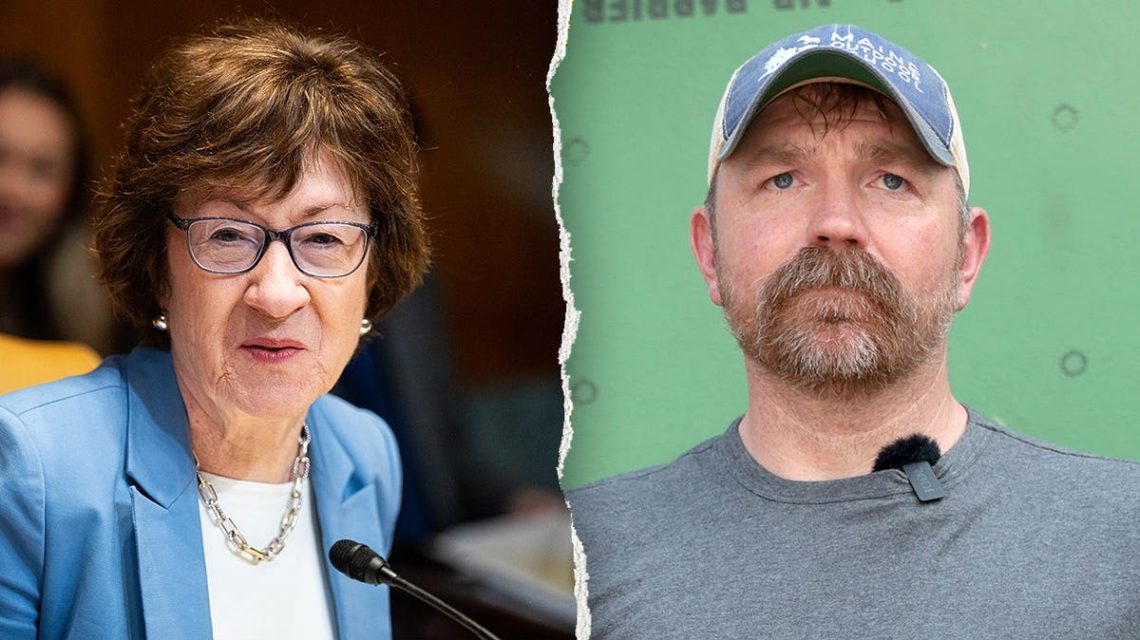
Sen. Susan Collins, R-Maine, recalls her upbringing in Caribou, Maine, where she first learned about hard work. At age 10, she joined other children in picking potato fields in Aroostook County, known by locals as ‘The County.’ As Collins prepared for her first day, her mother advised that farming was tough but that quitting wasn’t an option. These words have stayed with her throughout her career.
Susan’s early experiences working in the fields taught her resilience and commitment, shaping her into a notable political leader today.
Collins, with a track record of 10,000 consecutive votes in the Senate, now faces a highly contested election. Senate Minority Leader Chuck Schumer, D-N.Y., aims to win her seat, targeting her as the main opponent. Collins is challenged by Graham Platner, the Democratic nominee marred by outrageous scandals.
While traveling between Bangor and Portland, a frequent trip since her Senate entry in 1997, Collins remarked on Platner’s controversial history. Despite predicting Gov. Janet Mills as her opponent, Collins takes Platner seriously amid allegations against him.
Platner has aggressively criticized Collins, particularly for her Iraq War vote and support for parts of President Trump’s agenda, labeling her as ‘spineless and corrupt.’ Collins emphasizes her achievements and contributions to Maine over the years, contrasting Platner’s angry rhetoric with tangible results.
Collins’s efforts include a $1.5 billion allocation over five years, funding for rural healthcare, fire stations, and a fire boat protecting Portland’s waterfront. Yet, the tight race with Platner persists.
Schumer, intent on defeating Collins, believes she is weaker now compared to their last face-off in 2020. He points to her support of Trump, Kavanaugh’s confirmation, and the subsequent Roe v. Wade overturn, affecting her popularity.
Reflecting on past elections, Collins notes Democrats have consistently distorted her record. She emphasizes her stance on Trump’s legislation, where she supported modifications to bring about beneficial changes, ultimately voting against the final bill but securing significant funding.
Regarding her vote for Kavanaugh, Collins expresses disagreement over his Roe v. Wade stance, highlighting her votes for Sonia Sotomayor, Elena Kagan, and Justice Jackson.
Collins remarks on not voting uniformly with Trump, who acknowledged her as ‘sane’ but not a close ally. With a history of working with five presidents and varied agreements, Collins bases her decisions on benefiting Maine families.
Fox News Digital writer Alex Miller covers the U.S. Senate, providing updates on this race and other political developments.
 The Trump Team’s Challenge to the Military Leadership
  Maryland First State to Restrict Electronic Pricing in Grocery Stores
  Activists Push for Nationwide Ban on Child Marriage in the U.S.
  Democratic Hopes and Historical Warnings in 2026 Senate Race
  Republicans Face Challenges Amidst Cost of Living Concerns
  A Different Kind of Fall for Congress This Year