Larry Warsh began collecting art at a young age, and his latest endeavor focuses on Keith Haring’s unique ability to transform lines and spaces into a shared visual language. As the co-editor of Keith Haring in 3D, a book released with the major exhibition at Crystal Bridges Museum of American Art, Warsh believes Haring, a prominent 20th-century artist, remains not fully understood.
Exhibition at Crystal Bridges
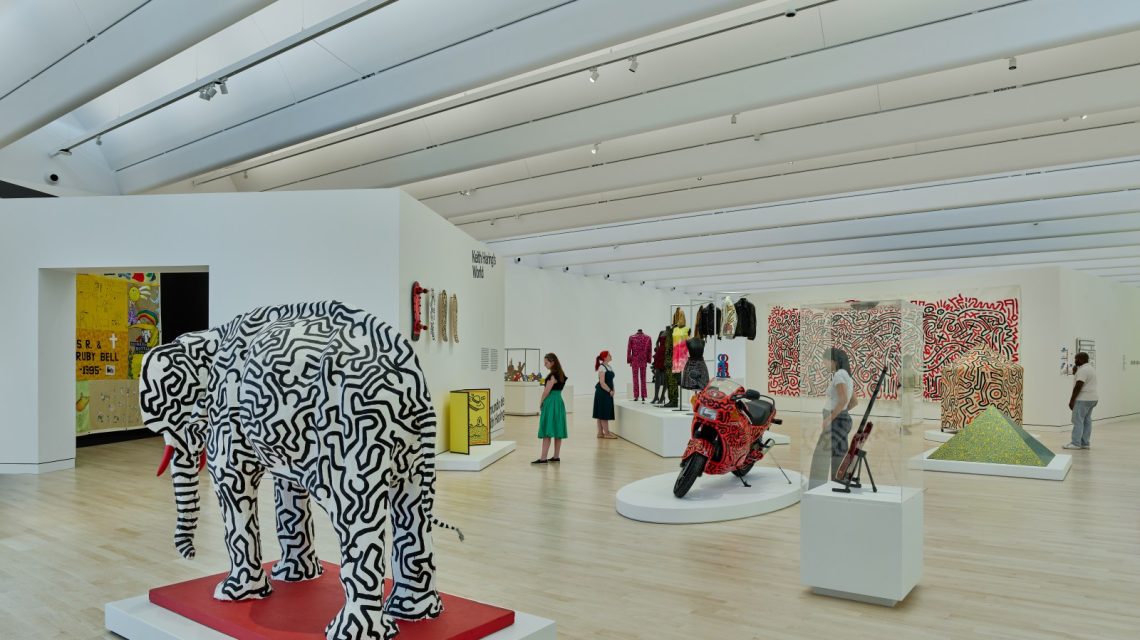
Located in Bentonville, Arkansas, this exhibition runs from June 6, 2026, to January 25, 2027. It is the first major showcase dedicated to Haring’s three-dimensional works. The exhibition features sculptures, totems, masks, painted objects, clothing, boomboxes, and even a 1963 Buick Special, highlighting Haring’s artistic depth beyond paintings and subway drawings.
Early Connections to Art
Warsh’s fascination with art began simply. Growing up surrounded by objects meant to be closely observed laid the groundwork. His uncle introduced him to galleries and auction houses around the age of 12, sparking his interest in the history and energy encapsulated in objects. Warsh began collecting diverse items like antiques and baseball cards early on.
Residing near Astor Place in 1980s New York brought Warsh closer to key figures including Keith Haring, Jean-Michel Basquiat, and Kenny Scharf. This environment underscores the significance of the Crystal Bridges exhibition, emphasizing Haring’s object-based works within the context that molded them.
The Vibrant Downtown Scene
The community Warsh reminisces about was dynamic and interconnected. Haring, along with Basquiat and Scharf, thrived in a downtown network fueled by creativity shared among clubs, studios, and galleries. Warsh recalls spaces like Fun Gallery and individuals like Patti Astor, who harnessed this energy into cultural momentum.
Other artists such as Futura, Rammellzee, Tseng Kwong Chi, and Rene Ricard contributed to this lively scene, defining the downtown New York cultural identity. Haring was an integral part of this artistic community.
Art Accessible to All
Warsh credits Haring with understanding visual and social scales deeply. Haring aimed to create art encountered in everyday settings. The Pop Shop, launched in 1986, furthered this mission by transforming his subway art into accessible retail items. The Crystal Bridges exhibition reveals how Haring’s art invited viewer interaction, embodying a tangible experience.
Haring, like Andy Warhol and Salvador Dalí, saw the value in merging art with public culture. Warsh recounts Haring’s belief in integrating art into everyday life to reach vast audiences. Haring famously articulated, “The Pop Shop makes my work accessible. It’s about participation on a big level.”
Warsh emphasizes the lasting impact of Haring’s art distribution—through museums, books, products, and collaborations. Haring’s quote on commercial projects enabling wide reach underscores his vision: “The use of commercial projects has enabled me to reach millions of people.”
Innovative Use of Materials
Haring’s creative process often embraced available materials, leading to a versatile body of work fundamental to understanding his artistic expression. Crystal Bridges showcases this innovation, exhibiting pieces like painted appliances and a Haring-painted motorcycle, reinforcing the significance of his three-dimensional art.
These works evidence Haring’s seamless merging of medium with motion, inspired by his surroundings and inventive possibilities. The Bentonville exhibition highlights how Haring’s sculptures reflect his broader artistic vision.
Generosity and Legacy
Generosity is pivotal in discussing Haring’s legacy. Friends donated many exhibited artworks because Haring often gifted them. His foundation later supported initiatives focused on AIDS care and children’s education. Warsh remembers Haring as a generous and approachable figure who supported charitable causes and remained deeply invested in people.
Warsh asserts that generosity is central to Haring’s legacy. The exhibition further expands the narrative around Haring from focusing on his murals and paintings to acknowledging his sculptural achievements, presenting a more comprehensive view of his artistic contributions.
 Readers React to Miss Manners Column
  Freddy’s American Adventure: From Soccer to College Football
  Troy Swanson: Award-Winning Librarian Transforming Academic Libraries
  Lisdoonvarna Matchmaking Festival: A Unique Tradition
  The Quest for the Knuckleball Dream
  Navigating Grief After a Sibling’s Overdose