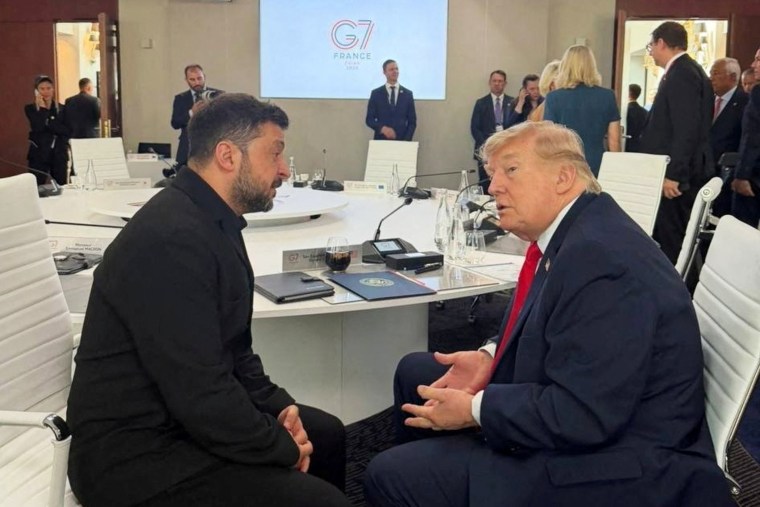
On June 16, 2026, during the Group of Seven summit in France, President Donald Trump expressed his intention to concentrate on Ukraine following the signing of an agreement with Tehran. Trump stated Iran would soon be in the rearview mirror despite uncertainties surrounding the agreement’s framework and sustainability.
President Trump had a meeting with Ukrainian President Volodymyr Zelenskyy, marking a shift in focus toward resolving Russia’s ongoing conflict with Ukraine. Trump assured reporters of his commitment to support Ukraine by urging Russia to negotiate. He planned another meeting with Zelenskyy on the same day.
During discussions with French President Emmanuel Macron, Trump indicated his interest in prioritizing the Ukraine issue now that the Iran deal appeared to be settled. European leaders, who have long attempted to maintain Trump’s attention on this conflict, welcomed this development.
Ukraine’s recent military actions have proven impactful, particularly with drones and missiles hitting deeper into Russian territory. This shift in strategy has altered the war narrative, encouraging optimism among European leaders. British Prime Minister Keir Starmer noted that Ukraine seemed to be regaining the initiative.
While Trump maintained a positive tone, suggesting the possibility of progress, no significant breakthroughs were evident either on the battlefield or in negotiations. Nonetheless, Trump conveyed confidence after conversations with both Russian President Vladimir Putin and Zelenskyy, hinting at potential resolutions.
No direct meeting with Zelenskyy was initially scheduled at the G7 summit in Evian-les-Bains, France. Macron’s gesture to Zelenskyy highlighted the importance of engaging the U.S. president in the discourse. Eventually, Trump, Zelenskyy, and Macron met to discuss enhancing Ukraine’s air defense and advancing diplomatic efforts to end the conflict.
Zelenskyy shared photos of talks with Trump and Secretary of State Marco Rubio, underscoring the significance of aligned positions. Trump’s past diplomatic efforts, marked by pressure on Ukraine and a tendency to favor Russian demands, had stalled. This time, he appeared more receptive after his meeting with Zelenskyy, advocating for Russia to negotiate.
In previous negotiations, European leaders were sidelined, but Zelenskyy now demands their involvement at the table. This demand, although controversial, aims at unifying efforts against Russia’s war. Zelenskyy proposed a meeting with Putin at the G7 summit or in the U.S., a proposal dismissed by the Kremlin.
Kremlin spokesperson Dmitry Peskov confirmed no official invitation was extended to Putin for the summit and reiterated that while Putin welcomed talks with Zelenskyy in Moscow, no official channels between Moscow and Kyiv were open. The U.S. focused on formalizing the Iran deal, with possible future negotiations in Russia.
 Israeli Prime Minister Calls for Comprehensive Security Review of Civil Flights
  U.S. Marine Arrested in Okinawa for Alleged Murder and Robbery
 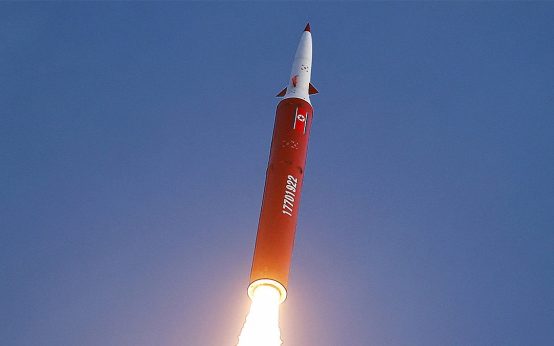 North Korea’s Missile Test and Its Implications
 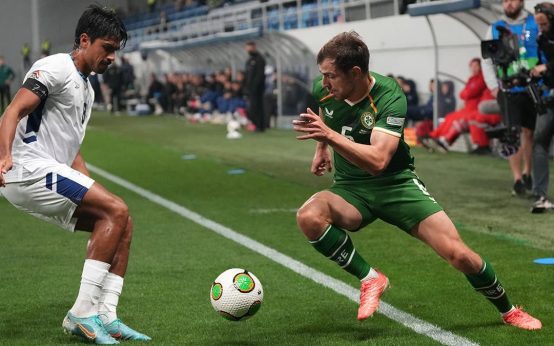 Israel and Ireland Soccer Teams Display Tension in Nations League Match
  Fox News Report on FlyDubai In-Flight Incident
  Brazilians Vote in Crucial Presidential Election