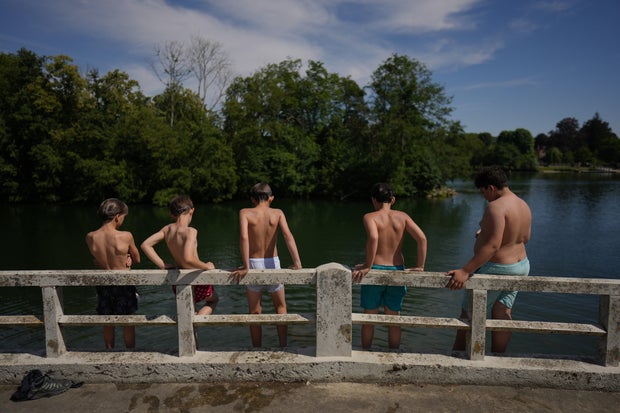
On June 21, 2026, France, along with other parts of Europe, braced for extreme heat conditions. Emergency services and military forces were put on high alert as temperatures soared to 104 degrees Fahrenheit in some regions, prompting widespread precautions.
Authorities in France enforced a public alcohol consumption ban and canceled various outdoor events. Roughly a third of the country was under a heat red alert, with conditions expected to worsen. In Paris, misting stations were set up at landmarks like the Eiffel Tower. Other European cities followed suit, with tourists in Rome using public fountains for relief and Spain’s Basque Country suspending sports and cultural activities.
The annual Music Day in France drew particular concern. This nationwide event is celebrated with numerous concerts and gatherings, attracting both locals and international visitors. In response, the French government restricted alcohol use in red-alert zones to prioritize emergency services.
High temperatures pose a significant risk, especially in regions without widespread air conditioning. The World Health Organization highlighted more than 200,000 heat-related deaths in Europe over four years, many of which could have been prevented. Continued above-average temperatures this summer threaten to cause heat exhaustion and potentially fatal heat stroke.
Climate change is increasingly linked to extreme weather events, with projections indicating record-setting heat over the next five years. A study found human-caused climate change responsible for approximately 1,500 deaths in an early European heat wave last month.
Authorities expressed grave concern for vulnerable groups, including those in nursing homes or living alone. The French government took preemptive measures, bolstering wildfire preparedness and monitoring water supplies for nuclear reactors. In anticipation of the heat, 845 schools were ordered closed, and train services faced disruption.
Prime Minister Sebastien Lecornu convened a government crisis meeting to discuss strategies for future heat wave adaptation, emphasizing the possible need for increased air conditioning.
Elsewhere in Europe, countries grappled with similar challenges. Spain remained on alert, with temperatures nearing 104 degrees, especially in typically cooler regions like the Basque Country. Italy issued heat warnings for eight cities, using fans and sprinklers to cool livestock at farms. Tourists in Rome resorted to fountain pools for relief.
Thunderstorms were anticipated in many regions alongside the heat.
The UK weather office warned of extreme heat in southern England and parts of Wales, predicting highs of 95 degrees, nearing the record set in 1976 for June’s hottest day.
In Germany, temperatures climbed to the mid-90s, leading to tragic incidents. A 23-year-old drowned in a southwestern lake, and three others went missing after swimming in the Rhine River, known for its strong currents. French media reported four children drowned on Saturday.
 British Police Arrest Man Suspected of Terror Plot
  Activists Push for Nationwide Ban on Child Marriage in the U.S.
  Investigation into Alleged Incident at Cornell University
  Rising Drone Threats Highlight Vulnerabilities in Moldova’s Airspace Defense
  Bolivia Faces Security Test Amid Unrest
  Atlantic Ends September Without a Hurricane for First Time Since 1994