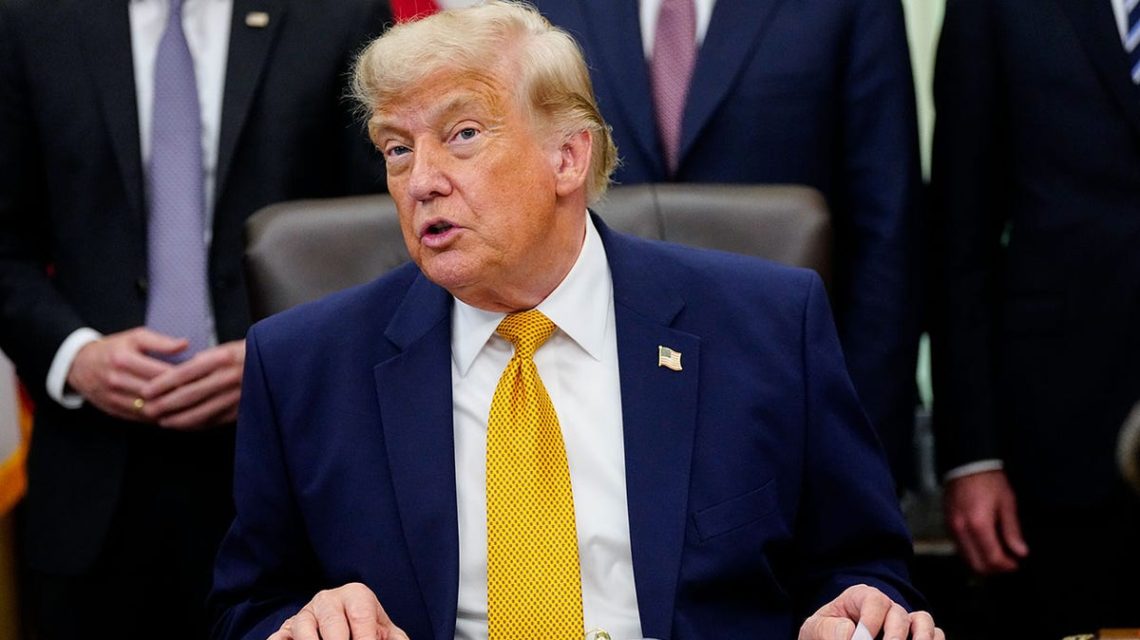
President Donald Trump has achieved a significant legislative victory with the approval of a comprehensive housing bill by Congress. The bill aims to enhance the nation’s housing supply and reduce housing costs, marking an important step in housing reform.
The House of Representatives voted 358-32 in a bipartisan decision on Tuesday to pass the measure, which was previously approved by the Senate. Opposition was limited to some Republicans, while every Democrat present supported the bill.
Titled the 21st Century ROAD to Housing Act, the bill is one of the most pivotal housing legislations passed in decades. It includes Trump’s proposal to restrict large institutional investors from buying single-family homes, allowing individual buyers to better compete with private equity firms.
The bill will streamline federal environmental reviews for housing projects and relax regulations on factory-built homes. It also incentivizes local governments to reform zoning laws to increase homebuilding opportunities.
The bill outlines over 45 provisions, including funding federal grants for municipalities with a history of building new homes and initiating a pilot program for redeveloping vacant properties.
Rep. Mike Haridopolos, R-Fla., commented, The package focuses on a simple idea of building more homes, which means lower costs and more expanded opportunities for all Americans.
The President is anticipated to sign the bill into law shortly, potentially as soon as Wednesday.
Rising Housing Costs
The legislative progress occurs amid sharply rising home prices. According to Realtor.com, the median home price nationwide has exceeded $400,000, while the median rent has risen above $1,760. These figures indicate price increases of 34.4% and 17.9%, respectively, since 2019.
House Speaker Mike Johnson, R-La., facilitated the measure’s passage using a fast-track method known as suspension of the rules, requiring a two-thirds majority. More Democrats supported the legislation compared to Republicans.
Conservative Opposition
Some conservative members opposed the legislation due to the absence of the SAVE America Act, failing to secure Senate approval due to filibuster concerns. The Act intends to impose voter identification, limit mail-in voting, and bar men from women’s sports, among other stipulations.
Rep. Anna Paulina Luna, R-Fla., expressed her dissatisfaction on social media, urging her colleagues to remain steadfast and uphold their commitments.
Republicans also objected to progressive Democrats’ contributions to the housing bill, citing additional government spending.
Rep. Chip Roy, R-Texas, criticized the bill as big government garbage & spending,
on social media.
Investor Restrictions
Months of negotiations resulted in Congress setting a restriction on large investors, preventing them from purchasing additional single-family homes if they own more than 350 properties, though exceptions exist for rental property construction. Existing holdings need not be sold.
Critics of the legislation argue that large investors are not significantly contributing to supply constraints, citing data from Parcl Labs that indicate investor ownership accounting for no more than 3% of single-family rental properties. High concentrations are noticeable in specific rental markets like Jacksonville, Fla., and Phoenix.
Political Implications
The approval of the housing bill comes amid electoral challenges for Republicans, facing voters dissatisfied with the economy and cost of living. The legislation provides Republicans with a practical action to address housing affordability, a central concern for voters approaching the midterm elections.
A Fox News poll revealed that only 31% of voters approve of Trump’s economic management, although this reflects a slight improvement from prior months.
 Investigation into Thomas Crooks’ Assassination Attempt
  Supreme Court Allows Trump Administration to Continue Third-Country Deportation Policy
  Trump Rallies Support in GOP Strongholds as Midterm Elections Approach
  Brazil’s Next Election: Familiar Faces and High Stakes
  Iowa Steel Plant: Incentives and Political Maneuvering
  Strategies for Democrats Leading Up to Election Day