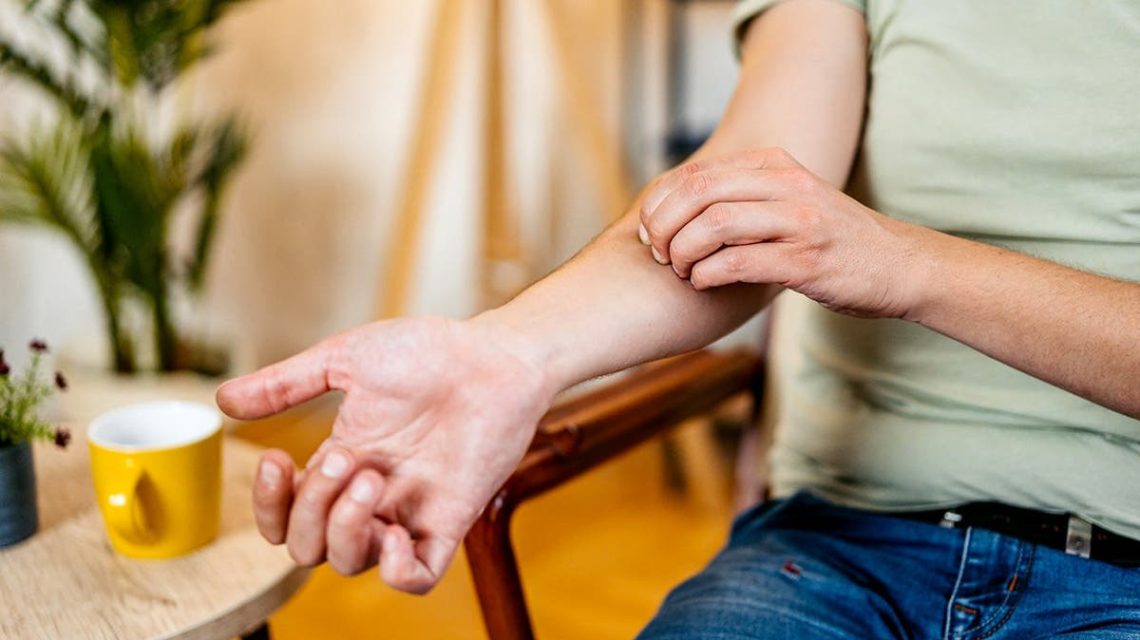
Scratching bug bites or rashes offers brief relief but often prolongs the discomfort. Researchers have discovered that this natural response heightens skin inflammation and can aggravate conditions like eczema. Yet, the connection between scratching and swelling lacks much exploration, as noted by University of Pittsburgh researchers.
Led by Professor Daniel H. Kaplan, their study delved into the relationship between itching, scratching, and inflammation. They applied allergens to mice to induce allergic-contact dermatitis, similar to the skin reactions people have to poison ivy or metals like nickel.
Some mice scratched normally while others wore collars to prevent scratching. Findings indicated that scratching activates mast cells, part of the immune system’s defense. These release histamine, instigating itchiness.
Scratching, however, releases more of something known as substance P, which further activates mast cells, increasing inflammation and perpetuating the itch-scratch cycle. When scratching is prevented, or the mice lack itch-sensing neurons, inflammation significantly decreases.
The research suggests that while scratching can reduce skin bacteria like Staphylococcus aureus, the inflammation damage outweighs this potential benefit. Interestingly, the ability to sense itch and the reaction by scratching evolved millions of years ago, implying some evolutionary advantage. The findings pose a curious question: if scratching extends inflammation, why is it pleasurable?
Kaplan’s team suggests that defense against certain bacterial infections offers a possible answer to this paradox. Although scratching can fight bacteria, the associated inflammation is not worth it if itching becomes chronic.
For those seeking itch relief, the American Academy of Dermatology recommends cold compresses and 1% hydrocortisone cream. These alternatives help soothe the itch without exacerbating inflammation.
The findings, published in the journal Science, broaden our understanding of the biological and evolutionary facets of itching.
 Increased Funding Needed for Psychiatric Hospitals
  Trump Administration Distributes ACA Refund Checks
  Higher Consumption of Ultra-Processed Foods Linked to Increased Health Risks
  Understanding Inflammation: Myths and Facts
  Calm Parenting: Strategies to Manage Stress
  Trump’s Executive Order to Combat Mosquitoes and Ticks in D.C.