Updated on: July 6, 2026
China’s military conducted a test-launch of a long-range ballistic missile from a nuclear-powered submarine in the South Pacific on Monday. This action prompted protests and concerns from neighboring countries. The Xinhua News Agency announced that the missile, which was launched at 12:01 p.m., carried a dummy warhead. China last carried out a missile test in the Pacific two years ago with an intercontinental ballistic missile equipped with a dummy warhead.
The launch was described by the official statement as part of routine annual training, asserting adherence to international law and practice. The statement, echoed by the Ministry of Defense, emphasized that the test was not targeted at any specific country or location.
In 2024, a similar launch highlighted China’s aspirations as a growing superpower, likened to the United States’ ballistic missile fleet tests. Australia, New Zealand, and Japan expressed criticism toward the latest test. The New Zealand government acknowledged being informed only hours before the scheduled launch, emphasizing the missile’s trajectory into the South Pacific Nuclear Free Zone. Established by the 1986 Treaty of Rarotonga, this zone prohibits nuclear weapons. China ratified protocols in 1987, committing to refrain from nuclear tests or threats within the zone.
It appears that despite our long-standing concerns about this type of activity, China carried out the test within hours of informing us.— Foreign Minister Winston Peters, New Zealand
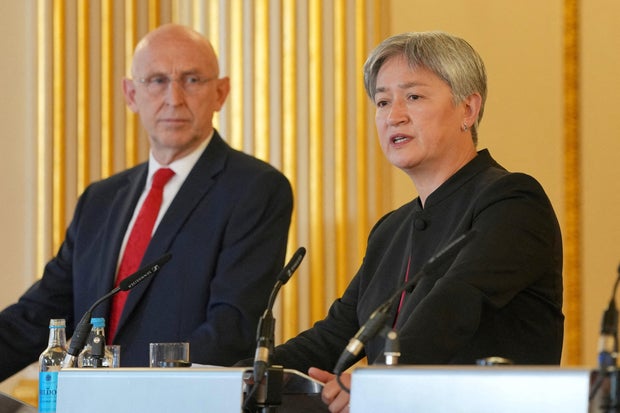
The test coincided with the signing of a new mutual defense treaty between Australia and Fiji, aimed at countering Chinese influence in the Pacific. Australia’s Foreign Minister, Penny Wong, expressed concerns about the destabilizing effect of the launch during a press conference in Fiji.
Japan’s government conveyed strong opposition to China through the Japanese Embassy in Beijing before the test. They emphasized the need for a reconsideration of the missile test to prevent any threat to Japan’s security.
According to the Nuclear Threat Initiative, China operates a fleet of six ballistic-missile submarines and 59 nuclear-powered attack submarines.
 The Threat of Melting Glaciers: A Call to Action
  Police Discover Ancient Roman Artifacts Off Sardinian Coast
  Urgent Need for Action in East Africa’s Food Crisis
  Suspected Plague Death in Siberia Sparks Health Measures
  G7 Nations Agree to Release 100 Million Barrels of Oil Amid Fuel Price Surge
  Co-Pilot Attempts Hijack on Flight to Tel Aviv