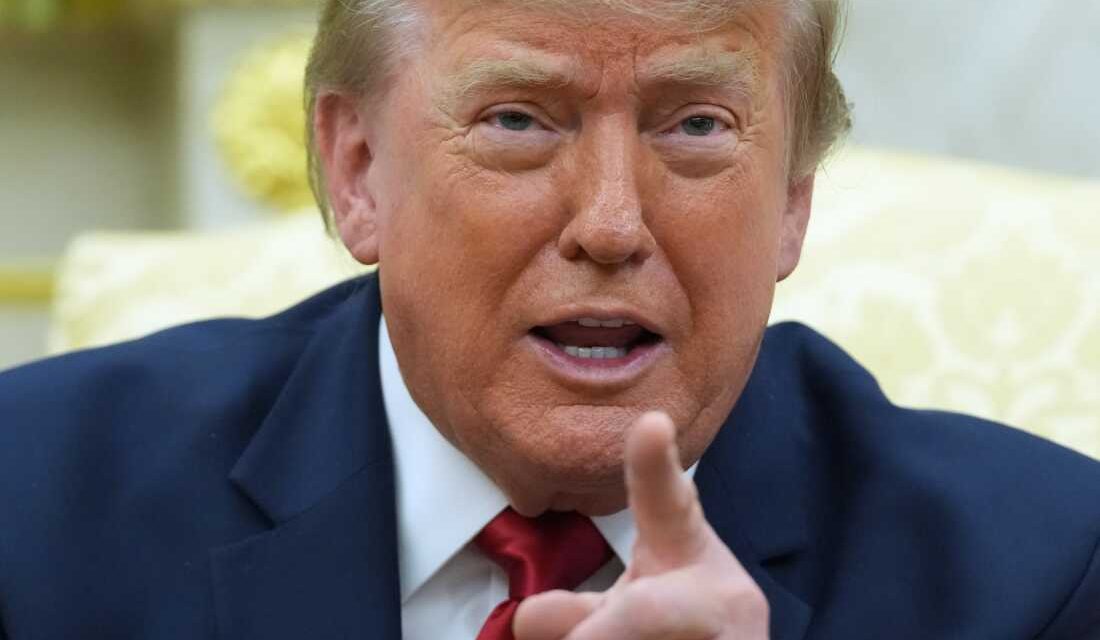
President Donald Trump plans to deliver a primetime speech later this week, announcing that elections will be a primary topic. Observers anticipate that he might revisit debunked conspiracy theories about his 2020 defeat to Democrat Joe Biden. This address comes as Trump has intensified his calls for Republicans to implement stricter voting rules before November’s midterm elections.
Trump has kept the contents of his Thursday night speech under wraps. Scheduled for 9 p.m., the announcement comes amidst ongoing struggles with attempts to end the conflict with Iran, alongside various domestic issues such as recent deadly incidents involving Immigration and Customs Enforcement officers. Trump, offering little detail, hinted that there would be “really big news” to share.
“Without free and fair elections, you don’t have a country,” he stated, declining to expand further on what the announcement might entail. Trump did suggest that he may cover a range of topics, highlighting that it would be a significant announcement.
In past speeches, Trump has utilized primetime addresses—normally reserved for major national or international events—to communicate politically charged messages. Earlier in December, he addressed the country to attribute economic hardships to Democrats. This Thursday, it seems he aims to further his platform, reiterating election-related falsehoods to a large audience, ultimately hoping to bolster Republican chances in the upcoming midterm elections.
Previously, Trump repeated erroneous allegations of voter fraud regarding the Los Angeles mayoral primary race. In an interview with conservative media outlet Newsmax, he blamed fraud for Republican Spencer Pratt’s primary loss, citing delays in California’s vote counting. Consequently, federal prosecutors initiated fraud investigations within the state after Trump spotlighted these claims.
Trump’s focus on election fraud and security originated at least as far back as 2016 when he hesitated to declare whether he’d accept a loss to Hillary Clinton. Even after his victory, he assembled a voting integrity commission aiming to substantiate claims of voter fraud costing him the popular vote; however, the commission disbanded without presenting evidence. After losing to Biden in 2020, Trump once more alleged cheating, especially in Georgia, which saw his infamous call to the state’s secretary of state, pressuring for vote “discovery,” attempting to overturn Biden’s win. Although indicted, charges against him and allies were dropped. Numerous audits and reviews, some led by Republicans, including his attorney general, revealed no significant fraud occurred in that election.
Trump, before reclaiming office in 2024, laid the foundation for claiming fraud should he lose again. Returning to power, he staffed his administration with officials supportive of his 2020 fraud assertions. His second term has focused heavily on voting regulation, pressing for laws mandating voter ID and curtailing mail-in voting.
As midterm elections approach, Trump has pursued fresh claims that cast doubt on results threatening his influence in Washington. Earlier in the year, FBI agents raided election offices in Fulton County, Georgia, confiscating materials from 2020. Tulsi Gabbard, then Director of National Intelligence under Trump, was involved in overseeing the raid in Atlanta.
In contrast, Maryland Governor Wes Moore, in Georgia campaigning for Democratic figures, dismissed Trump’s ongoing focus on past elections as a strategy destined for failure. Moore expressed that many are tired of rehashing settled elections.
Trump has broadly criticized states permitting mail-in voting. He reported contacting a U.S. attorney to urge investigation of California’s governor primary amid vote counts last month. Recently, he dismissed the remaining bipartisan members of the federal Election Assistance Commission—who had resisted his push for mandatory voter documentation of U.S. citizenship before registration.
 Brazil’s Presidential Race Heads to Runoff
  Sen. Thom Tillis Criticizes Trump’s Administration in New Book
  Controversy Surrounds Steve Hilton’s Campaign Ad Amid Gubernatorial Race
  Trump Calls for Probe into Alleged ‘Paid Protesters’
  Donald Trump Criticizes Fox News for Rally Coverage
  Rahm Emanuel Advises Against Impeaching Trump and Calls for Ethics Reforms