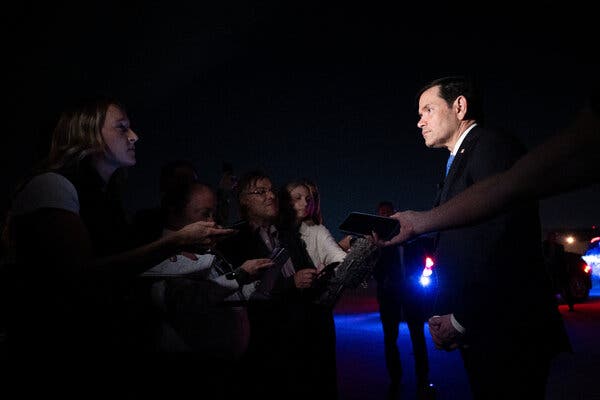
On Sunday, U.S. Secretary of State Marco Rubio indicated that the United States remains open to diplomatic engagement with Iran. Despite ongoing military operations, including a series of nightly strikes, Rubio expressed willingness to explore opportunities for diplomacy. He stated, “We’ve tried multiple times with Iran, and we’ll continue to try. If that door opens, we’ll be happy to see it open.” This commentary was made during a briefing at Joint Base Andrews in Maryland, ahead of his departure for a summit with the Association of Southeast Asian Nations in Manila.
However, Rubio emphasized that changes in Iranian conduct are necessary for progression in U.S. policies. While Iran has reportedly conveyed interest in negotiations, both directly and through intermediaries, Rubio did not provide detailed information about these communications. Despite a lack of public diplomatic initiatives recently, Iran’s actions over the past week included missile and drone attacks, particularly targeting ships—activities Rubio described as provocative.
“Their behavior is what we’re responding to, and their behavior is they’re launching missiles and drones against ships, including tonight.”
Reports emerged on Monday from Iran’s Islamic Revolutionary Guards Corps, alleging incidents involving two oil tankers experiencing explosions while navigating the Strait of Hormuz. The Corps did not explicitly claim accountability for these strikes. Meanwhile, a British naval monitoring agency reported a separate vessel on fire near Oman’s coast on Monday morning.
The Strait of Hormuz, a pivotal corridor for global oil transport, has been a focal point in the escalating confrontations between Iran and the United States. Both nations assert control over the passage, vital for international commerce. Iran’s recent attacks on commercial ships in the strait have fueled the ongoing retaliatory exchanges, broadening hostilities beyond the initial scope.
Rubio referenced an earlier memorandum of understanding between Washington and Tehran, indicating Iran’s actions breach its terms. Iran interprets the agreement to grant it authority to dictate shipping routes through the strait, leading to its aggressive stance against vessels opting for alternative paths nearer Oman.
Addressing queries regarding former President Trump’s discontinued proposal for charging shipping guidance fees through the strait, Rubio urged a more collaborative international approach. He stressed, “Other countries need to begin to step up and provide — whether it’s hardware or finances — to help carry that burden.” Rubio reiterated that it should not solely be on the United States to ensure global maritime security indefinitely.
 Sen. Cotton Opposes Permanent Daylight Saving Time
  Steve Hilton’s Latino Outreach and Gubernatorial Ambitions
 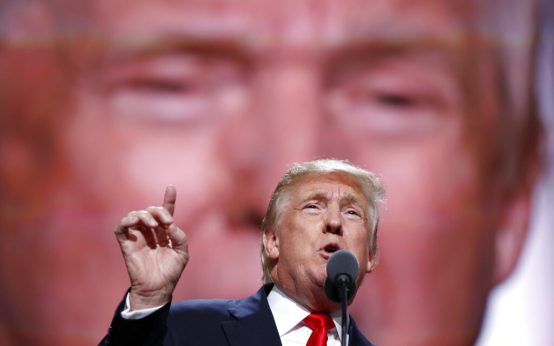 The Need for Reform in Presidential Nominations
  Controversy Surrounds Performances at Gillette Stadium
 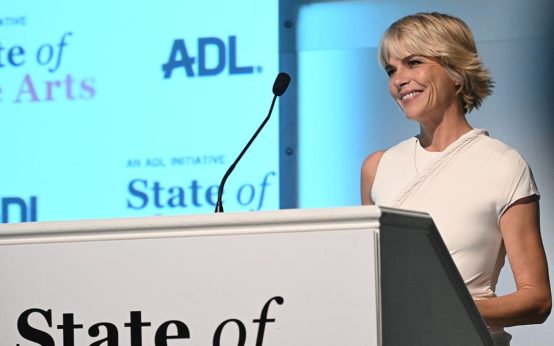 Celebrity Controversies Over Political Activism and Speech
  The Threat of Melting Glaciers: A Call to Action