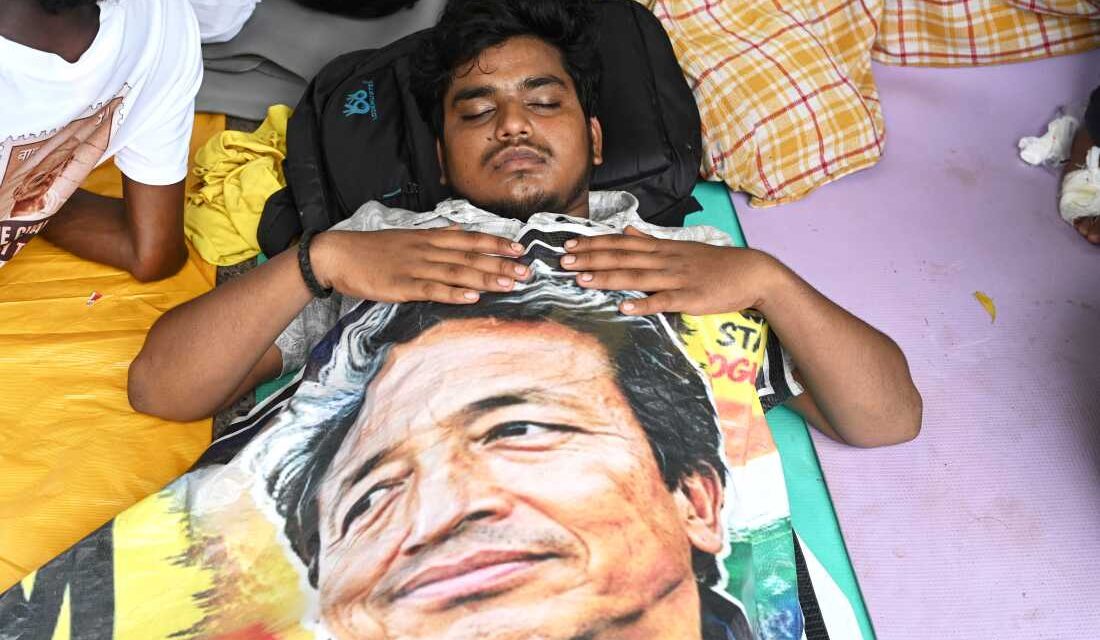
NEW DELHI — Indian activist Sonam Wangchuk concluded a 26-day hunger strike on Friday, galvanizing a youth movement that stands as one of India’s largest protests in recent years. Despite Wangchuk’s decision to end the fast, demonstrators assert their commitment to ongoing protests until the education minister resigns.
Wangchuk’s protest became symbolic of India’s “Cockroach” demonstrations, which began over a month ago. The movement arose in response to alleged leaks in some of the country’s crucial entrance exams, sparking demands for educational reforms. This movement has since evolved into a broader expression of public dissatisfaction over unemployment, government accountability, and economic opportunity.
Thousands have joined protests not only in New Delhi but across India. These demonstrations are one of the most significant waves of dissent against Modi’s government recently, exemplified by the persistence of protesters who faced tear gas and baton charges from police as they sought to approach Parliament.
In a post on X, Wangchuk shared that he ended his fast after extensive negotiations involving two federal ministers and appeals from multiple parliament members. He mentioned that considerations of potential violence in the country influenced his decision, though he did not provide details about these talks.
Protest organizers insist that demonstrations will persist until Education Minister Dharmendra Pradhan steps down. Organizers have planned nationwide protests to show solidarity with students who suffered police brutality during a recent march to Parliament. This march attracted thousands of participants on Monday.
“We won’t let Sonam sir’s sacrifice go in vain,” declared Abhijeet Dipke, the founder of Cockroach Janta Party, a satirical group leading the movement. The movement’s name refers to a remark by the country’s supreme court chief justice likening some unemployed young people to cockroaches.
On Thursday, Modi addressed the protests publicly for the first time, announcing the establishment of fast-track courts to expedite cases concerning exam paper leaks. Additionally, Modi promised future legislation aimed at addressing these leaks in Parliament.
Despite Modi’s announcements, demonstrators remain unsatisfied. The protestors demand government accountability, comprehensive examination reforms, and compensation for families affected by student suicides linked to paper leaks.
 Sen. Cotton Opposes Permanent Daylight Saving Time
  Steve Hilton’s Latino Outreach and Gubernatorial Ambitions
  The Need for Reform in Presidential Nominations
  Controversy Surrounds Performances at Gillette Stadium
  Celebrity Controversies Over Political Activism and Speech
  Trump Pushes for Permanent Daylight Saving Time, Sharing Senator’s Contact Information