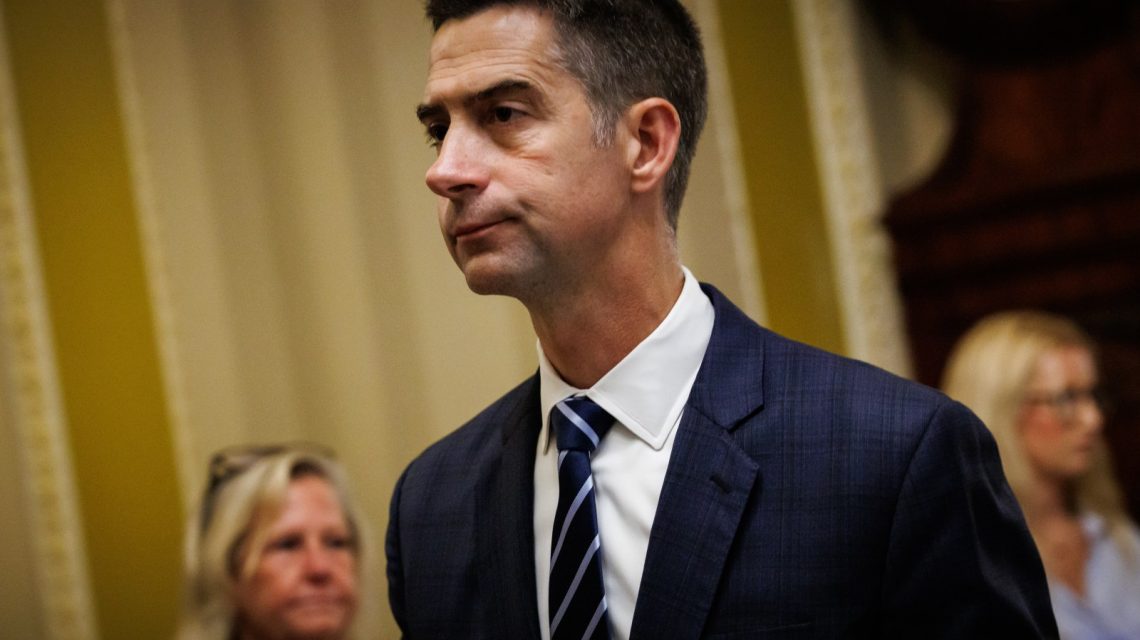
President Donald Trump on Saturday morning publicly shared Senator Tom Cotton’s cellphone number via Truth Social. This move was designed to pressure lawmakers to support legislation making daylight saving time (DST) permanent. Previously, Trump critiqued the Arkansas Republican for hindering the progress of the Sunshine Protection Act. This bipartisan bill aims to eliminate the biannual clock changes and establish year-round DST.
Trump’s Public Campaign
In his Truth Social post, Trump called Cotton a “friend” but urged people to contact him directly. He stated, “For some reason, Tom is stopping the Bill and, in the Senate, it’s very easy to do, it only takes one! It should pass overwhelmingly, in a Bipartisan fashion…To the Great People of Arkansas, please let your Senator know it would be a GREAT Bipartisan WIN for the United States Senate, and for America, itself. Call Tom on his cellphone.” When Newsweek called the number, it went straight to voicemail with a full mailbox message.
Newsweek reached out to Cotton by email, but he did not provide a comment. The legislative push comes as Americans prepare to turn their clocks back, returning to standard time on Sunday, November 1. Despite passing the House with strong bipartisan support (308-117 vote), the legislation faces hurdles in the Senate, which is in recess until after the midterm elections.
The Argument for Permanent DST
Trump claims that eliminating clock changes would benefit public health, reduce crime, decrease traffic accidents, and stimulate economic activity. He argues, “Nobody wants to spend their precious time running all over the place, turning Clocks back twice a year and, having sunshine in the afternoon is better than early in the morning!” He cited the PGA TOUR, regular golfers, tennis players, hunters, and farmers as benefiting from more daylight in the afternoon.
However, sleep medicine experts were among the first to oppose permanent DST. The American Academy of Sleep Medicine supports ending twice-yearly clock changes, but advocates for permanent standard time. AASM spokesperson Karin Johnson said permanent DST misaligns clocks with natural biological cycles by reducing morning sunlight exposure, which affects sleep and alertness.
Republican Divide and Public Opinion
The debate highlights a rift among Republicans, despite public support for ending clock changes. A YouGov survey in February found 64% of Americans favor eliminating biannual clock changes, with only 16% opposing it. While Trump prioritizes permanent DST, rebranding it the “No More Changing of Clocks Act,” Cotton remains a vocal opponent.
Cotton argues that permanent DST would result in dangerously dark winter mornings. In a Senate floor speech, he warned of children heading to school before sunrise and workers starting their day in darkness. In Arkansas, winter sunrises could be delayed until after 8 a.m. A similar concern was raised by Senator Mike Rounds, who noted that northern states would experience sunrises after 9:30 a.m. in winter.
Several Republicans and Democrats have opposed the bill. Republicans who voted against include Ted Budd, Deb Fischer, Jerry Moran, Tim Sheehy, Dan Sullivan, Roger Wicker, and Todd Young. Democratic opponents include Lisa Blunt Rochester, Tammy Duckworth, Amy Klobuchar, Gary Peters, and Jacky Rosen.
Historical Context of Daylight Saving Time
The issue of DST has been debated for over a century. According to the U.S. Department of Transportation and congressional records, lawmakers have experimented with various DST schedules, only to face backlash concerning dark winter mornings.
- 1918: Congress introduced DST during World War I to conserve fuel and energy. It was repealed post-war due to unpopularity.
- 1942-1945: During World War II, the federal government imposed year-round DST, known as “War Time,” to aid the war effort.
- 1966: The Uniform Time Act established a standardized schedule for DST while allowing state opt-out.
- 1974: The U.S. briefly tried permanent DST during an energy crisis; however, issues with dark winter mornings led to a quick reversal.
- 2007: The Energy Policy Act extended DST by several weeks.
- 2022: The Senate passed the Sunshine Protection Act, but the bill stalled in the House.
- July 2026: The House passed a permanent DST bill, awaiting Senate consideration.
- November 1, 2026: Another clock change is slated unless Congress acts.
The Path Forward
While the bill remains before the Senate’s Committee on Commerce, Science, and Transportation, a floor vote has not been scheduled. Senate Majority Leader John Thune expressed doubts over the measure attracting the necessary 60 votes. “I just don’t think we want a mandate,” Thune stated previously.
 Steve Hilton’s Latino Outreach and Gubernatorial Ambitions
  The Need for Reform in Presidential Nominations
  Controversy Surrounds Performances at Gillette Stadium
  Celebrity Controversies Over Political Activism and Speech
  Tucker Carlson’s Comments on Britain’s WWII Decision Ignite Controversy
  Trump’s White House Ballroom Project Faces Challenges and Rising Costs