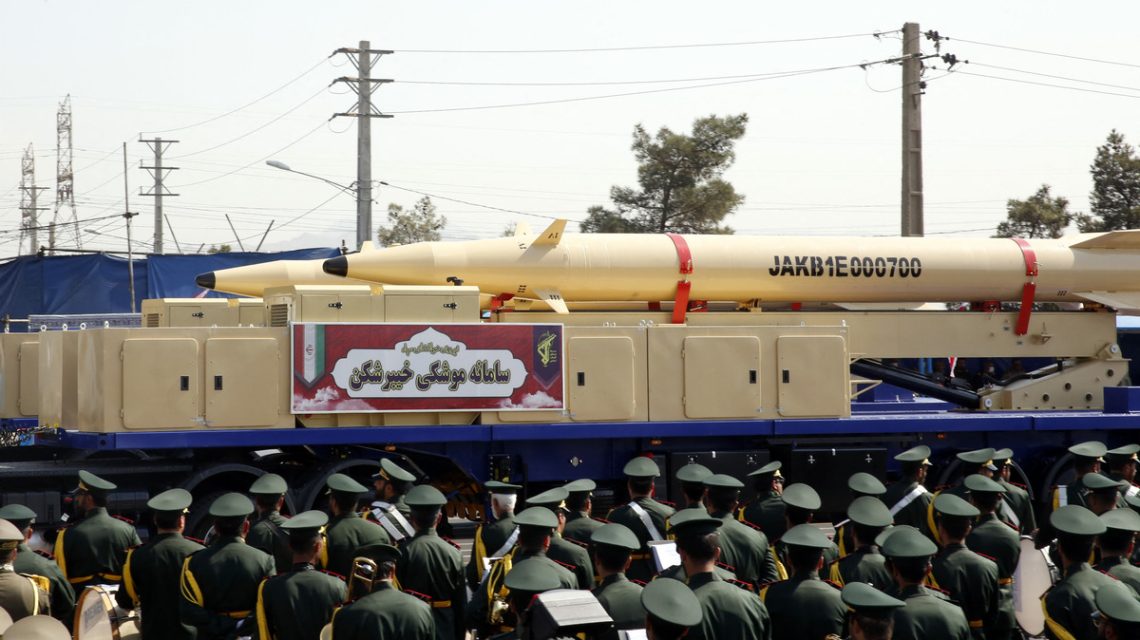
Iran has shifted its military approach by deploying Kheibar Shekan ballistic missiles to target U.S. bases throughout the Middle East. Adjustments in flight paths, speeds, and mid-air maneuvers aim to penetrate American air defenses. This information comes from unnamed U.S. officials cited by The Wall Street Journal.
Since July, Iran has launched multiple missile attacks on American sites in at least five Middle Eastern nations. These actions strained a fragile ceasefire established in June, resulting in consecutive nights of exchanges until a temporary calm prevailed.
President Donald Trump asserted that the U.S. continues negotiations with Iran while remaining open to resuming military strikes. On Sunday, the U.S. refrained from attacking Iran for the second day, with an Iranian army spokesperson announcing a pause in their attacks on state TV.
The latest escalation followed a strike on the Muwaffaq Salti Air Base in Jordan, claiming the lives of three U.S. service members: 1st Lieutenant Tyler James Feehan, Private Isabella Gonzales, and Sergeant Angel Rampersad. Additionally, Sergeant Michael Emmanuel Swinton died in a drone detonation at Erbil Air Base in Iraq, bringing U.S. military casualties to 18. In recent weeks, Iran also targeted U.S. facilities in Kuwait, Bahrain, and Qatar.
What is the Kheibar Shekan?
First introduced by Iran in 2022, the intermediate-range ballistic missile can reach approximately 900 miles, covering the Middle East and parts of Russia, India, and Turkey. The Kheibar Shekan is launched from mobile platforms, using solid fuel to significantly shorten preparation and launch times, thereby reducing vulnerability to enemy attacks.
Named after the Battle of Khaybar, where the Prophet Muhammad’s forces conquered the oasis of Khaybar, the missile is lighter than its predecessors. This design choice maximizes distance and complements other Iranian solid-fueled systems like the Zolfaghar and Fattah-1.
Why is it drawing attention?
According to U.S. officials, Iran has integrated the Kheibar Shekan with drones, marking a tactical shift. The missiles cost less than U.S. interceptors, which range from several million to $15 million each, creating a sustainability issue for defense systems.
“The Iranians figured out during the war that the Kheibar Shekans are valuable because they are inexpensive, flexible, and efficient,” said Nicole Grajewski from Sciences Po in Paris.
Ukrainian President Volodymyr Zelensky reported that Russia has used satellites to provide reconnaissance data to Iran. “There is a clear correlation between Russian satellite imagery and Iranian strikes,” Zelensky stated.
Can air defenses stop it?
While most Kheibar Shekan missiles have been intercepted since the conflict’s start on February 28, some have evaded defense systems. The unpredictable trajectory of ballistic missiles poses interception challenges, leading Tehran to refine its tactics continually.
“Tehran has identified effective strategies for overcoming missile defenses,” said Fabian Hinz, an independent missile expert. The Kheibar Shekan’s reentry vehicle can perform maneuvers to evade defenses.
Retired Lieutenant General Qasid Mahmoud explained that Iran uses simple missiles to distract radars, followed by higher-quality missiles that alter their target in the last few kilometers, complicating interception efforts.
Contact Newsweek editors for this story: Daniel Orton and Anthony Murray.
 The Threat of Melting Glaciers: A Call to Action
  Police Discover Ancient Roman Artifacts Off Sardinian Coast
  Urgent Need for Action in East Africa’s Food Crisis
  Suspected Plague Death in Siberia Sparks Health Measures
  G7 Nations Agree to Release 100 Million Barrels of Oil Amid Fuel Price Surge
  Co-Pilot Attempts Hijack on Flight to Tel Aviv