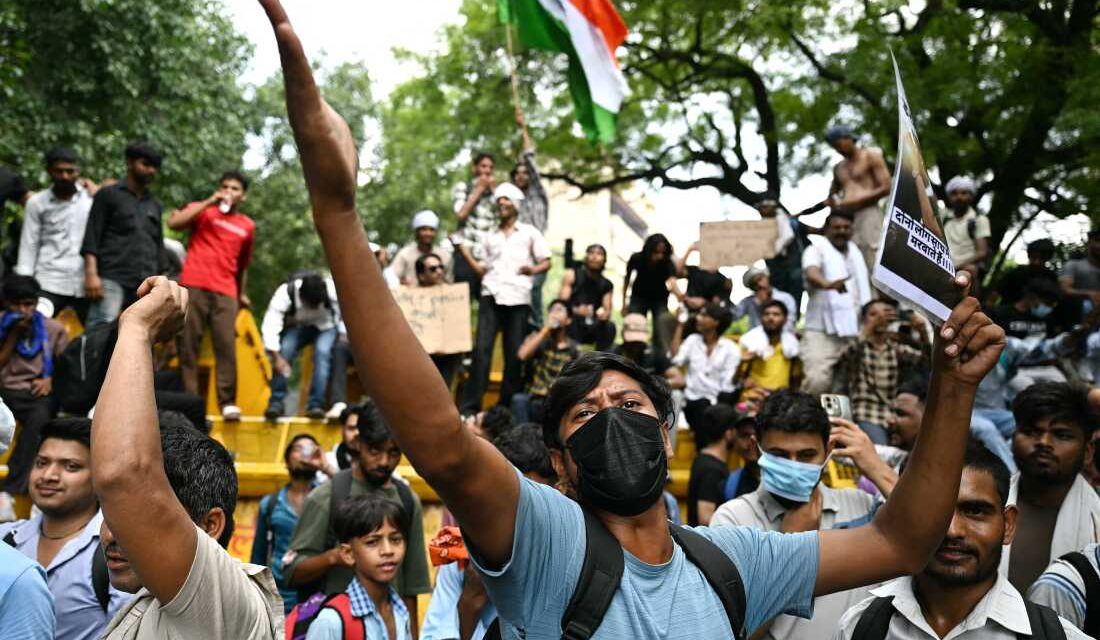
Amid a wave of protests in India, a supporter of the Cockroach Janta Party (CJP) is seen shouting slogans at Jantar Mantar in New Delhi. This demonstration demanded the resignation of Dharmendra Pradhan, India’s education minister. Recent student-led protests have put pressure on Pradhan, leading to his resignation due to widespread exam paper leaks.
Protests have swept across South Asia, drawing attention to the challenges faced by the youth. In September 2025, Nepal banned 26 social media platforms, citing efforts to combat misinformation and hate speech. Critics claimed it was a move to suppress videos showcasing politicians’ opulent lifestyles. The backlash resulted in mass protests, ultimately leading to the resignation of Prime Minister K.P. Sharma Oli. In Bangladesh, similar protests over a quota system in government jobs led to Prime Minister Sheikh Hasina’s resignation in August 2024.
Structural Drivers of Unrest
South Asia’s youth are confronting significant structural challenges. Despite economic growth, wealth distribution in Bangladesh remains unequal, with the richest 10% owning a majority of the country’s wealth. In Nepal, a third of the population under 30 remains unemployed, often despite having a college education. Youth frustration reflects the lack of opportunities and ongoing corruption.
In India, frustrations center on the perceived erosion of meritocracy. A 23-year-old protester highlighted the issue of exam paper leaks and the advantage of wealthier families paying for success, leaving poorer youth behind. These grievances reflect broader concerns throughout the region.
Internet and Youth Mobilization
The accessibility of the internet has transformed how youth protests unfold. Awareness of democratic rights and aspirations have risen, empowering youth movements. Attempts to limit online expression can exacerbate tensions, as seen in Nepal where social media restrictions fueled public anger and mobilization.
The Demographic Challenge
While demonstrations in New Delhi have paused following Pradhan’s resignation, the underlying issues persist. Solutions require addressing the systemic lack of opportunities for South Asia’s young population. Previously seen as an advantage, the demographic dividend has become a challenge as economic inequities and corruption remain unaddressed.
 The Threat of Melting Glaciers: A Call to Action
  Police Discover Ancient Roman Artifacts Off Sardinian Coast
  Urgent Need for Action in East Africa’s Food Crisis
  Suspected Plague Death in Siberia Sparks Health Measures
  G7 Nations Agree to Release 100 Million Barrels of Oil Amid Fuel Price Surge
  Co-Pilot Attempts Hijack on Flight to Tel Aviv