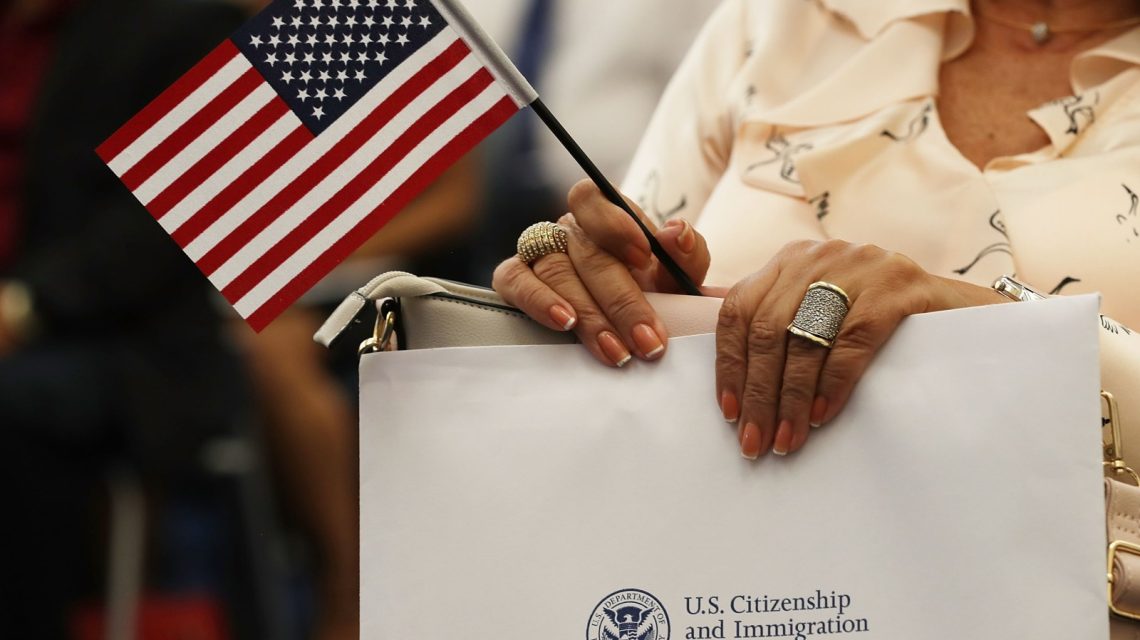
The Trump administration is exploring modifications to the U.S. citizenship test with the aim of setting new educational standards for applicants and granting more flexibility in its administration by immigration officials. According to a federal regulatory agenda, these changes could involve how the test is administered while enhancing the integrity of the naturalization process.
Proposed Changes to the Naturalization Exam
The Department of Homeland Security (DHS) has indicated that the proposed rule seeks to establish a framework and standard for applicants to meet educational requirements for citizenship. U.S. Citizenship and Immigration Services (USCIS) is contemplating the involvement of third parties in administering the naturalization test. The DHS proposal suggests this could provide more flexibility, though the agenda entry lacks specifics on the operation of such a system.
These changes could affect hundreds of thousands of applicants annually. In fiscal 2024, USCIS naturalized 818,500 individuals, contributing to nearly 8 million new citizens over the past decade. Data indicates an initial pass rate of 89.7%, which rises to 94.4% after retesting.
Current Requirements for Citizenship Applicants
Under current legislation, applicants must demonstrate basic proficiency in reading, writing, speaking English, and knowledge of U.S. history and government. The DHS noted that existing regulations lack specifics regarding how these educational requirements should be met.
The proposed changes aim to ensure proper assimilation of lawful immigrants and promote a unified American identity linked to the Constitution, laws, and founding principles.
Historical Context and Expert Opinions
Douglas S. Pierce, a former USCIS supervisor, acknowledged that third-party testing is not new, citing attempts during the Clinton administration. He highlighted the lack of detailed information currently available to assess the full impact of the proposal.
Immigration attorney Gabriella Walsh commented that the proposal could significantly alter the naturalization process. She noted that immigration policy is evolving beyond visas and border enforcement, with established processes like naturalization subject to change.
A revised civics exam introduced during Trump’s term was later replaced by the Biden administration, but USCIS announced a new version in 2025, building on past changes.
Denaturalization Efforts
The Trump administration has intensified its denaturalization initiatives. The Justice Department recently launched its largest coordinated effort to revoke citizenship of 25 naturalized Americans accused of fraud or other misconduct. Denaturalization cases have surged during Trump’s tenure, with an average of about 25 cases annually during his first term, up from 11 cases per year between 1990 and 2017.
Recent reports indicate increased filings for denaturalization, reflecting a change in Justice Department enforcement priorities since 2025.
Next Steps
DHS is expected to publish a notice of proposed rulemaking in December. Details on potential changes to educational standards and testing procedures remain pending. Public comments will be invited before adopting any final rule.
Editors at Newsweek involved in this story include Matthew Cannon and Shakeema Edwards.
 Trump Advocates for Expanded Use of Capital Punishment Amid Execution Controversy
  Investigation into Thomas Crooks’ Assassination Attempt
  Supreme Court Allows Trump Administration to Continue Third-Country Deportation Policy
  Trump Rallies Support in GOP Strongholds as Midterm Elections Approach
  Brazil’s Next Election: Familiar Faces and High Stakes
  Iowa Steel Plant: Incentives and Political Maneuvering