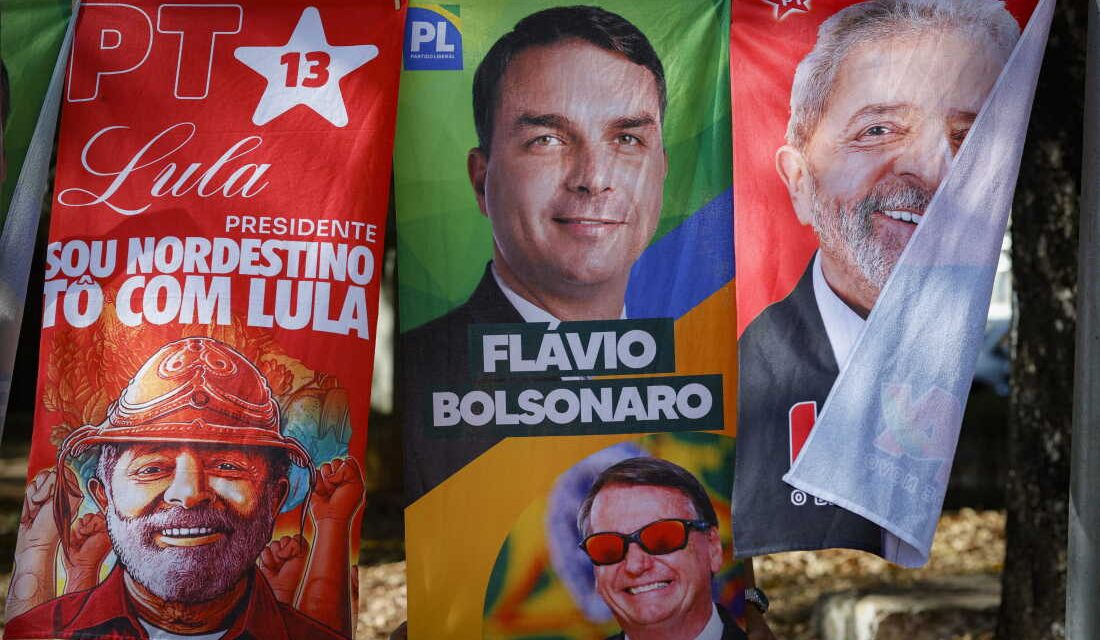
On September 11, 2026, merchandise featuring Brazilian presidential candidates Luiz Inácio Lula da Silva and Flávio Bolsonaro appeared in Brasília. This is ahead of Brazil’s presidential election on October 4, 2026.
The election brings back memories of the 2022 battle. This time, President Lula faces Flávio Bolsonaro, the son of his previous opponent Jair Bolsonaro. Flávio, a senator at 45 years old, aims to continue his father’s political legacy. Jair Bolsonaro is currently serving a 27-year sentence for attempting to overturn his loss to Lula. Flávio has vowed to pardon him if elected. Although Flávio claims to be more moderate, he aligns closely with his father’s policies. Flávio questions human-driven climate change and wants relaxed gun ownership laws. Lula, at 80, seeks a fourth term. The election’s outcome will decide if Brazil retains Lula’s left-wing government or returns to the Bolsonaro political stance.
October 4 Election Details
Lula and Flávio Bolsonaro are in a tight race among several candidates. Federal and state legislative seats and governorships are also contested. If no candidate secures over 50% of the vote, the two top candidates will proceed to a runoff on October 25. Brazil uses electronic voting machines, so results are typically fast. By Sunday night, the overall performance of each candidate should be known.
The Bolsonaro Political Legacy
Jair Bolsonaro was narrowly defeated in 2022, later becoming involved in efforts to contest the result. His conviction came with plans that included attempts on Lula’s life. Flávio stands by his father, making the promise to pardon Jair part of the campaign. This raises concerns about the impact on Brazil’s democratic processes. Lula was once jailed for corruption but saw his charges annulled. His record includes poverty reduction and Amazon rainforest conservation efforts. Political polarization remains high, challenging any president’s ability to gain strong approval.
Domestic Concerns
Beyond political drama, voters face pressing issues. Crime is a major topic. Bolsonaro supports a hard approach, possibly involving U.S. military cooperation. Lula prefers targeting criminal financiers and questions foreign influence. Corruption is another voter concern. Recent investigations have exposed questionable relationships between an incarcerated ex-banker and high-profile politicians, including Bolsonaro. Economic challenges also weigh on voters. Lula’s initial public spending spurred growth, but it has slowed. Bolsonaro’s camp blames national debt and suggests reductions inspired by Argentina’s policies.
U.S. Influence
The U.S. features prominently in the campaign. Flávio Bolsonaro’s rallies sometimes display U.S. flags, suggesting closer ties with Trump’s administration. A Brazilian magazine depicted U.S. interest using a spaceship image on its cover. The Bolsonaros have long pursued Trump ties; Flávio’s brother lives in the U.S., urging Trump to act against the trial of Jair. Trump’s tariffs on Brazil were justified by citing the trial. Meanwhile, Lula resisted Trump’s pressures, negotiated tariff reductions, and defended judicial independence. Lula accused the U.S. of interfering with Brazilian elections, which was dismissed by the U.S. State Department.
A close election could lead to disputes, says Yuri Sanches from AtlasIntel. A narrow Lula victory might lead Bolsonaro supporters to challenge results, possibly seeking U.S. support. Flávio’s win would strengthen the conservative movement in South America.
Implications for Democracy
Since emerging from a military dictatorship in 1985, Brazil ranks 28th on the Liberal Democracy Index. Jair Bolsonaro’s prosecution in 2025 highlighted the strength of democratic institutions. Flávio’s intention to pardon his father raises questions about their resilience. Brazil’s significance extends to global discussions. As a G20 member and part of BRICS, it holds economic and political weight. The election’s outcome affects global trade, climate policy, and the U.S.-Global South balance.
 Sen. Cotton Opposes Permanent Daylight Saving Time
  Steve Hilton’s Latino Outreach and Gubernatorial Ambitions
  The Need for Reform in Presidential Nominations
  Controversy Surrounds Performances at Gillette Stadium
  Celebrity Controversies Over Political Activism and Speech
  Trump Pushes for Permanent Daylight Saving Time, Sharing Senator’s Contact Information