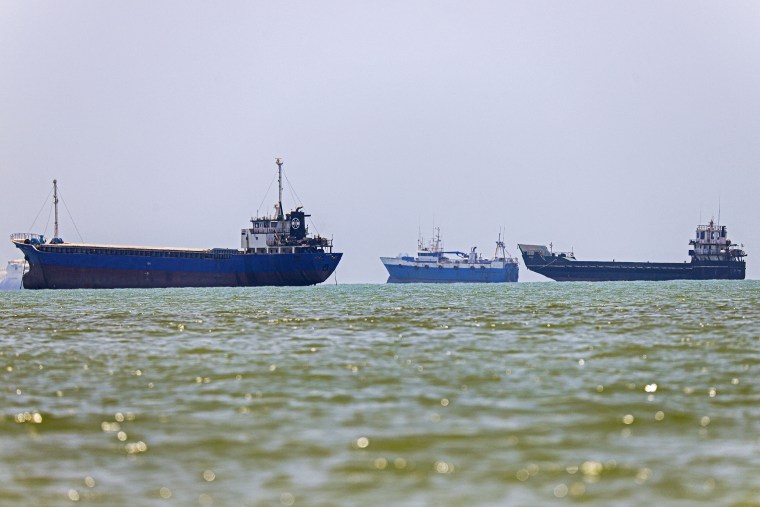
President Donald Trump indicated a potential agreement on the Strait of Hormuz could occur as early as Wednesday. Iran and Oman are getting closer to an agreement to reopen this essential waterway, aiming to help end the ongoing conflict. Initially, both Israel and the U.S. had broader goals, including the overthrow of Tehran’s regime and the conclusion of its nuclear initiatives. However, the conflict has now centered on the Strait of Hormuz, as Iran’s aggression halted shipping activity there.
The closure of the strait, which once accommodated one-fifth of the world’s oil and natural gas trade, has significantly increased fuel and basic goods costs globally, impacting the economy worldwide. Trump is facing increasing demands to resolve this unpopular conflict before the upcoming midterm congressional elections scheduled for later in the year.
Trump’s Comments on the Deal
During a trip to California, Trump responded to reporters regarding a report from Axios that mentioned an announcement might be made the following Wednesday. He stated, “It could happen. Tomorrow or the next day,” during an interview on Tuesday evening California time, underscoring progress made in negotiations. Meanwhile, vessels remained docked in Bandar Abbas along the Strait of Hormuz since June.
Following these discussions, oil prices slightly decreased on Wednesday as expectations of resuming shipping activities rose. Brent crude, the global standard, fell by 1.2% to $78.43 per barrel in the early hours of Wednesday.
U.S. and Iran’s Struggles Despite Progress
While the U.S. and Iran seemed to reach an agreement in June to reopen the strait, hostilities resumed shortly afterward. Recently, Trump has fluctuated between threats of severe military action and advocating for diplomatic solutions.
Regional Conflicts Escalate
In conjunction with potential progress at the strait, the region experienced continuous attacks. On Wednesday, Houthi rebels, backed by Iran, claimed responsibility for launching ballistic missiles at a Saudi oil tanker, the Wafa, in the Red Sea. Brig. Gen. Yahya Sare from the Houthis detailed the attack in a pre-recorded statement, although he provided no corroborating evidence. Saudi Arabia has yet to comment on the incident.
This escalation threatens to revive the Yemeni civil war after a de-facto truce was reached four years ago. In retaliation for the blockade on Yemen and an attack on Yemen’s main airport, the Houthis declared the closure of the Bab el-Mandeb Strait, leading to the Red Sea for Saudi-bound ships, back in July.
Moreover, an Indian-flagged commercial ship that sank off Yemen in the Red Sea on Tuesday was attributed to an explosive-laden boat, according to Yemeni and Indian authorities. The Yemeni coast guard managed to rescue the crew, which consisted of Indian and Yemeni members. Additionally, earlier that day, the United Kingdom Maritime Trade Operations Center reported a cargo ship struck by an unidentified projectile while in the Strait of Hormuz, causing damage according to British maritime company Ambrey.
Details of the Negotiation
The possible deal being discussed involves Iran and Oman with plans for ships entering the Persian Gulf via Iran and exiting through Oman, according to anonymous regional officials speaking to The Associated Press. Fees for security and maritime environmental preservation services would apply.
Trump has previously opposed any agreement granting Iran any authority in the strait, emphasizing opposition to toll charges, stating, “I’m not going to let them charge. Anybody’s going to charge, we’ll charge.”
Despite ongoing negotiations, the final arrangement may link to lifting the U.S. blockade on Iranian ports.
U.S. and Iranian Negotiation Updates
Esmail Baghaei from Iran’s Foreign Ministry commented on ongoing discussions with Oman, focusing on secured shipping lanes that respect sovereign rights and national security considerations of both countries. He noted the outcome would be shared publicly upon completion.
U.S. Secretary of State Marco Rubio acknowledged progress in discussions but highlighted they were not finalized. Previously, Rubio voiced concern that granting Iran control could set a risky precedent globally.
Meanwhile, U.S. Treasury Secretary Scott Bessent mentioned to CNBC the possibility of reaching an accord imminently to restore the strait and progress toward a stabilized conflict scenario.
In dialogue with reporters, Trump declared U.S.-Iran talks ongoing and emphasized the precariousness of Iran’s situation, despite Iran’s denials. He indicated an initial focus on reopening the straits, followed by denuclearization efforts, which would demand more time.
 The Threat of Melting Glaciers: A Call to Action
 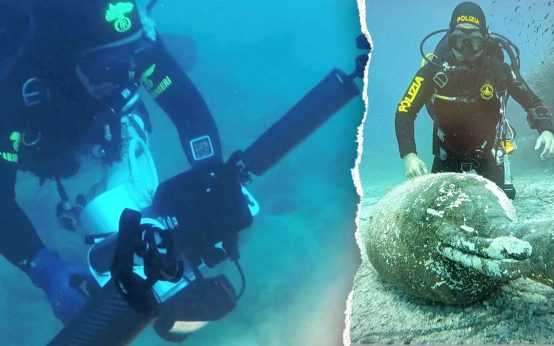 Police Discover Ancient Roman Artifacts Off Sardinian Coast
  Urgent Need for Action in East Africa’s Food Crisis
  Suspected Plague Death in Siberia Sparks Health Measures
  G7 Nations Agree to Release 100 Million Barrels of Oil Amid Fuel Price Surge
  Co-Pilot Attempts Hijack on Flight to Tel Aviv