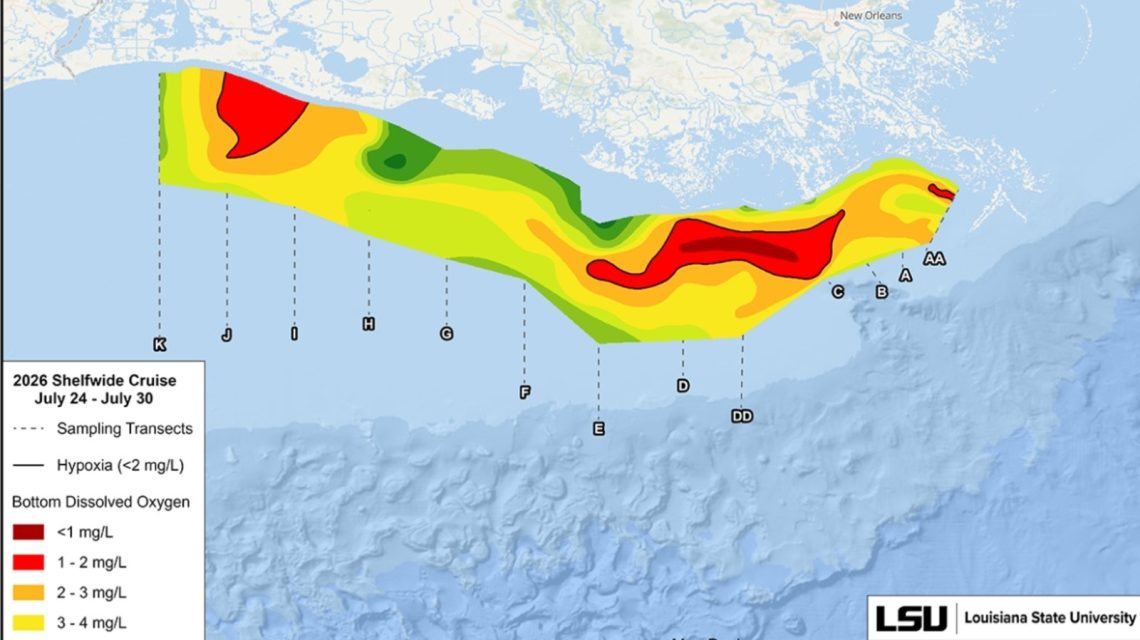
A significant low-oxygen “dead zone” has once more appeared in the Gulf of Mexico along the U.S. coast. New data from the National Oceanic and Atmospheric Administration (NOAA) reveals this occurrence, although its size was smaller than anticipated due to temporary disruption from a tropical storm.
Size and Location
The annual hypoxic zone, a region with critically low dissolved oxygen levels, covered approximately 1,332 square miles in July. This measurement makes it the second-smallest in over 40 years of records. Hypoxic zones earn the name “dead zones” as marine life like fish and shrimp often leave or struggle there when oxygen is scarce.
According to NOAA’s map, this zone extends across parts of the northern Gulf near Louisiana, fueled by nutrient-rich waters from the Mississippi and Atchafalaya rivers. Regions marked in red indicate dissolved oxygen levels of 2 milligrams per liter or less, deemed hypoxic and unsuitable for many bottom-dwelling species.
Understanding Hypoxic Zones
Hypoxic zones arise when excessive nutrients, mainly nitrogen and phosphorus from agricultural runoff, wastewater, and stormwater, enter water bodies and produce large algal blooms. When these algae die and decompose, bacteria use up oxygen, leading to dangerously low levels, especially in warm periods when mixing between surface and bottom waters is limited.
Scientists have long studied hypoxia due to its significant ecological and economic consequences. Persistent low oxygen can disrupt migration, decrease habitat availability, and impact vital fisheries. NOAA emphasizes the importance of understanding these effects for industries like seafood, recreational fishing, and coastal tourism.
Impact on Marine Life
Marine species near the seafloor suffer most when oxygen levels decrease. Hypoxic conditions remove critical habitats for bottom-dwelling organisms, forcing relocation or causing stress that impacts their growth and reproduction. Fish, shellfish, corals, and aquatic plants are at risk when oxygen decreases below survivable levels.
Mobile animals, such as many fish and shrimp, may escape if oxygen drops gradually. However, this movement can lead to overcrowding and disrupt feeding and breeding. Less mobile organisms on the seafloor face greater threats with limited avoidance options.
Ocean mammals, like whales and dolphins, are generally less vulnerable because they can breathe air. Nonetheless, dead zones can affect them by altering food webs and decreasing prey availability. Changes in prey movement can force dolphins to travel further for food.
Reduction in Hypoxic Zone Size
This year, the unexpectedly smaller size of the hypoxic zone does not indicate a complete escape from hypoxia. Tropical Storm Bertha mixed the water column before the survey, temporarily reducing visible low-oxygen conditions. Earlier forecasts predicted a zone over 7,000 square miles, larger than the average and nearing New Jersey’s size.
NOAA’s monitoring highlights how weather events significantly affect hypoxia formation. Measuring dead zones provides insights into ocean oxygen levels and connections between land, waterways, and oceans, underscoring efforts to develop better management strategies.
Other Hypoxic Zones
Dead zones are not unique to the Gulf. They occur in several U.S. waterways, including Chesapeake Bay, Long Island Sound, portions of Lake Erie, and along the coastlines of Washington and Oregon. These areas experience oxygen depletion often due to nutrient-related algal blooms and specific oceanographic conditions.
Chesapeake Bay and Long Island Sound are closely watched as these zones pose threats to local marine species like fish, crabs, and oysters. Hypoxia has also affected the Pacific Northwest coast and Lake Erie, highlighting the widespread environmental challenge across the U.S.
Future Efforts
Efforts are underway to reduce the Gulf’s dead zone to 1,900 square miles by 2035 through minimizing nutrient runoff in the Mississippi River watershed. This year’s smaller zone doesn’t necessarily reflect a resolved issue, as tropical storms contributed to the decrease. Ongoing research and policy efforts continue focusing on tackling these widespread environmental challenges.
 Atlantic Ends September Without a Hurricane for First Time Since 1994
  Bobcat Sightings and Conservation Efforts in Illinois
  2026 El Niño: A Historical Comparison and Future Projections
  U.S. Records Warmest September in History
  Swiss Glaciers Show Effects of Ice Loss Amid Global Warming
  Climate-Resistant Rock Glaciers: Hidden Water Resources