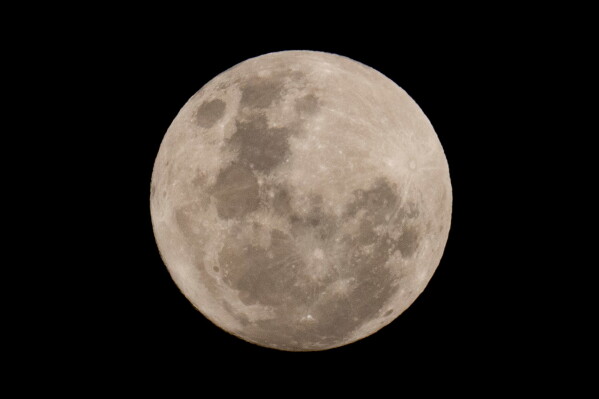
A recent study highlights the potential of a protective vest, tested on a manikin during NASA’s Artemis mission, to significantly decrease radiation exposure for astronauts facing extreme solar storms. This protective gear underwent evaluation on a female test dummy during NASA’s Artemis I flight in 2022. Although the mission had no crew on board, it set the stage for an upcoming crewed moon flyby scheduled for April.
Significance of Radiation Protection
Radiation poses a severe threat to astronauts, especially as NASA plans the establishment of a permanent moon base. The study, published in Science Advances, indicates that protective garments can safeguard crews during solar events, enabling them to operate beyond their shelters when necessary. The United States, Germany, and Israel collaborated on this research.
The vest has previously been tested on the International Space Station. It did not accompany astronauts on the Artemis II mission due to limited space, but it could be used in future missions. Designed for use during solar events, the vest targets the most vulnerable organs and tissues, including the lungs, stomach, bone marrow, breasts, and ovaries. Women face a heightened risk of radiation-induced cancer.
Testing and Results
Artemis I involved two female manikins named Zohar and Helga, each measuring 3 feet from head to torso. These manikins occupied seats in NASA’s Orion capsule, with Zohar wearing a 57-pound AstroRad vest made by StemRad and Lockheed Martin. Helga did not wear the vest but had radiation sensors akin to Zohar’s sensors.
Study lead, Jordan Houri of StemRad, noted this experiment was the most extensive assessment of astronaut radiation exposure beyond low-Earth orbit. NASA, the German Aerospace Center, and the Israel Space Agency funded the project.
Radiation exposure for astronauts near Earth benefits from the planet’s protective atmosphere and magnetic fields. Although Artemis I experienced no significant solar flares, simulations based on Orion capsule data revealed the vest’s protective capabilities. During events akin to the 1972 and 1989 solar storms, the vest reduced radiation exposure by about 60% and nearly 40%, respectively, equating to approximately 193 and 131 days of unnecessary radiation in deep space.
Implications for Future Missions
Apollo missions lasted only up to two weeks, but future moon-base projects will require longer stays, increasing the risk of exposure to severe solar storms. Future Mars expeditions, concerning companies such as SpaceX, may last months or years. Scientists are examining how to reduce vest weight while retaining its shielding properties, and considering recycling onboard materials for radiation protection.
According to Houri, further deep-space testing might not be necessary in the short term, given the vast dataset obtained from Zohar and Helga. Currently, Zohar’s displayed at Kennedy Space Center in Florida, where the mission began.
The Associated Press Health and Science Department receives backing from the Howard Hughes Medical Institute’s Department of Science Education and the Robert Wood Johnson Foundation, although the AP alone is responsible for its content.
 The Threat of Melting Glaciers: A Call to Action
  Climate-Resistant Rock Glaciers: Hidden Water Resources
  California Voters to Decide on $7.5 Billion State Research Fund
 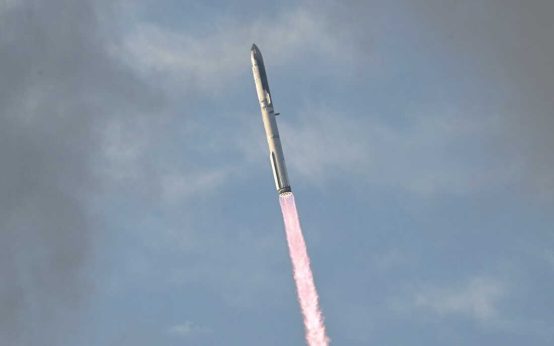 SpaceX Successfully Launches Starship Flight 14 into Orbit
  Ancient Pottery Unearthed During Roadworks in Tbilisi
  U.S. Space Academy Announcement