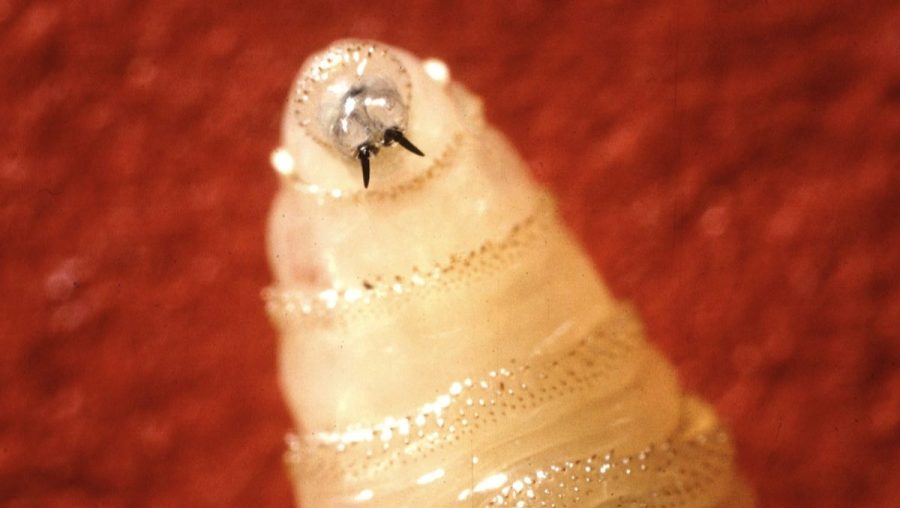
In August, the United States Department of Agriculture confirmed 45 cases of New World screwworm infestations in the U.S. The latest detection occurred in Terrell County, Texas, affecting a domesticated sheep. While the screwworm has primarily targeted animals like cattle, sheep, and dogs since entering the U.S. during the summer, there are concerns for humans as well. The screwworm flies can lay eggs on warm-blooded hosts, including humans, leading to parasitic larvae, known as maggots, that consume flesh around them.
The Centers for Disease Control and Prevention (CDC) warns that even small wounds, such as tick bites, can attract a female screwworm fly to lay her eggs. A single female fly can lay up to 3,000 eggs during her lifespan of 10 to 30 days. Unlike the cyclospora parasite, which spreads through contaminated food, screwworm flies deposit eggs directly into live tissues, such as wounds and openings like the nose, mouth, eyes, or ears.
Individuals who frequently spend time outdoors and interact with animals, especially those with open cuts, are at heightened risk. Treatment for screwworm infestations involves the removal of all larvae and eggs from the affected person, potentially requiring surgical intervention if maggots are deeply embedded.
Agricultural authorities are actively working to halt the spread of screwworms, posing a significant threat to the nation’s cattle industry. Infestations have predominantly occurred in Texas, with a single case reported in New Mexico. The Department of Agriculture is deploying sterile flies to curb reproduction rates, while the Food and Drug Administration has authorized an emergency preventive medication.
All rights reserved by Nexstar Media Inc., 2026. Unauthorized reproduction of this material is prohibited.
 Senator Roger Marshall Criticizes Dr. Anthony Fauci Over Vaccine Text Messages
  Understanding Medicare Extra Help and Its Benefits
  Trump’s Remarks on Childhood Vaccines Spark Debate
  CDC Reports Drug-Resistant Fungus Candida Auris Cases Across 27 States
  Medicaid Coverage and Its Impact on Pediatric Care
  Challenges of Breaking Up MMR Vaccine