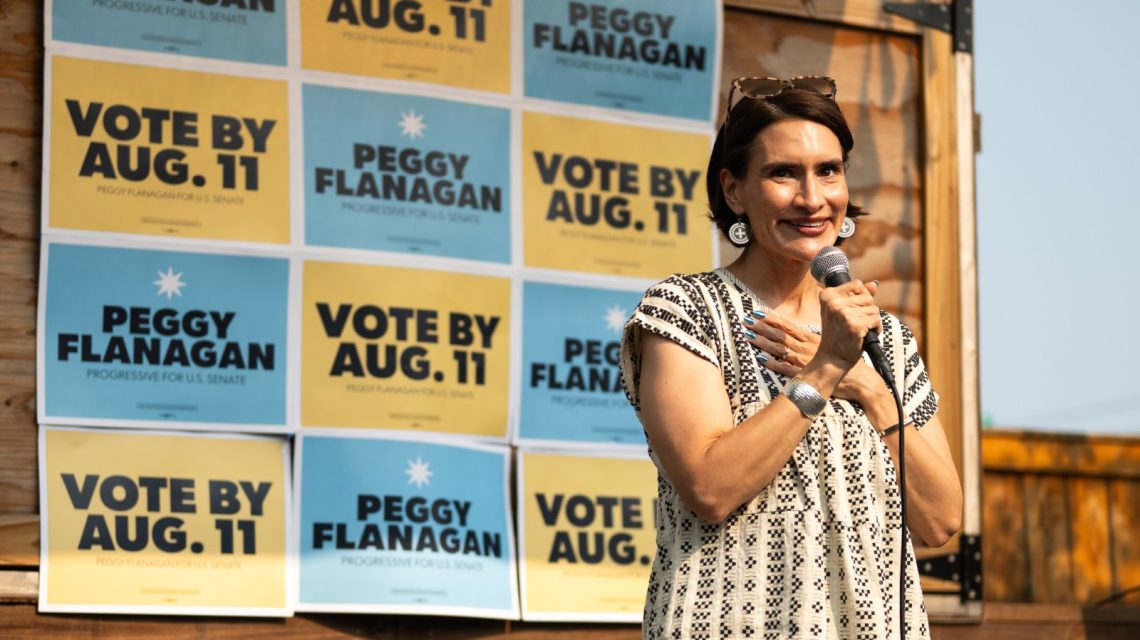
Minnesota Democrats delivered a clear message: organizing efforts and a commitment to change outweighed traditional party loyalty in their latest primary. Lieutenant Governor Peggy Flanagan defeated Representative Angie Craig in the Democratic race for the U.S. Senate with 59 percent to Craig’s 39.4 percent, as 99 percent of votes tallied.
Flanagan’s campaign strategy focused on rejecting corporate PAC money and criticizing Israel’s actions in Gaza, which helped cast Craig as aligned with the Washington establishment and out of touch with voters. Despite Craig securing $12.6 million compared to Flanagan’s $6.4 million, as reported by Open Secrets, Flanagan’s approach resonated more with Minnesota voters. High-profile support divided, with Craig endorsed by leaders such as House Minority Leader Hakeem Jeffries and former Speaker Nancy Pelosi, while Flanagan gained backing from Senators Elizabeth Warren and Bernie Sanders.
Originally framed as an ideological battle between Sanders-style progressivism and Clinton-esque centrism, the race ultimately hinged on campaign execution. Flanagan emphasized her grassroots efforts, stating, “Rejecting corporate PAC money was a simple decision, but it meant we needed a strong ground game.”
According to AdImpact, Craig spent $9.6 million on advertising, while Flanagan allocated $1.9 million, instead prioritizing 300 events across 112 communities. During these events, Flanagan discussed proposals such as Medicare for All, a higher national minimum wage, and universal childcare, energizing over 40,000 attendees at the Minnesota Democratic-Farmer-Labor (DFL) Party precinct caucuses.
As the campaign gained momentum, Flanagan secured the DFL’s endorsement at the May convention, enhancing her odds of election success. “We knocked on 30,000 doors the weekend before the race,” Flanagan said. “Many volunteers were new to campaigns, underscoring voter interest in electing representatives who prioritize people over money.”
In the general election, Flanagan faces Republican nominee Michele Tafoya, who asserts, “This is about common sense versus crazy.” Anticipating GOP support for Tafoya, Flanagan will maintain her anti-PAC and populist economic message. While previously critical of Craig’s ties with Republicans, Flanagan plans to escalate her critique of Donald Trump, emphasizing that Tafoya aligns closely with Trump’s policies.
The Cook Political Report marks the Minnesota race as “Likely D,” citing the state’s Democratic voting streak since 1972. If elected, Flanagan aims to join “The Fight Club” of progressive senators to shift the Senate’s direction. She has expressed interest in potentially supporting Chris Van Hollen for Senate leadership, though her final decision remains open.
Flanagan plans to establish bipartisan relationships through initiatives like “99 coffees” with Republicans, acknowledging the importance of collaboration with willing Republicans to drive change. She believes that aligning with the recent wave of progressive candidates can usher in positive developments.
“People are seeking representatives who serve them, not corporate interests,” she remarked. “The wave of elections we’ve seen indicates that voters are ready for change, breaking from Washington’s status quo.”
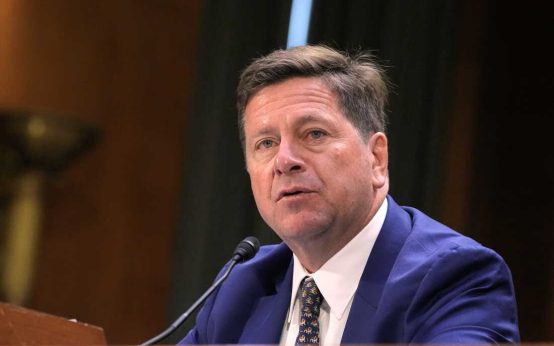 Jay Clayton Appointed as White House AI Czar
 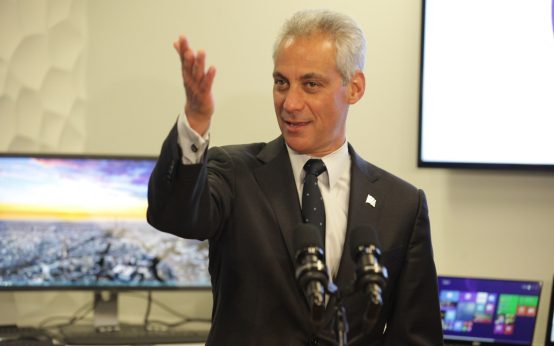 Debate Over Democratic Socialism Intensifies Within Democratic Party
 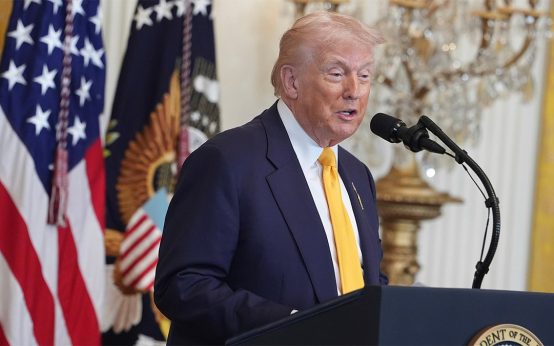 Latino Voters Show Less Support for Trump and GOP
  Rep. Emmer Criticizes Far-Left Democrats, Rallying Support for GOP
  Latino Men Shift Away from Trump Ahead of Midterms
  Jonathan Turley: Left Demonizes Supreme Court