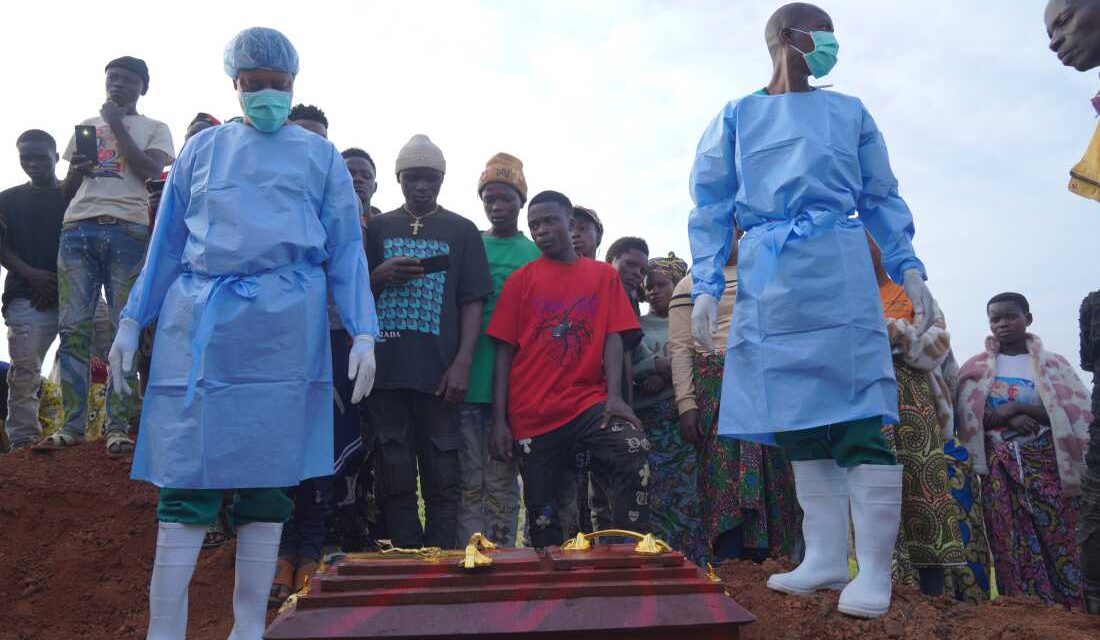
BUNIA, Congo — The Ebola outbreak in Congo has reached alarming levels, with government data revealing 5,000 cases as of Wednesday. Officials warn that the virus’s spread is accelerating at a pace that far exceeds containment efforts, particularly in remote areas.
According to Congo’s Ministry of Health, the outbreak has recorded 5,021 cases and 2,378 deaths by Sunday. The crisis is compounded by instability, displacement, and frequent movement of people. This outbreak has progressed faster and with greater fatalities than any previous Ebola crisis.
The World Health Organization (WHO) projects that this outbreak may surpass the 2014-2016 outbreak in West Africa, which resulted in over 11,000 deaths. From the first reported case, the current outbreak has expanded approximately three times faster than the worst outbreak in history.
“The epidemic is far from being under control,” WHO Director-General Tedros Adhanom Ghebreyesus stated at a recent meeting. “The risk of national and international spread remains high.”
In Bunia, Ituri province, nurse Thérèse Anyiya expressed exhaustion due to heavy workloads and inadequate working conditions. Some health workers are striking due to unpaid wages, threatening to withdraw from duties if management does not act seriously.
A significant challenge is the absence of approved vaccines or treatments for the Bundibugyo virus causing the outbreak. Most new cases are emerging beyond monitored groups, putting pressure on surveillance teams to catch up.
Ituri province, significantly impacted by the outbreak, is experiencing violence that hinders response efforts. On Monday, residents in Aru territory attacked health workers following a suspected Ebola case report. A mob burned an ambulance and damaged other vehicles, reported Michael Wani of the Union of Cultural Associations for the Development of Ituri.
Dr. Martin Cwinyay highlighted the necessity of bringing response efforts closer to affected communities, especially in rural, mining, and displaced regions.
Trish Newport of Doctors Without Borders emphasized the need for community awareness regarding the outbreak. People must understand symptoms and appropriate actions if symptoms manifest.
Experts suspect the virus spread from the mining town of Mongbwalu in February, months before the outbreak was officially declared on May 15. Responders are racing to contain the outbreak amidst challenges such as rebel threats, community trauma, and poor road access.
Although fatalities during the 2014-2016 outbreak were historically high, the current Bundibugyo outbreak presents a higher fatality percentage, primarily due to delayed patient care and limited symptom reporting. The case fatality rate averages 47.4%, but in areas like North Kivu province, it escalates to 70% due to more challenging conditions.
 U.S. Monitors Potential Pneumonic Plague Case in Russia
  Grudges and Forgiveness: The Impact on Mental Health
  Heroic Passengers Prevent Catastrophe on Flight 1073
  Brazil’s Presidential Race Heads to Runoff
  Israeli Prime Minister Calls for Comprehensive Security Review of Civil Flights
  U.S. Marine Arrested in Okinawa for Alleged Murder and Robbery