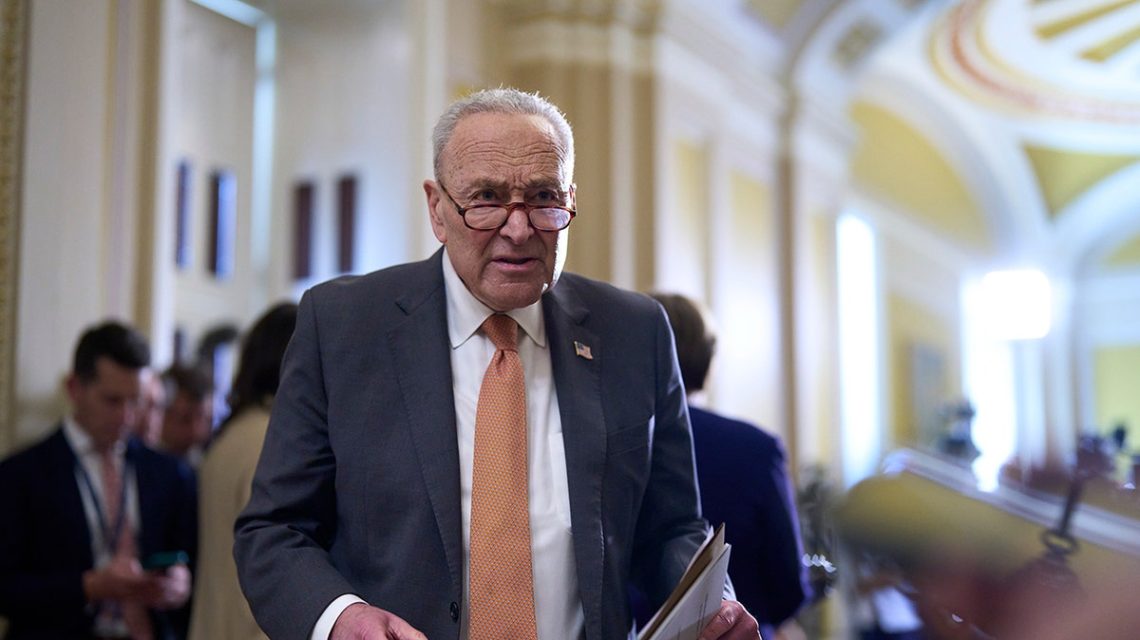
If the 2026 midterm elections occurred today, Democrats might be poised to regain control of the Senate. RealClearPolitics polling averages suggest Democratic candidates are ahead in key states: North Carolina (+8%), Minnesota (+4%), Texas (+3%), Ohio (+3%), and Michigan, Maine, and Alaska (+2% each).
President Trump’s approval rating is below 40%, which could negatively impact Republican candidates nationwide. Democrats need to flip four seats, assuming no Republican gains in states like Michigan, Minnesota, or Georgia. This makes a Senate comeback feasible for Democrats, according to available data.
The midterms are not happening today, and with about two months left until Election Day, anything can happen.
Despite potential advantages, Democratic candidates face various challenges, making the outcome uncertain. In many states, their polling leads are within the margin of error. Voter focus typically increases post-summer, possibly inflating Democratic numbers, as higher-frequency voters often lean Democratic.
Frustration with Trump potentially only carries Democrats so far. Candidate quality is crucial for moderates and swing voters. The success of left-leaning Democratic candidates, associated with the Democratic Socialists of America (DSA), gives Republicans opportunities to label Democrats as extreme.
In 2024, Donald Trump successfully positioned Kamala Harris as too far left. Democrats have since shifted further left. In Texas, Michigan, and Maine, key races could determine Republican control. Candidates like James Talarico, Abdul El-Sayed, and Troy Jackson have far-left positions that may alienate voters.
Such positions include Talarico’s support for transgender women in sports, El-Sayed’s anti-American statements and ties to far-left influencer Hasan Piker, and Jackson’s inconsistencies. Republicans will likely emphasize these perceptions in their campaigns.
Even moderates like Alaska’s Mary Peltola may face Republican attempts to tie them to the DSA. Dan Sullivan has portrayed her support as detrimental to Alaska’s energy sector, despite her stance on drilling.
Democrats must secure 51 seats due to Vice President JD Vance’s tiebreaker. Uncertainty surrounds Sen. John Fetterman possibly switching parties, though he denies such plans.
Republicans have a financial advantage, with the Republican National Committee holding $128.5 million compared to the DNC’s $16.3 million. Collectively, Republican committees and super PACs have $657 million, vastly outmatching the Democrats’ $334 million. Trump’s super PAC alone holds over $400 million.
Democrats have a legitimate opportunity to retake the Senate, surprising after their 2024 defeat. Despite the favorable map for Republicans, Democrats lead in unlikely states like Alaska and Texas, fueling their momentum.
Nevertheless, the final outcome of the midterms remains uncertain. Poll leads don’t guarantee election wins. Narrow leads, candidate concerns, and Republican financial strength complicate the Democrats’ path to flipping the Senate.
Carly Cooperman, CEO of Schoen Cooperman Research, provides insights. Doug Schoen, a pollster and political consultant with over 40 years of experience, served as an adviser to President Bill Clinton.
 Sen. Cotton Opposes Permanent Daylight Saving Time
  Steve Hilton’s Latino Outreach and Gubernatorial Ambitions
  The Need for Reform in Presidential Nominations
  Controversy Surrounds Performances at Gillette Stadium
  Celebrity Controversies Over Political Activism and Speech
  Trump Pushes for Permanent Daylight Saving Time, Sharing Senator’s Contact Information