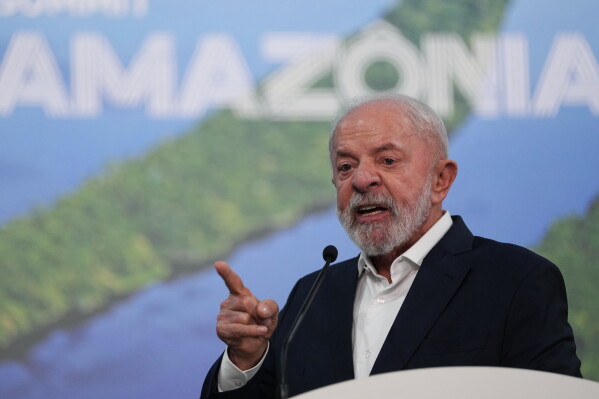
Brazil’s Supreme Court is on the verge of making critical decisions that could reshape protections for the Amazon rainforest and Indigenous communities. The upcoming cases cover issues such as Indigenous land rights and recent environmental safeguard rollbacks. Despite differing specifics, these cases have reached the court due to actions by a largely conservative Congress, whose measures are seen by environmentalists as constitutional violations.
Under the leadership of President Luiz Inácio Lula da Silva, who focuses on environmental agendas, some measures were vetoed or partially rejected; however, Congress overrode these objections, leading to these cases being taken to the Supreme Court. For many environmental advocates, the court represents a crucial barrier against the erosion of Brazil’s environmental protections.
Despite the Lula administration’s achievements in reducing deforestation and promoting ecological investments, its influence in Congress is limited. Agribusiness interests dominate the legislative branch, often pushing through measures that weaken environmental protection policies. As a result, the Supreme Court plays a significant role in supporting parts of Lula’s agenda when Congress resists these efforts.
Agribusiness is a major economic sector in Brazil, wielding substantial power in Congress. It has pressed for continued agricultural expansion, the primary driver of Amazon deforestation through cattle ranching and soybean production. Brazil is a leading global producer of soybeans and beef, with much of the soybean production exported, particularly to China, which buys significant portions of Brazil’s beef and soybean exports. However, efforts to curb illegal deforestation continue amidst calls for increased productivity.
“The government is very weak in the legislative arena,” said Suely Araújo from the Climate Observatory.
On Indigenous land rights, Brazil’s Supreme Court reviews final motions on a 2025 ruling that dismissed the “time limit” thesis. This legal idea, backed by farming interests, would fix land claims to territories occupied or disputed at the time of Brazil’s 1988 Constitution. Many Indigenous groups oppose this cutoff, citing historical expulsions and forced displacements. The court will address motions from varied stakeholders, including the government, political parties, farmers, and Indigenous organizations. The decisions may impact land compensation rules and deadlines for demarcating Indigenous territories.
Ricardo Terena, a lawyer with the Articulation of Indigenous Peoples of Brazil, noted potential delays in future demarcations caused by added administrative challenges.
The Kawahiva people, nomadic hunter-gatherers in the Amazon, are among those affected. They remain largely uncontacted, avoiding outsiders despite documented presence and territory demarcation completed only recently.
The Supreme Court is also reviewing legislation concerning the soy moratorium and a new environmental license law. Grain traders abandoned the soy moratorium following state laws ending tax benefits for compliant companies. An injunction by Justice Flávio Dino temporarily halted these state laws; now the court will examine his decision.
Another critical review involves a new environmental licensing law that expedites approval for large projects. The Climate Observatory’s Araújo expects the court to strike down unconstitutional elements of this law, noting its immediate consequences for Amazon infrastructure projects. The environment ministry voiced concerns over maintaining national standards, defending the soy moratorium’s success in reducing deforestation.
The Associated Press provided coverage supported by private foundations, ensuring journalistic standards and unbiased reporting.
 Atlantic Ends September Without a Hurricane for First Time Since 1994
  Bobcat Sightings and Conservation Efforts in Illinois
 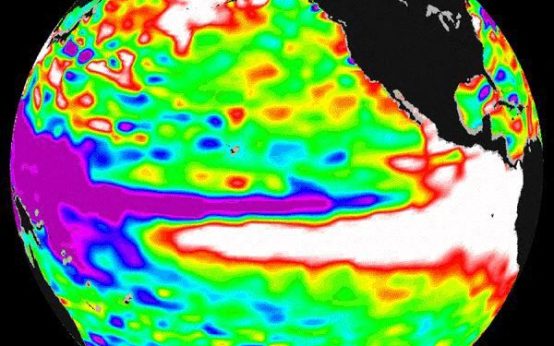 2026 El Niño: A Historical Comparison and Future Projections
  U.S. Records Warmest September in History
 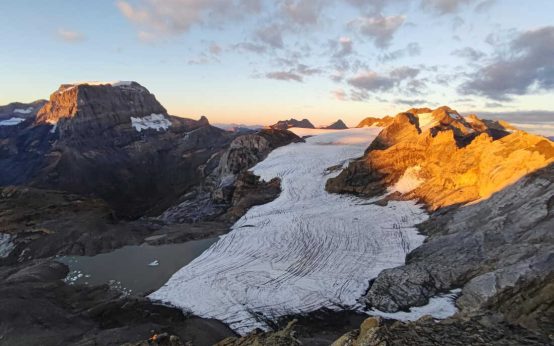 Swiss Glaciers Show Effects of Ice Loss Amid Global Warming
  Climate-Resistant Rock Glaciers: Hidden Water Resources