With El Niño increasing the chances of significant storms this fall and winter, California remains vigilant against potential flooding. However, a heavy rainfall season could also mean a substantial increase in water supply. The state must ask itself: how ready is it to benefit from El Niño, and what further actions can it take to maximize an abundant wet year?
Experts agree that California has advanced in stormwater capture but more can be done. In Los Angeles County, a system of 27 spreading grounds captures stormwater as it flows from the mountains into valleys. This water penetrates the soil, replenishing groundwater. Sterling Klippel, assistant deputy director of the L.A. County Public Works Department, stated, “It really makes a big difference during these wet years that we capture as much of that water as possible.” During the 2025-26 storm season, this capture system collected water equal to what 3.3 million residents consume annually. If El Niño brings substantial storms, the area could absorb even more water underground for future use.
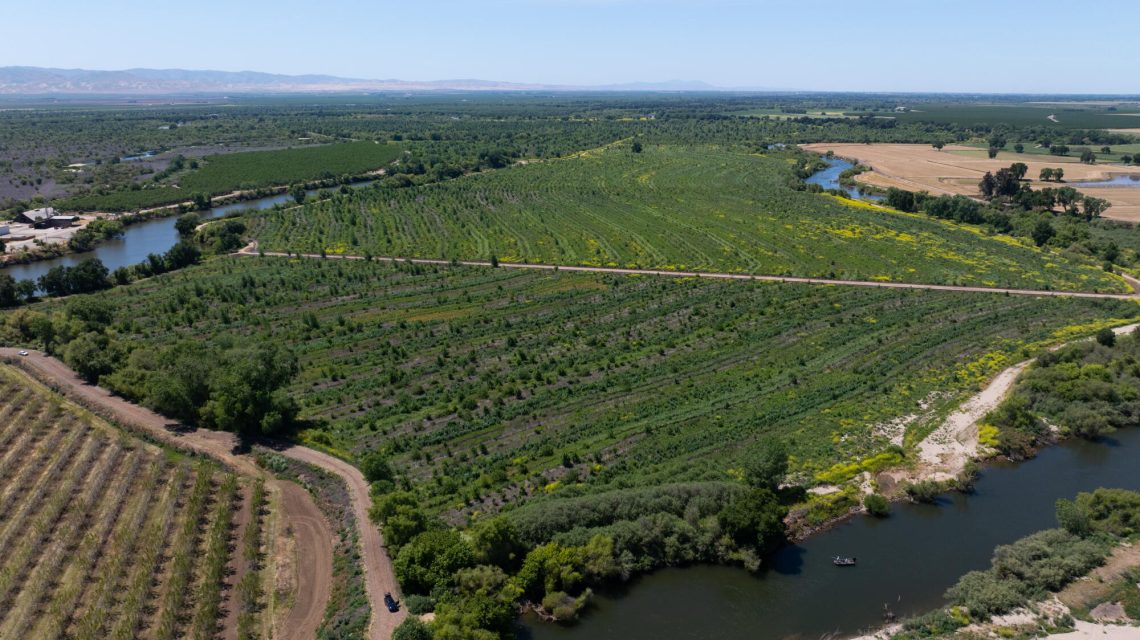
Significant water capture initiatives are also taking place in the Central Valley. Crews have been restoring floodplains, creating recharge basins, and diverting floodwater to farmland. Julie Rentner, president of River Partners, a nonprofit group, highlighted, “This El Niño year is a huge opportunity for our water system.” Over a decade, her group has transformed 13,000 acres of farmland, allowing water to sink into the land and revive groundwater. Historically, the Central Valley was lush with meadows, wetlands, and lakes, fed by the Sierra Nevada snow. It was developed into agricultural land but is now being restored to absorb more water.
Notable efforts include converting former farm fields near Modesto into floodplains. In 2023, these areas expanded significantly during a rare wet year. Rentner’s organization aims to open more floodplain areas with government support. “By far the single most important step California can take to capture water during big storms” is this restoration, Rentner emphasized. This aligns with state efforts to ready for El Niño storms; Governor Gavin Newsom declared a statewide emergency to enhance flood preparedness.
The declaration mobilizes state agencies for flood readiness and water capture. During the 2023 floods, Newsom’s executive order suspended permit requirements to enhance groundwater recharge via farms and irrigation districts. Equipment was deployed to redirect water into canals. While El Niño doesn’t guarantee heavy storms, it increases their likelihood, with more intense El Niños linked to global warming.
Farmers and irrigation managers are planning ahead. Don Cameron, the manager of Terranova Ranch in Helm, has pioneered groundwater recharge by inundating fields. During the 2023 floods, his team utilized extensive equipment for water capture. “We proved in ’23 we could take a lot of water off the Kings River when it flooded,” Cameron noted. This year, he has upgraded to electric pumps for better efficiency.
Elsewhere, Tulare Irrigation District was able to manage water excess by collectively channeling the resources to their fields, acting “like one big sponge,” said district Chief Executive Aaron Fukuda. The collective efforts from across the state contributed to a significant groundwater recharge in 2023, but there remains a deficit from years of water extraction.
To further improve water retention, state agencies, including the Department of Water Resources, have spearheaded projects supporting local water capture through financial aid and logistical assistance. Plans for new infrastructure, like Sites Reservoir near Sacramento, are in place. However, experts suggest flexible dam management could significantly boost water retention without requiring new reservoirs.
Research indicates that adapting dam operations to more precise weather forecasting could enhance water retention. For example, trial implementations along the Russian River have demonstrated the approach’s effectiveness. “It’s worked really well during several years of testing,” said Marty Ralph from UC San Diego’s Scripps Institution of Oceanography. Such advances could support over a million households annually.
California must prepare for more than El Niño. With climate change, precipitation could fall more as rain, not snow. Atmospheric rivers could intensify, causing heavier downpours, while droughts become prolonged. Effective management of big storms not only aids flood prevention but also ensures essential water supplies amid climate stress.
 Climate-Resistant Rock Glaciers: Hidden Water Resources
  Senators Reach Bipartisan Agreement on Permitting Reform
  Experts Warn of Critical Period for the Colorado River
  Future Cities: Ambitious Projects Aiming for Innovation and Sustainability
  Supreme Court Case Suncor vs. Boulder: Implications for Accountability in Climate Change
  Hawaii Faces Impact of Record El Niño Through Recent Hurricanes