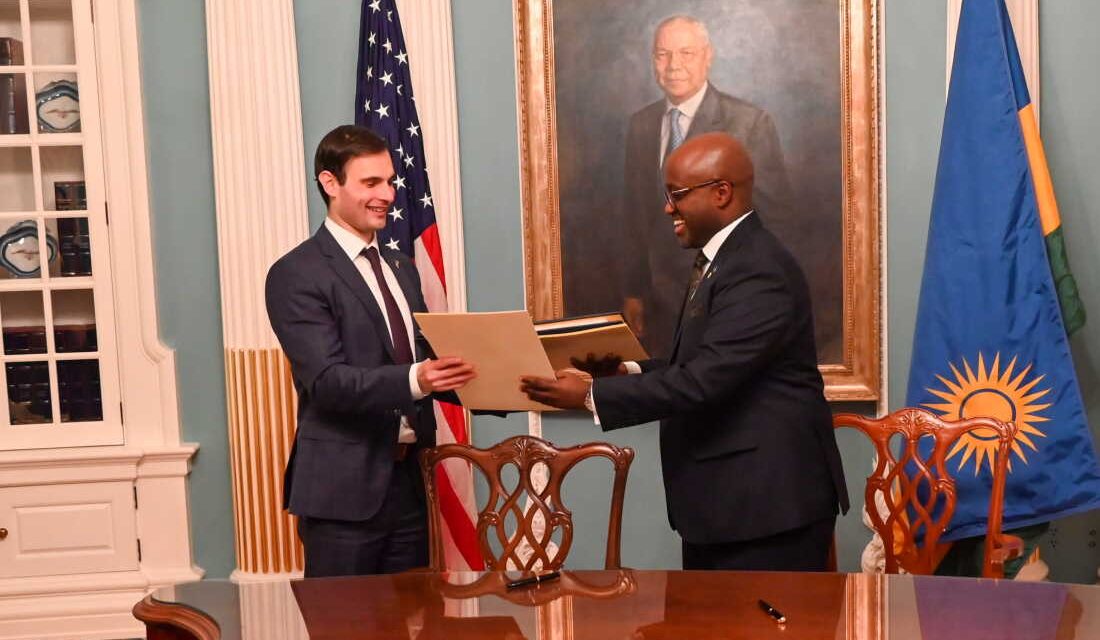
In December, State Department senior official Jeremy Lewin welcomed Rwanda’s Foreign Minister Olivier J.P. Nduhungirehe for the signing of a multi-year Memorandum of Understanding (MOU) on global health cooperation. This initiative is part of the Trump administration’s ‘America First Global Health Strategy,’ which began on October 1. The strategy aims to overhaul funding rules for healthcare in low- and middle-income countries.
The ‘America First’ approach asserts that the U.S. will not allocate billions of dollars for health and development programs without tangible returns. This includes access to local resources and a requirement for recipient governments to contribute financially. To be eligible for U.S. funds, countries must sign an MOU outlining U.S. investments and their own financial commitments. The administration believes this strategy will promote self-reliance, reducing dependency on U.S. assistance.
U.S. Rationale for the Strategy
The U.S. remains the largest donor for global health programs, despite past cuts and the dismantling of USAID. Previous administrations valued global health spending as a tool for fostering relationships and influence. Tom Bollyky from the Council on Foreign Relations states, ‘Historically, the focus has been on mutual benefits, improving health, and development, which benefit the U.S. as well.’
The State Department highlights three goals on its website: protecting the U.S. from infectious diseases, saving lives with bilateral agreements requiring co-investment, and promoting American health innovations. This new approach adopts what Bollyky describes as a transactional view of health aid. ‘The U.S. wants clarity on what taxpayers receive in return,’ he says. This could mean preferential access to critical minerals or patient data. Asking for confidential records is a controversial part of the strategy.
Participating Countries
The U.S. has signed MOUs with 35 countries, committing around $14 billion in health investments over five years. Participating countries include Nigeria, Rwanda, the Philippines, and Bolivia. Rwanda, for instance, will receive $157 million and will contribute $70 million, while agreeing to share patient data with the U.S.
However, some countries refused to sign MOUs, citing sovereignty concerns. Ghana, Namibia, and Zimbabwe declined, while negotiations with Zambia stalled. Ghana’s president, John Dramani Mahama, criticized the proposal, calling it humiliating and the financial offer insufficient. In response, the U.S. halted health funding to Zimbabwe and plans to focus on economic investments instead.
Expert Opinions on the Strategy
Global health experts acknowledge that America First offers a pragmatic approach. ‘Governments should run and financially support their health systems,’ says Jocilyn Estes from the Center for Global Development. Yet, she notes the rapid pace of implementation is unprecedented and may lead to poor planning in high-stakes situations.
The administration extended the start date to October 1 after missing the original April 2026 deadline. Estes warns that this speedy rollout poses risks to U.S. global health assistance. Stephen Morrison from the Center for Strategic and International Studies adds that reduced U.S. aid concerns countries with large at-risk populations, such as those dealing with HIV. Despite frustrations, many countries may continue to engage due to the substantial U.S. role in global health aid.
Bollyky questions whether countries will fulfill their commitments with reduced U.S. funds. Rwanda, for example, received over $200 million in 2024 and now faces economic challenges. Bollyky observes limited signs of countries increasing domestic healthcare budgets to compensate for U.S. funding cuts.
The rapid strategy rollout left little time for countries to adjust, complicating the creation of stable health funding environments. NPR sought comments from the State Department regarding criticisms. The department’s statement emphasized moving from ‘forever aid’ to direct collaboration and locally-led health system development through the America First Global Health Strategy.
 The Threat of Melting Glaciers: A Call to Action
  Police Discover Ancient Roman Artifacts Off Sardinian Coast
  Urgent Need for Action in East Africa’s Food Crisis
  Suspected Plague Death in Siberia Sparks Health Measures
  G7 Nations Agree to Release 100 Million Barrels of Oil Amid Fuel Price Surge
  Co-Pilot Attempts Hijack on Flight to Tel Aviv