
Debates over Israel have become pivotal in the primary races across the U.S., splitting both Democrats and Republicans. A recent example arose with Representative Thomas Massie’s comments during his concession speech.
On the night he conceded to his opponent, Ed Gallrein, Massie acknowledged the end of his nearly 14-year congressional career. “I would have come out sooner, but I had to call my opponent and concede, and it took a while to find Ed Gallrein in Tel Aviv,” Massie stated, referencing his Republican opponent. This comment linked to the extensive financial support Gallrein received from pro-Israel donors.
Massie, a vocal critic of Israel and the conflict with Iran, attributed his defeat partly to the financial influence of these donors. A super PAC associated with the American Israel Public Affairs Committee was among those contributing substantial funds to oppose Massie.
Kentucky’s race reflects broader national trends where debates over Israel’s role, especially amid the ongoing war in Gaza and tensions with Iran, are reshaping perspectives. These discussions have created divisions within both major political parties.
Massie’s remarks resonated deeply, sparking concern among Jewish leaders who are wary of how opposition to Israel can sometimes bleed into harmful antisemitic tropes. This is particularly pressing given the recent rise in antisemitic incidents, which underscores the potential risks of such rhetoric in political discourse.
 New Jersey Voter Fraud Prompts Renewed Push for SAVE Act
  Concerns Over Changes to Voter-Registration Form for Americans Abroad
  Trump’s 2024 Campaign Targets Young Men Through Cryptocurrency
  Trump’s White House Visitor Center Proposal Gains Bipartisan Support
  State Department Simplifies Passport Process with Online Applications
 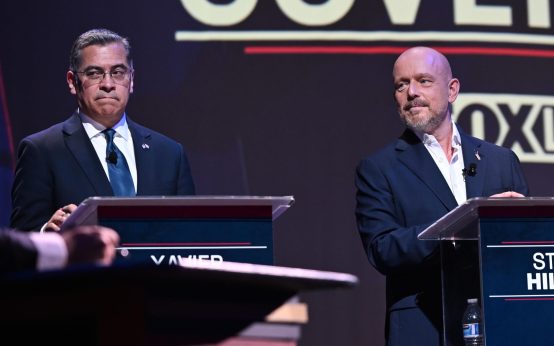 Becerra and Hilton Clash in California Gubernatorial Debate