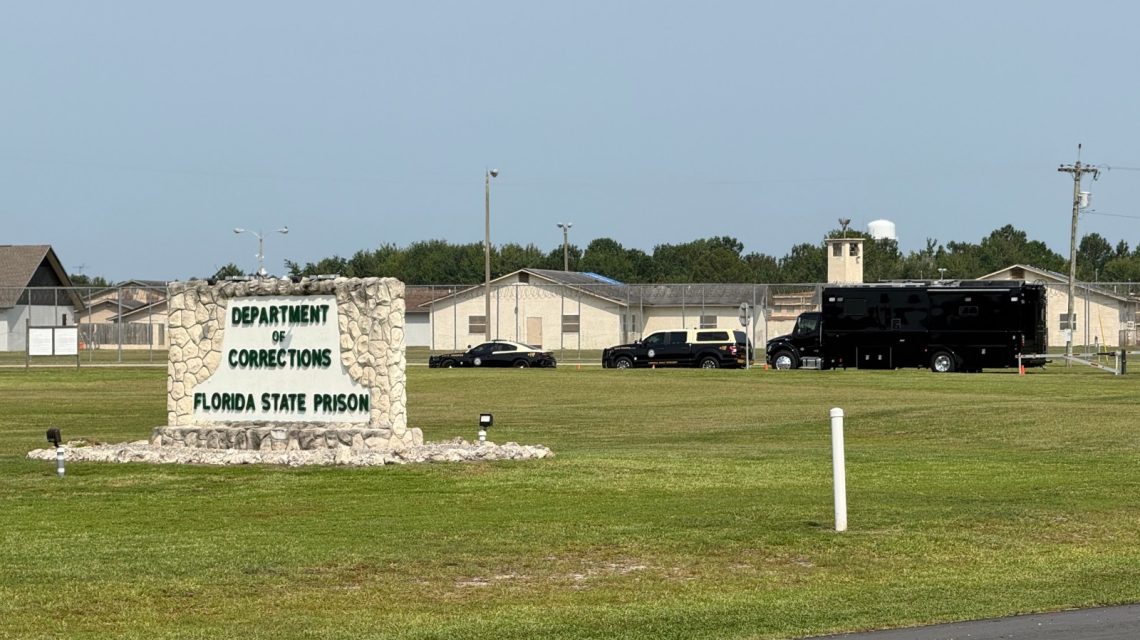
Florida executed a 77-year-old death row inmate on Tuesday, marking its 18th execution of 2026. This highlights the state’s growing number of elderly prisoners executed as it approaches an annual execution record.
William Reaves was declared dead at 6:12 p.m. after a three-drug lethal injection at Florida State Prison near Starke. He was convicted for the 1986 murder of Richard Raczkoski, an Indian River County sheriff’s deputy. ‘Would we all be so lucky to be 77 years old and to die so peacefully? That’s not justice in any way, in my opinion,’ stated Sheriff Eric Flowers in a press conference post-execution.
This marks Florida’s 18th execution under Governor Ron DeSantis, who has sped up death warrants during his final term. The state conducted a record 19 executions in 2025 and could tie that mark with another execution next month. Reaves was also the eighth Florida prisoner aged 70 or older executed this year, drawing attention to the aging death row population in Florida and nationally. The Death Penalty Information Center reported that Reaves spent 34 years on death row before his execution, similar to many other inmates this year.
Florida’s execution pace has set it apart nationally, conducting 18 of the 32 executions in the U.S. this year, as per the Death Penalty Information Center. The age of death row inmates has gained attention, particularly with several elderly inmates scheduled for execution recently.
Florida’s Aging Death Row Population
This issue gained renewed attention this summer when several inmates in their 70s and one in their 80s were scheduled for execution. The cases sparked debate over the ethics of executing elderly and frail inmates after decades on death row. Supporters argue that lengthy appeals ensure constitutional rights and prevent wrongful executions, while opponents raise humanitarian concerns, questioning the punishment’s purpose.
The Death Penalty Information Center revealed that death row populations have aged significantly, with a rising median age of executed inmates over recent decades.
Reaves’ Final Legal Battles
Reaves’ attorneys challenged Florida’s lethal injection protocol without success. They also argued jurors were unaware of his 100 percent disability due to Vietnam service-related PTSD. Over 100 veterans appealed to Governor DeSantis to stop the execution, but no intervention occurred, with the U.S. and Florida Supreme Courts declining to stop it.
Court records reveal Raczkoski was responding to a 911 call by Reaves at a Convenience store, where a struggle led to the deputy’s shooting. Marc Raczkoski, the victim’s brother, said justice was served. Flowers termed the execution as more of a closure than justice.
Florida plans another execution on November 5. If it proceeds, the state will match last year’s record 19 executions.
 Addressing Recidivism: A Call to Reform the U.S. Prison System
 Unsealed Records Suggest Possible O.J. Simpson Murder Cover-Up Assistance
 Cold Case Breakthrough: Tracking a Serial Predator
 The Tragic Case of Amy Mullis: Accidental Death or Murder?
 Florida Woman Found Guilty of Murdering Boyfriend
 California Couple’s Alleged Child Abuse Highlights Surrogacy Industry Concerns