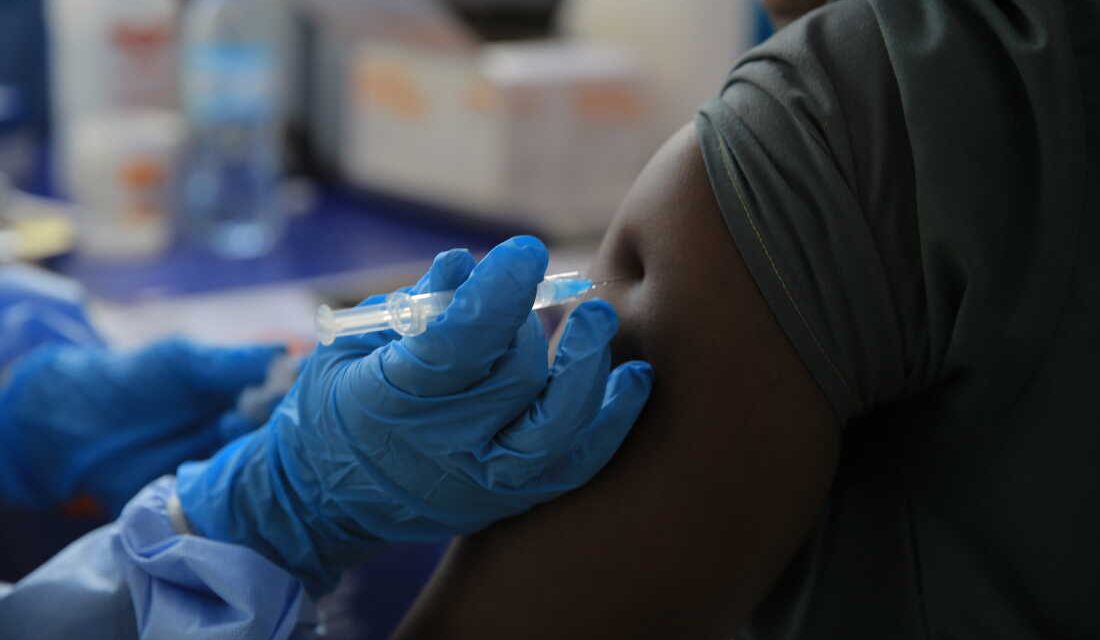
In Beni, North Kivu province, eastern Congo, a health care worker administered a dose of the Ervebo vaccine against the Ebola virus on October 16. A photograph by Sebastien Kitsa Musayi of Associated Press captures the moment.
In Abuja, Nigeria, the Health Ministry confirmed a case of Ebola. A woman from Uganda, who arrived in the capital, tested positive. She exhibited symptoms on October 7 and was admitted to a private hospital on October 11. Health Minister Muhammad Pate announced that officials are tracing 44 individuals connected to the patient. ‘We are doing everything possible to contain this case by tracing all the contacts the individual may have had,’ he emphasized.
Uganda has previously reported Ebola cases but has since declared itself free from the virus. Nigeria joins other countries facing Ebola cases due to a spreading outbreak. Earlier this month, Kenya confirmed its first case and has recorded nine infections since.
The director general of the Africa Centers for Disease Control, Dr. Jean Kaseya, discussed the situation on X. He remarked on the seriousness of the threat, noting a fatality rate of nearly 50%. ‘This Bundibugyo Ebola outbreak has already become the most geographically extensive in history, affecting several countries across three regions of Africa,’ said Kaseya.
The Nigeria Centre for Disease Control (NCDC) heightened surveillance efforts two weeks ago to prepare for a potential Ebola outbreak. These efforts prioritize early detection, isolation, laboratory diagnosis, infection prevention and control, contact tracing, risk communication, and protection of health care workers.
Nigeria established an Ebola task force in June, responding to an earlier outbreak in Congo. Femi Gbajabiamila, Chief of Staff to President Bola Tinubu, explained the task force’s creation. ‘We do not want a repeat of what happened during the last outbreak when a carrier entered the country, and everyone was scrambling to respond,’ he stated, emphasizing the importance of preparedness.
The Ebola virus’s spread outside Congo has raised longstanding concerns about the rapid transmission of the rare Bundibugyo virus. This virus has affected over 9,000 people and resulted in over 4,300 deaths. WHO warns that the latest outbreak is the fastest-spreading on record, threatening to surpass the deadliest outbreak from 2014 to 2016, which claimed 11,000 lives in West Africa. Nigeria was part of the affected region during that outbreak, recording 20 cases before being declared Ebola-free after three months.
 Navigating Pregnancy Costs and Healthcare Challenges
 Canadian Man’s Struggle for Home Care Amid Assisted Death Proposals
 Trump Administration Initiates Kidney Care National Plan
 ADHD Linked to Increased Risk of Early Death, Study Suggests
 Rethinking School Safety: A New Approach
 Reevaluating School Safety Measures Post Santa Clarita Shooting