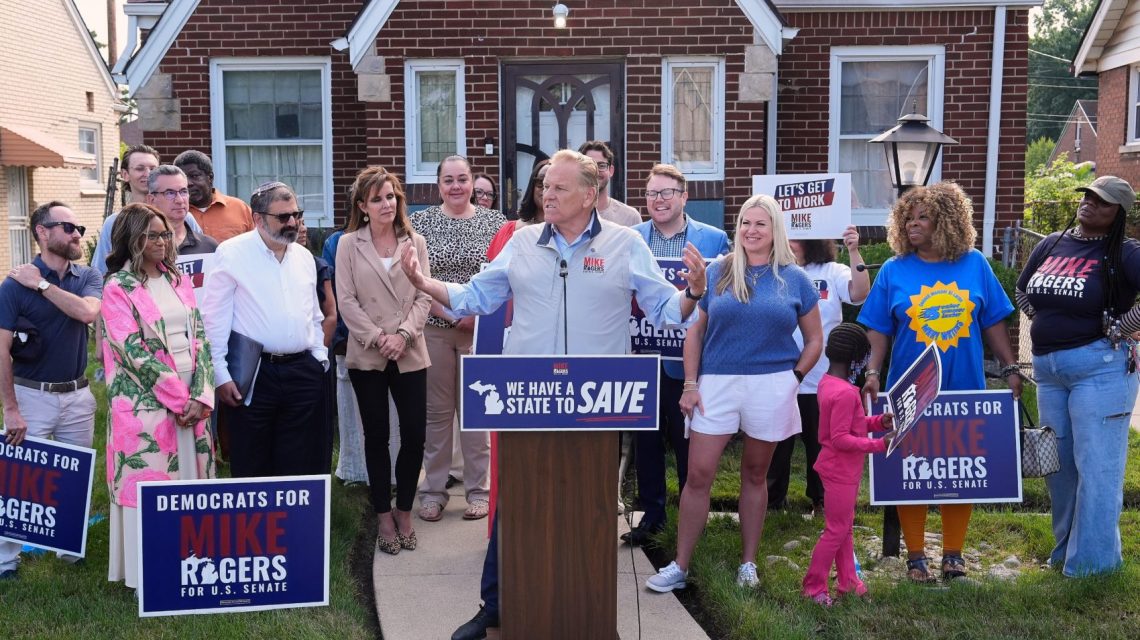
In Michigan, the U.S. Senate race transcends the usual political dynamics. The battle between Republican Mike Rogers and Democrat Abdul El-Sayed delves into issues of faith and identity, particularly in the Detroit suburbs.
Personal Dilemmas for Jewish Democrats
Jewish Democrats in these suburbs are facing personal questions about supporting their party’s nominee. Meanwhile, Arab American leaders in Dearborn, who previously backed former President Trump, express concern over Republican rhetoric.
The ongoing conflict involving Israel and Hamas has added layers to these voters’ decisions.
Rogers’ Campaign Strategy
Republican nominee Mike Rogers is actively courting Jewish voters amid tensions. His campaign includes highlighting his opponent, El-Sayed, as a threat to Jewish communities. A strategic event with Senator Ted Cruz titled “Who Will Keep Us Safe?” aims to solidify his stance among these voters.
A synagogue in West Bloomfield recently endured an attack, while nearby children are memorialized in Dearborn.
This symbolic division mirrors political tensions between friends like Lori Goldman, a Jewish Democratic activist, and her colleague, Mimi Price-Miletic.
Republican Outreach Efforts
Vance Patrick, leading Oakland County’s Republican Party, notes Rogers’ progress with Jewish voters. Synagogue visits and discussions are central to this strategy, emphasizing heightened security concerns.
Rogers critiques El-Sayed for his reaction to a recent attack on a synagogue, while others challenge Rogers’ framing of El-Sayed’s comments.
Democratic Divisions
The Democratic Party in Michigan struggles with unity post-primary. State Sen. Jeremy Moss and Rep. Haley Stevens exhibit tepid support for El-Sayed, reflecting broader disagreements over Israel. Concerns about El-Sayed’s associations and rhetoric amplify these divides.
Grassroots efforts continue as El-Sayed’s supporters aim to foster dialogue among undecided Jewish voters, emphasizing shared concerns.
Arab American Community Backlash
Dearborn’s Arab American community, pivotal during Trump’s previous win, now faces uncertainty. Mayor Abdullah Hammoud critiques Republican rhetoric, citing perceived discriminatory undertones.
Earlier support for Trump by leaders like Bishara Bahbah has shifted as rhetoric crosses perceived red lines, cautioning against alienating voters.
 Minnesotans React to Raid on Ilhan Omar’s Home
 Elon Musk Plans to Distribute SpaceX Shares to American Children
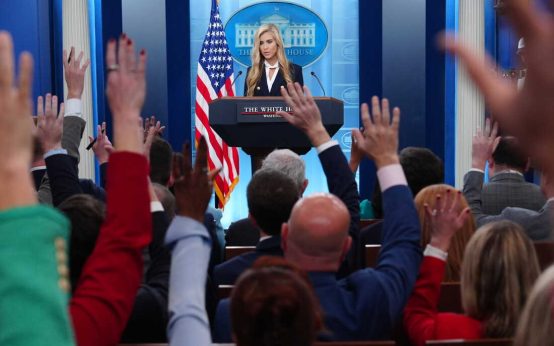 The Role and Challenges of the White House Press Secretary
 Interior’s First Offshore Mining Lease Sale
 Understanding the Impact of El Niño on the Midwest and Natural Environment
 Historical Events in Chicago on October 20