Taiwan announced on Thursday that President Lai Ching-te is open to speaking with President Donald Trump. Such a conversation would be unprecedented between the leader of the world’s largest economy and Taiwan, which China claims as part of its territory. The timing of this proposed discussion remains uncertain. Any decision to proceed could affect U.S.-China relations and influence a substantial arms deal the United States is considering for Taiwan, which operates under a democratic government.
Direct talks between U.S. and Taiwan presidents have not occurred since the U.S. shifted its diplomatic recognition from Taipei to Beijing in 1979. China views Taiwan as its territory and has not ruled out using force to bring it under control.
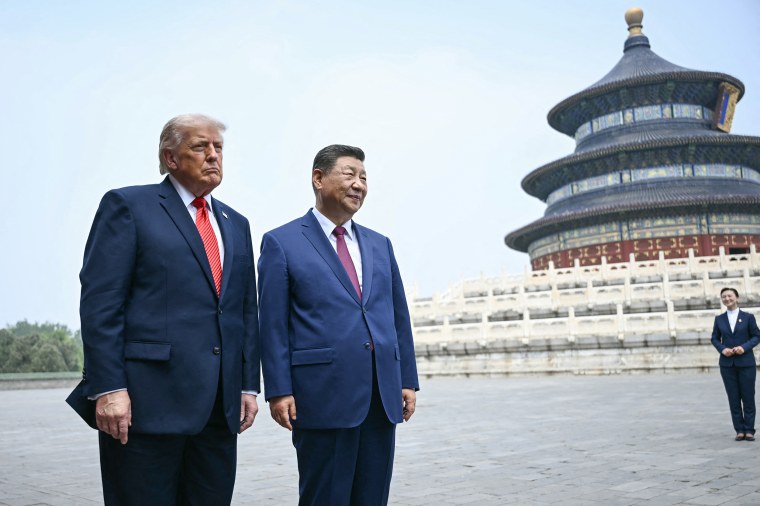
Recently, Trump indicated his willingness to speak with Lai, reiterating this intent twice in one week. This dispelled initial thoughts that his earlier comment, made after his summit with Chinese President Xi Jinping, was a mistake. During a visit to Beijing, Trump and Xi attended an event at the Temple of Heaven.
Taiwan’s foreign ministry reiterated President Lai’s intention to discuss the stability of the Taiwan Strait with Trump, emphasizing that China is disrupting peace in the area.
In addition to being committed to maintaining the stable status quo in the Taiwan Strait, President Lai is also happy to discuss these matters with President Trump,
the ministry declared.
Joseph Wu, the secretary-general of Taiwan’s National Security Council, advised maintaining a low profile for now. He promised that any progress made would be communicated publicly. Wu stressed the importance of high-level dialogues that promote regional peace and stability, benefiting Taiwan and other democratic nations in the Indo-Pacific region.
Wu countered Trump’s mention of the Taiwan problem, a phrase echoing Beijing’s stance, by asserting that Taiwan is not the issue. China is creating all kinds of problems along the first island chain,
he mentioned, referencing an area extending from Japan through Taiwan to the Philippines. China is the problem,
he concluded.
In late 2016, as president-elect, Trump had already surprised diplomatic norms by speaking with Taiwan’s then-President Tsai Ing-wen. China dismissed multiple dialogue offers from President Lai, labeling him a separatist. Beijing’s foreign ministry reiterated its steadfast opposition to official U.S. exchanges with Taiwan.
According to Reuters, Trump, who had discussions with Xi in Beijing, is considering a new arms sales package to Taiwan, potentially valued at $14 billion. While the United States has no formal diplomatic ties with Taiwan, it is mandated under the 1979 Taiwan Relations Act to provide Taiwan with defensive means.
During a parliamentary session on Thursday, Taiwan Defense Minister Wellington Koo stated that the U.S. has consistently reassured its policy on Taiwan remains the same. He noted that peace in the Taiwan Strait is a pivotal U.S. interest. The supply of defensive arms to Taiwan, as per the Taiwan Relations Act, reflects established U.S. policy.
Minister Koo expressed cautious optimism regarding future arms purchases due to the unchanged stance of U.S. policy toward Taiwan. China’s displeasure persists over the U.S.’s sustained military support for Taiwan, including arms sales aimed at deterring Chinese actions.
Taiwanese government maintains its rejection of Beijing’s sovereignty claims over the island.
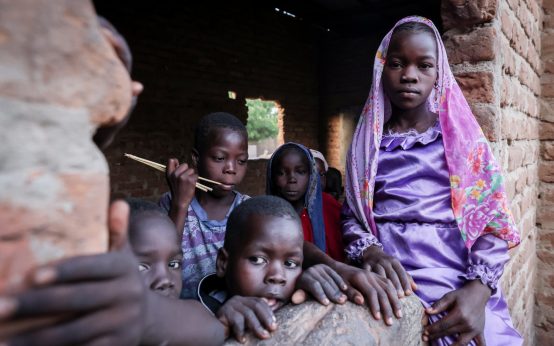 Urgent Need for Action in East Africa’s Food Crisis
 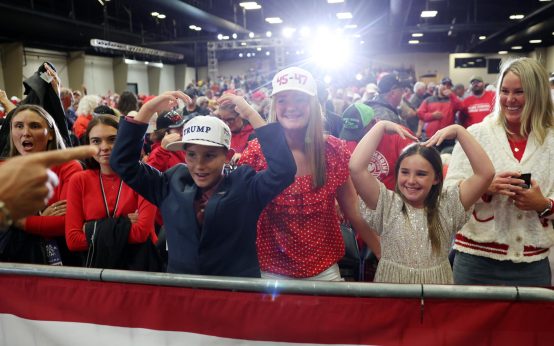 Trump Rallies Support in GOP Strongholds as Midterm Elections Approach
 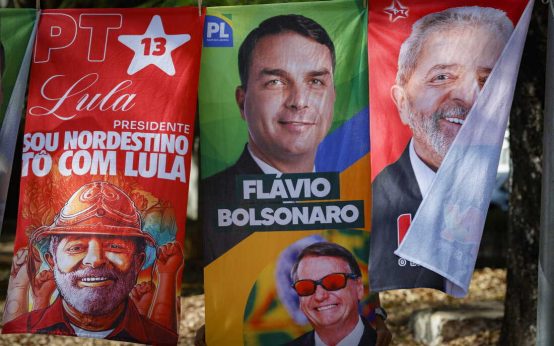 Brazil’s Next Election: Familiar Faces and High Stakes
  Suspected Plague Death in Siberia Sparks Health Measures
  Iowa Steel Plant: Incentives and Political Maneuvering
  Strategies for Democrats Leading Up to Election Day